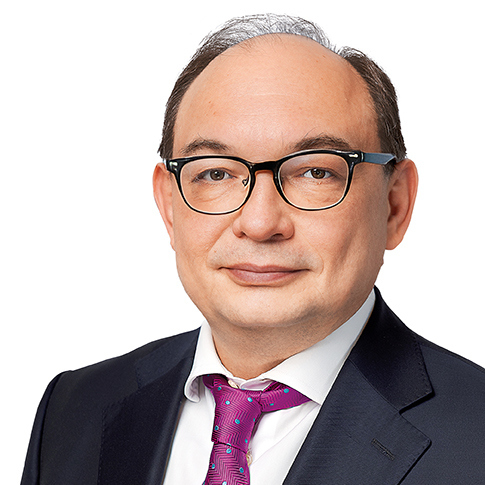
TODAY RUSSIA STANDS AS ONE OF THE CONSOLIDATING CENTRES OF THE MULTIPOLAR WORLD ORDER. ITS ROLE IN SHAPING THE NEW ECONOMIC MODEL IS BOLSTERED BY ITS RESILIENT ECONOMY AND ITS STRONG STANDING IN THE UN, BRICS, AND THE G20, AMONG OTHERS.
– Dmitry Birichevskiy, Director of the Department of Economic Cooperation, Ministry of Foreign Affairs of the Russian Federation
GLOBAL ECONOMY 2.0:
RUSSIAN ECONOMIC DIPLOMACY IN ACTION
Each historical era puts forward new challenges for states seeking to secure a rightful place in the global economy. Today, decisions are made amid geopolitical confrontation with the West, global volatility, fragmentation, and the inconsistent policy by major powers. Alongside the omnipresent impact of technological progress, the political and economic landscape is being reshaped by the multipolar world order. The BRICS countries’ share in global GDP has already reached 40%, surpassing that of the G7 (29%). Nations across Asia, Africa, the Middle East, and Latin America are emerging as leading engines of growth—particularly in high tech, trade, and investment. The Global South and East boast 14 entries among the world’s 25 largest economies by entrepreneurial capacity.
Under the auspices of non-Western powers, innovative formats of cooperation are developing, independent transport and logistics chains are being established, and advanced payment, investment, and reinsurance platforms are taking shape. Regional integration projects are also showing significant progress. The Eurasian Economic Union has entered a phase of confident, mature growth, while the network of integration agreements in the Asia Pacific region continues to expand. Launched in 2021, the African Continental Free Trade Area is designed to foster the continent’s rise to prosperity.
Russia is steadily asserting its role as a consolidating centre in the emerging multipolar world order. With its economy ranked fourth globally by purchasing power parity, Russia’s resilience in the face of unprecedented external pressure, reinforced by its strong standing in global governance platforms—such as the UN, BRICS, and the G20—firmly cement its significance in shaping the new economic paradigm, market dynamics, and supply chains.
Today, modern global politics is under threat from the very engine of growth that once pushed it forward— the West. Now being overtaken by new competitors in a fair race, the former hegemon, in its bid to cling to dominance and forestall any rivals from gaining the upper hand, is wielding the economy as a weapon without any regard to possible repercussions. Through sanctions and tariff wars, it is destabilising the global economy, seizing other nations’ assets and dismantling long-established value chains.
The actions of Western elites create major disparities in trade relations, driving up the cost of key commodities in global demand—particularly those in agriculture and energy. Geoeconomic fragmentation is accelerating, while growth is markedly slowing down. Global public debt now risks exceeding the volume of world economy—a possible reality, the IMF reckons, as early as 2029.
The situation is exacerbated by the G7 systematic abuses within international financial and economic cooperation institutions. The resurgent bloc mentality is once again dividing the world into friends and foes. Over the past year, the erosion of the global governance architecture has become rampant: the future of the multilateral trading system—and its underpinning principle of non-discrimination—has been called into question.
These, however, are but broad strokes of a far more complex international landscape in which the Economic Department of the Russian Foreign Ministry operates today. We are still guided by the overarching objectives set out in the Concept of the Foreign Policy of the Russian Federation: strengthening Russia’s stance in the global economy, safeguarding its national development interests, ensuring economic security, and unlocking its full potential. These efforts on the economic track are, however, shaped by the demands of the present.
The sanctions war unleashed by the West against Russia has compelled the latter to take systemic measures to adapt to radically altered external conditions and to embark on a sweeping reconfiguration of the entire architecture of economic cooperation. In a short time, Moscow had to recalibrate its economic ties towards the Global South and East, while establishing mechanisms to support Russian companies—many of which were forced to overhaul long-standing business models, forge new forms of cooperation, and tackle urgent challenges in payments and logistics.
Under the auspices of non-Western powers, innovative formats of cooperation are developing, independent transport and logistics chains are being established, and advanced payment, investment, and reinsurance platforms are taking shape. Regional integration projects are also showing significant progress. The Eurasian Economic Union has entered a phase of confident, mature growth, while the network of integration agreements in the Asia Pacific region continues to expand. Launched in 2021, the African Continental Free Trade Area is designed to foster the continent’s rise to prosperity.
Russia is steadily asserting its role as a consolidating centre in the emerging multipolar world order. With its economy ranked fourth globally by purchasing power parity, Russia’s resilience in the face of unprecedented external pressure, reinforced by its strong standing in global governance platforms—such as the UN, BRICS, and the G20—firmly cement its significance in shaping the new economic paradigm, market dynamics, and supply chains.
Today, modern global politics is under threat from the very engine of growth that once pushed it forward— the West. Now being overtaken by new competitors in a fair race, the former hegemon, in its bid to cling to dominance and forestall any rivals from gaining the upper hand, is wielding the economy as a weapon without any regard to possible repercussions. Through sanctions and tariff wars, it is destabilising the global economy, seizing other nations’ assets and dismantling long-established value chains.
The actions of Western elites create major disparities in trade relations, driving up the cost of key commodities in global demand—particularly those in agriculture and energy. Geoeconomic fragmentation is accelerating, while growth is markedly slowing down. Global public debt now risks exceeding the volume of world economy—a possible reality, the IMF reckons, as early as 2029.
The situation is exacerbated by the G7 systematic abuses within international financial and economic cooperation institutions. The resurgent bloc mentality is once again dividing the world into friends and foes. Over the past year, the erosion of the global governance architecture has become rampant: the future of the multilateral trading system—and its underpinning principle of non-discrimination—has been called into question.
These, however, are but broad strokes of a far more complex international landscape in which the Economic Department of the Russian Foreign Ministry operates today. We are still guided by the overarching objectives set out in the Concept of the Foreign Policy of the Russian Federation: strengthening Russia’s stance in the global economy, safeguarding its national development interests, ensuring economic security, and unlocking its full potential. These efforts on the economic track are, however, shaped by the demands of the present.
The sanctions war unleashed by the West against Russia has compelled the latter to take systemic measures to adapt to radically altered external conditions and to embark on a sweeping reconfiguration of the entire architecture of economic cooperation. In a short time, Moscow had to recalibrate its economic ties towards the Global South and East, while establishing mechanisms to support Russian companies—many of which were forced to overhaul long-standing business models, forge new forms of cooperation, and tackle urgent challenges in payments and logistics.
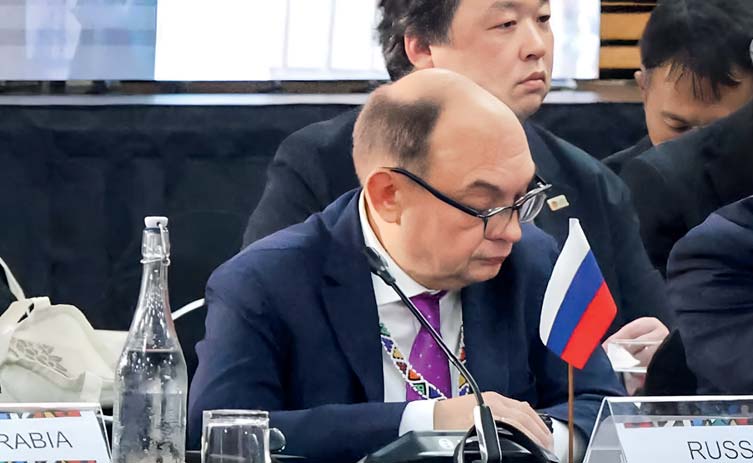
The current momentum in trade and economy proves that the decisions made were visionary and yielded positive results. Russian goods are growing in demand across Asia, the Middle East, Africa, and Latin America. In 2024 alone, trade with Africa surged by 13%, reaching USD 27.7 billion. These figures are by no means the ceiling, given the potential yet untapped. Under the EAEU auspices, Russia continues to expand its network of free trade agreements with foreign partners. Preferential trade regimes could soon give Russian exporters direct access to markets of 500 million consumers.
This trend underscores the need to strengthen transport connectivity—particularly by building a holistic network of supply chains across Eurasia. Russia’s efforts to unlock the potential of the North–South International Transport Corridor and to organise transit cargo flows in the Arctic via the Northern Sea Route are of paramount importance. These flagship initiatives are designed to become the cornerstone of the continent’s logistics.
Along the eastern branch of the North–South Corridor—often described as the “backbone” of Greater Eurasia—container traffic has more than doubled, while the western branch has seen a 50% increase. Transit container shipments via the Northern Sea Route have risen 2.6-fold, reaching a historic peak of 400,000 tonnes. Russia is ramping up these tangible efforts by consistently engaging in sectoral international forums and championing depoliticised cooperation. Our focus spans the International Transport Forum, the Organisation for Cooperation between Railways, the Intergovernmental Organisation for International Carriage by Rail, and other formats.
High on our agenda is financial cooperation with like-minded partners who share Russia’s vision of a resilient infrastructure, independent of the whims of neoliberal elites. Today, nearly 80% of cross-border settlements by Russian operators are conducted in national currencies, with the rouble accounting for over 50% of export transactions. Within the EAEU, payments in national currencies have exceeded 93%. Together with our partners in the EAEU, BRICS, and the SCO, Russia focuses on developing new settlement tools, including digital ones.
This trend underscores the need to strengthen transport connectivity—particularly by building a holistic network of supply chains across Eurasia. Russia’s efforts to unlock the potential of the North–South International Transport Corridor and to organise transit cargo flows in the Arctic via the Northern Sea Route are of paramount importance. These flagship initiatives are designed to become the cornerstone of the continent’s logistics.
Along the eastern branch of the North–South Corridor—often described as the “backbone” of Greater Eurasia—container traffic has more than doubled, while the western branch has seen a 50% increase. Transit container shipments via the Northern Sea Route have risen 2.6-fold, reaching a historic peak of 400,000 tonnes. Russia is ramping up these tangible efforts by consistently engaging in sectoral international forums and championing depoliticised cooperation. Our focus spans the International Transport Forum, the Organisation for Cooperation between Railways, the Intergovernmental Organisation for International Carriage by Rail, and other formats.
High on our agenda is financial cooperation with like-minded partners who share Russia’s vision of a resilient infrastructure, independent of the whims of neoliberal elites. Today, nearly 80% of cross-border settlements by Russian operators are conducted in national currencies, with the rouble accounting for over 50% of export transactions. Within the EAEU, payments in national currencies have exceeded 93%. Together with our partners in the EAEU, BRICS, and the SCO, Russia focuses on developing new settlement tools, including digital ones.
Today, together with its BRICS partners, Russia is stressing the importance of discussing the open world economy, abandoning illegitimate restrictions and tariff escalation within the rele- vant international forums.
A key tool for attracting foreign investment into the Russian economy are major flagship specialized events and forums held locally, spearheaded by the Foreign Ministry. Our calendar is tightly packed with high-level meetings such as the St Petersburg International Economic Forum (SPIEF), the Eastern Economic Forum, the Caucasus Investment Forum, and Russian Energy Week. In tandem with Roscongress, the Ministry contributes substantially to the agenda of expert sessions, while working with Russian diplomatic missions to secure the participation of high-profile attendees. Last year’s SPIEF, for instance, attracted more than 140 foreign officials, including heads of government and leaders of intergovernmental organisations.
A sought-after forum for debate is the Open Dialogue, launched under the stewardship of Deputy Chief of Staff of the Presidential Executive Office Maxim Oreshkin and hosted by the National Centre Russia. In a short time, it has evolved into a credible international platform where leading experts engage in a professional, depoliticised dialogue on the most pressing issues of our time.
New wave of globalisation, the rise of platform economy, demographic shifts, and the development in human capital—driven by cutting-edge technologies—are just some of the dominant trends shaping the future. The forum encourages expertise and visionary thinking among participants. The expert roster is drawn from across the globe, including the West, reflecting a broad spectrum of political views. In this sense, the platform is helping to restore a culture of dialogue to international discourse, countering the prevalent “megaphone diplomacy” that flourishes in the West.
To assert Russia’s pivotal role in shaping a more just global economic order demands our proactive involvement in negotiations across leading multilateral formats. The G20 takes a central place among these, standing as a cornerstone of global governance.
Under the leadership of Russia’s G20 Sherpa, Svetlana Lukash, Deputy Chief of Presidential Experts’ Directorate, our delegation has been a resolute champion for principle-based approaches in addressing economic challenges, the development agenda, the future of multilateral institutions, energy cooperation, and climate action on this platform. Russia acts as a magnet for constructive partners, rallying them around our shared vision. With Russia’s active support, the African Union became a full member of the G20 in 2023.
In recent years, together with like-minded allies, we have achieved significant progress in democratising the G20 and aligning its work with the interests of the Global Majority. During successive BRICS presidencies in the G20 in 2022–2025, the focus was on the needs of emerging markets. A strong political signal was sent through G20 agreements to amplify the voices of developing nations within financial institutions, prioritise technology-neutral approaches to energy cooperation, and bridge digital divides. In tandem with our partners, we have stood firm against Western attempts to politicise the G20. A landmark step forward was made when participants reached a shared understanding on the need to streamline the forum’s agenda and return to its roots, a purely economic mandate—the very foundation upon which the G20 was built.
This year marks the start of the second cycle of G20 presidencies, which opens with the United States at the helm. While Washington’s agenda prioritises growth, deregulation, affordable energy, and innovation—a focus that aligns closely with Russia’s vision—we, alongside our BRICS partners, are firmly insisting on keeping the spotlight on an open global economy, free from illegitimate restrictions and tariff escalations.
Priority is being given to long-overdue practical steps to align global governance with the interests of developing nations, a commitment the G20 acknowledged as far back as the 2008 Leaders’ Summit. Yet this pledge remains unmet due to the collective resistance from the West. The central task is to comprehensively modernise the financial architecture, ensuring true fairness, transparency, and non-discrimination. This means depoliticising its governance bodies, completing the IMF quota reform in favour of the Global South, and ensuring equal access to the World Bank’s resources and opportunities—redirecting its efforts towards the states most in need.
A sought-after forum for debate is the Open Dialogue, launched under the stewardship of Deputy Chief of Staff of the Presidential Executive Office Maxim Oreshkin and hosted by the National Centre Russia. In a short time, it has evolved into a credible international platform where leading experts engage in a professional, depoliticised dialogue on the most pressing issues of our time.
New wave of globalisation, the rise of platform economy, demographic shifts, and the development in human capital—driven by cutting-edge technologies—are just some of the dominant trends shaping the future. The forum encourages expertise and visionary thinking among participants. The expert roster is drawn from across the globe, including the West, reflecting a broad spectrum of political views. In this sense, the platform is helping to restore a culture of dialogue to international discourse, countering the prevalent “megaphone diplomacy” that flourishes in the West.
To assert Russia’s pivotal role in shaping a more just global economic order demands our proactive involvement in negotiations across leading multilateral formats. The G20 takes a central place among these, standing as a cornerstone of global governance.
Under the leadership of Russia’s G20 Sherpa, Svetlana Lukash, Deputy Chief of Presidential Experts’ Directorate, our delegation has been a resolute champion for principle-based approaches in addressing economic challenges, the development agenda, the future of multilateral institutions, energy cooperation, and climate action on this platform. Russia acts as a magnet for constructive partners, rallying them around our shared vision. With Russia’s active support, the African Union became a full member of the G20 in 2023.
In recent years, together with like-minded allies, we have achieved significant progress in democratising the G20 and aligning its work with the interests of the Global Majority. During successive BRICS presidencies in the G20 in 2022–2025, the focus was on the needs of emerging markets. A strong political signal was sent through G20 agreements to amplify the voices of developing nations within financial institutions, prioritise technology-neutral approaches to energy cooperation, and bridge digital divides. In tandem with our partners, we have stood firm against Western attempts to politicise the G20. A landmark step forward was made when participants reached a shared understanding on the need to streamline the forum’s agenda and return to its roots, a purely economic mandate—the very foundation upon which the G20 was built.
This year marks the start of the second cycle of G20 presidencies, which opens with the United States at the helm. While Washington’s agenda prioritises growth, deregulation, affordable energy, and innovation—a focus that aligns closely with Russia’s vision—we, alongside our BRICS partners, are firmly insisting on keeping the spotlight on an open global economy, free from illegitimate restrictions and tariff escalations.
Priority is being given to long-overdue practical steps to align global governance with the interests of developing nations, a commitment the G20 acknowledged as far back as the 2008 Leaders’ Summit. Yet this pledge remains unmet due to the collective resistance from the West. The central task is to comprehensively modernise the financial architecture, ensuring true fairness, transparency, and non-discrimination. This means depoliticising its governance bodies, completing the IMF quota reform in favour of the Global South, and ensuring equal access to the World Bank’s resources and opportunities—redirecting its efforts towards the states most in need.
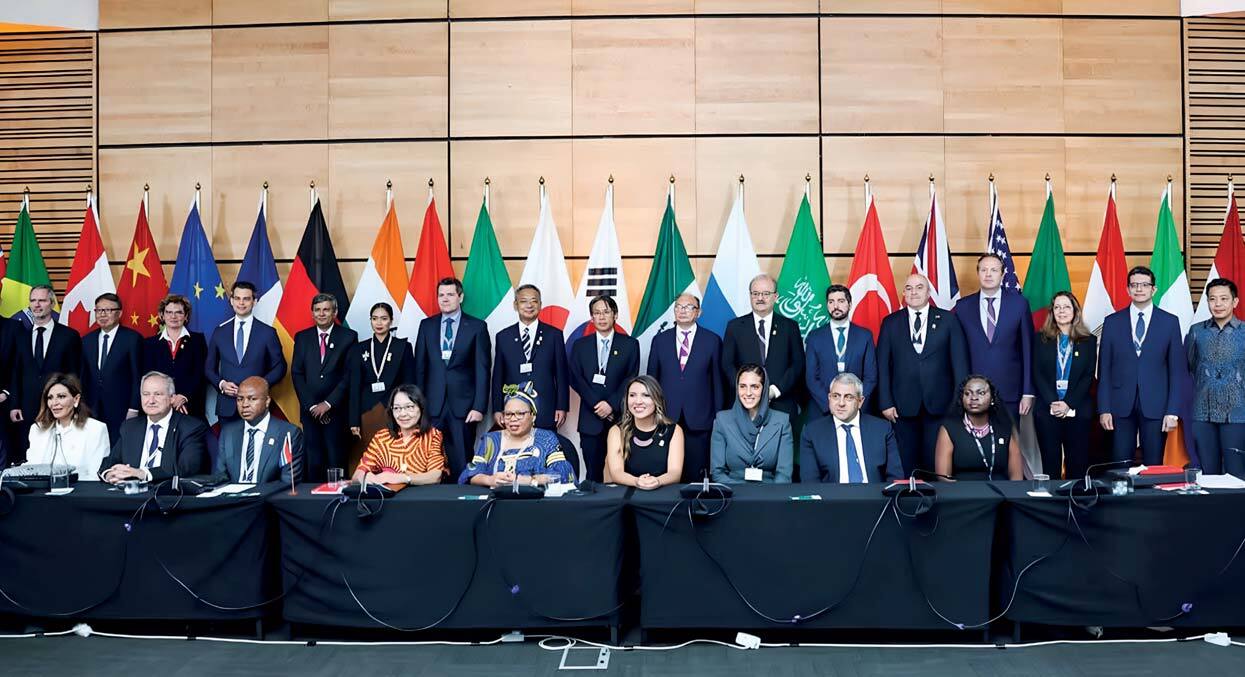
Russia is also championing the WTO’s role as the primary regulator of international trade policy, despite rising protectionism and the crisis faced by its dispute settlement body—especially as 80% of Russia’s non resource exports still adhere to its rules. It is our conviction that, should this not be upheld, global trade risks sinking into a chaos of bilateral deals, where the law of the jungle prevails and a level playing field is all but impossible.
It is no secret that certain economies are already recalibrating their approaches, based on their own interpretation of “reciprocity” in market access and “balanced” external trade. Yet, without comprehensive reform, the WTO’s status cannot be preserved. At this juncture, the priority is to inject momentum into negotiations to secure consensus on the key parameters of the organisation’s reform agenda.
Russia is also an active participant in key regional economic initiatives, holding strong positions within the Asia-Pacific Economic Cooperation (APEC) forum, which accounts for 60% of global GDP and 40% of the world’s population. In 2025, the Asia-Pacific region recorded a 3.1% GDP growth, underscoring its role as an engine of global progress, which calls for deep engagement with the Foreign Ministry and sectoral ministries along the APEC track. Russia consistently engages in give-and-get interaction with APEC, sharing its cutting-edge achievements in the digital economy, rural and remote area development, energy, sustainable financing, SME support, and women entrepreneurship.
It is no secret that certain economies are already recalibrating their approaches, based on their own interpretation of “reciprocity” in market access and “balanced” external trade. Yet, without comprehensive reform, the WTO’s status cannot be preserved. At this juncture, the priority is to inject momentum into negotiations to secure consensus on the key parameters of the organisation’s reform agenda.
Russia is also an active participant in key regional economic initiatives, holding strong positions within the Asia-Pacific Economic Cooperation (APEC) forum, which accounts for 60% of global GDP and 40% of the world’s population. In 2025, the Asia-Pacific region recorded a 3.1% GDP growth, underscoring its role as an engine of global progress, which calls for deep engagement with the Foreign Ministry and sectoral ministries along the APEC track. Russia consistently engages in give-and-get interaction with APEC, sharing its cutting-edge achievements in the digital economy, rural and remote area development, energy, sustainable financing, SME support, and women entrepreneurship.
It is worth noting that in 2026, the stewardship of APEC falls to China— an economy friendly to Russia. President Putin has already confirmed his readiness to attend the forum’s summit in Shenzhen on November 18–19. For our part, the Ministry is systematically preparing for the forthcoming event. We are confident this will set the trajectory for APEC’s development for years to come. At the same time, we are also exploring the possibility of Russia assuming the APEC chairmanship in a “vacant” year.
Russia also stands as a key participant in multilateral diplomacy in the strategically vital Black Sea region— historically the largest transport and logistics hub. The universal regional format here is the Organisation of the Black Sea Economic Cooperation (BSEC). Despite its profound politicisation, Ukrainian provocations, and the EU’s confrontational stance— along with that of its satellites—Russia, together with its like-minded partners, has managed to preserve it as a constructive framework. BSEC has established robust foundations for practical cooperation in transport, logistics, energy, digitalisation, and environmental protection—initiatives that can be put into motion once partners are ready.
Our commitment to strengthening multipolarity in the global economy demands greater engagement with the Global South in shaping the world economy and fostering a fair development model for Africa. The prerequisites for this, as Russia sees them, lie in integrating the African states into cross-border value chains—not merely as suppliers of commodities, but as manufacturers of intermediate and finished goods. Africa currently supplies the world with natural resources in exchange for finished goods—a dynamic that results in foregone value.
The struggle against neocolonial practices unfolds in critical commodities. As competition intensifies, the resource rich South finds itself drawn into new vassal relations with former colonial powers, which seek to gain control over the sector under the superficially virtuous pretext of introducing “best standards.” As a result, African nations, according to UNCTAD, generate only about 40% of the possible potential revenue. If the extraction of rare metals yields USD 11 billion, the production of batteries from those same metals generates USD 400 billion. The discrepancy is stark. Attempts to protect sovereign rights—through export restrictions, for instance—meet an aggressive pushback from opponents, including lawsuits at the WTO.
Russia also stands as a key participant in multilateral diplomacy in the strategically vital Black Sea region— historically the largest transport and logistics hub. The universal regional format here is the Organisation of the Black Sea Economic Cooperation (BSEC). Despite its profound politicisation, Ukrainian provocations, and the EU’s confrontational stance— along with that of its satellites—Russia, together with its like-minded partners, has managed to preserve it as a constructive framework. BSEC has established robust foundations for practical cooperation in transport, logistics, energy, digitalisation, and environmental protection—initiatives that can be put into motion once partners are ready.
Our commitment to strengthening multipolarity in the global economy demands greater engagement with the Global South in shaping the world economy and fostering a fair development model for Africa. The prerequisites for this, as Russia sees them, lie in integrating the African states into cross-border value chains—not merely as suppliers of commodities, but as manufacturers of intermediate and finished goods. Africa currently supplies the world with natural resources in exchange for finished goods—a dynamic that results in foregone value.
The struggle against neocolonial practices unfolds in critical commodities. As competition intensifies, the resource rich South finds itself drawn into new vassal relations with former colonial powers, which seek to gain control over the sector under the superficially virtuous pretext of introducing “best standards.” As a result, African nations, according to UNCTAD, generate only about 40% of the possible potential revenue. If the extraction of rare metals yields USD 11 billion, the production of batteries from those same metals generates USD 400 billion. The discrepancy is stark. Attempts to protect sovereign rights—through export restrictions, for instance—meet an aggressive pushback from opponents, including lawsuits at the WTO.
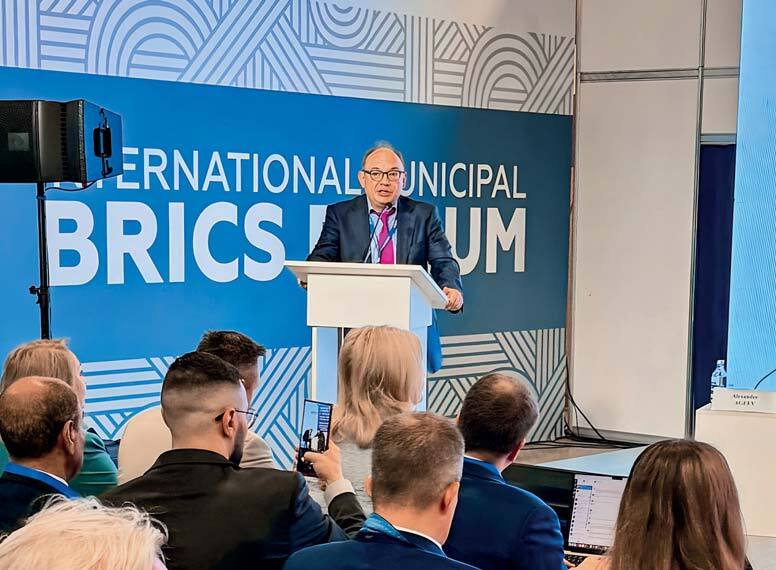
Unlike Western countries, Russia does not attach economic cooperation to short term political conditions, nor does it meddle in the internal affairs of sovereign states. It offers an open model of mutually beneficial partnerships grounded in respect for the national interests of its partners. Russia is contributing to the international regulatory mechanisms in the critical commodities sector based on equal, depoliticised cooperation and the unequivocal recognition of resource rich nations’ right to their own natural wealth.
Russia is helping African countries tackle their debts—having, for instance, written off over USD 23 billion in African debt—a burden often exceeding their expenditures on education or healthcare. It also plays a significant role in ensuring food security, thereby contributing to the fight against hunger. For the second consecutive year, Russia ranks third globally in the volume of its agricultural exports in physical terms.
As one of the world’s largest energy exporters, Russia contributes significantly to stability on global energy markets. Its primary objective is to secure universal access to affordable and modern energy sources. Reliable supplies of Russian energy to Asia, Africa, and Latin America stimulate socio-economic progress and advance the SDGs on the ground—a matter of great significance in addressing the North South divide.
We also provide substantial expert support to our partners of the Global Majority. Last autumn, for example, St Petersburg hosted the inaugural Russian African Raw Materials Dialogue, designed to become a standing forum for cooperation in the field of subsoil use with the continent and its regional integration associations.
The Foreign Ministry is actively involved in championing Russia’s approaches within the international energy organisations and on the relevant tracks of economic forums. Together with constructively minded countries,
Russia is helping African countries tackle their debts—having, for instance, written off over USD 23 billion in African debt—a burden often exceeding their expenditures on education or healthcare. It also plays a significant role in ensuring food security, thereby contributing to the fight against hunger. For the second consecutive year, Russia ranks third globally in the volume of its agricultural exports in physical terms.
As one of the world’s largest energy exporters, Russia contributes significantly to stability on global energy markets. Its primary objective is to secure universal access to affordable and modern energy sources. Reliable supplies of Russian energy to Asia, Africa, and Latin America stimulate socio-economic progress and advance the SDGs on the ground—a matter of great significance in addressing the North South divide.
We also provide substantial expert support to our partners of the Global Majority. Last autumn, for example, St Petersburg hosted the inaugural Russian African Raw Materials Dialogue, designed to become a standing forum for cooperation in the field of subsoil use with the continent and its regional integration associations.
The Foreign Ministry is actively involved in championing Russia’s approaches within the international energy organisations and on the relevant tracks of economic forums. Together with constructively minded countries,
Russia coordinates the work within the Organisation of the Petroleum Exporting Countries (OPEC), achieving tangible results well aligned with national interests, notably within the OPEC+ format. A testament to Russia’s standing in the Gas Exporting Countries Forum is the decision to hold the organisation’s next summit of heads of state and government in Moscow this October.
At the same time, Russia does not discount the assertion of the “green” agenda as a significant factor in transforming the global economy. It advocates a balanced transition to a low-emission trajectory, without discrimination against any particular energy source and technologies, while taking national priorities and capacities into account. At international platforms we emphasise the important role of natural gas and nuclear energy in meeting climate goals. United with the Global South, we oppose the politicisation of green processes, imposing climate based restrictive measures on competitors, and creating non-inclusive alliances.
Russia is pleased to see that the ideological Western dominance on the green track is giving way to a pragmatic approach of emerging economies. China, India and other BRICS partners, alongside Central and Southeast Asia, as well as the Gulf States, are investing heavily in low emissions development. New technological and regulatory standards are being developed, and supply chains are being built. The green agenda, hence, represents both a serious challenge and a strategic benchmark for the competitiveness of Russian goods. For its part, the Foreign Ministry is helping sectoral agencies to shape a Russian model of sustainable development, while remaining aligned with current international practices.
Another major transformative trend is digitalisation, which is permeating every sector and reshaping the structure of the global economy. New technologies bring both substantial dividends—Russia expects that over the next decade AI could boost global GDP by about USD 15.7 trillion—and negative implications, for instance for the labour market. IMF estimates that the price of technological progress will only increase, as the benefits of innovation are distributed unevenly owing to the persistent digital divide: poor countries and disadvantaged populations within wealthy nations are being left behind.
At the same time, Russia does not discount the assertion of the “green” agenda as a significant factor in transforming the global economy. It advocates a balanced transition to a low-emission trajectory, without discrimination against any particular energy source and technologies, while taking national priorities and capacities into account. At international platforms we emphasise the important role of natural gas and nuclear energy in meeting climate goals. United with the Global South, we oppose the politicisation of green processes, imposing climate based restrictive measures on competitors, and creating non-inclusive alliances.
Russia is pleased to see that the ideological Western dominance on the green track is giving way to a pragmatic approach of emerging economies. China, India and other BRICS partners, alongside Central and Southeast Asia, as well as the Gulf States, are investing heavily in low emissions development. New technological and regulatory standards are being developed, and supply chains are being built. The green agenda, hence, represents both a serious challenge and a strategic benchmark for the competitiveness of Russian goods. For its part, the Foreign Ministry is helping sectoral agencies to shape a Russian model of sustainable development, while remaining aligned with current international practices.
Another major transformative trend is digitalisation, which is permeating every sector and reshaping the structure of the global economy. New technologies bring both substantial dividends—Russia expects that over the next decade AI could boost global GDP by about USD 15.7 trillion—and negative implications, for instance for the labour market. IMF estimates that the price of technological progress will only increase, as the benefits of innovation are distributed unevenly owing to the persistent digital divide: poor countries and disadvantaged populations within wealthy nations are being left behind.
The new framework of the economic architecture is being built on the pillars of inclusivity and mutual respect. These principles underpin the flagship project of the Greater EurasianPartnership,setoutbyPresident Putin as an open framework for cooperation across Eurasia focused on national interests. It is a flexible mechanism responsive to the needs of its participants, free from any hierarchical “leader-follower” dynamic. A uniform and stable system of mutually beneficial relations across Eurasia is being actively forged today through enhanced coordination between the EAEU, the SCO, and ASEAN, with the involvement of the CIS, the Conference on Interaction and Confidence Building Measures in Asia, the Gulf Cooperation Council, and other formats.
The past year has seen many landmark developments in removing excessive barriers to the “integration of integrations” across Eurasia and in promoting the Greater Eurasian Partnership. The free trade agreement between the EAEU and Iran entered into force; similar documents were signed with the UAE, Mongolia, and Indonesia; and corresponding arrangements are pursued with Egypt, Thailand, India, and Tunisia. The GEP initiative was incorporated into the final documents of the Supreme Eurasian Economic Council meeting, events at the level of heads of state and government of the SCO, and the joint statement by the leaders of Russia and China. We are confident thatmutualrespectandGEP’sextensive sectoral coverage will enable a synergyofthemacroregion’sunique advantages.
Efforts across the full spectrum of these directions are aimed at the overarching goal: elevating Russia’s role as a centre of gravity endowed with full economic and technological sovereignty for constructive participants in global processes.
The foreign agenda actively pursued by the Russian Foreign Ministry in tandem with sectoral bodies is constructive and unifying in nature. It is aimed at building a more democratic world economic order to replace the obsolete models of cooperation shaped by the West centric neocolonialism. Together with like minded partners, Russia is making every effort to return international trade and economic relations to the track of non discriminatory, depoliticised cooperation, and to rule out unfair competition and unlawful restrictions—all for the benefit of the peoples of our planet.
The past year has seen many landmark developments in removing excessive barriers to the “integration of integrations” across Eurasia and in promoting the Greater Eurasian Partnership. The free trade agreement between the EAEU and Iran entered into force; similar documents were signed with the UAE, Mongolia, and Indonesia; and corresponding arrangements are pursued with Egypt, Thailand, India, and Tunisia. The GEP initiative was incorporated into the final documents of the Supreme Eurasian Economic Council meeting, events at the level of heads of state and government of the SCO, and the joint statement by the leaders of Russia and China. We are confident thatmutualrespectandGEP’sextensive sectoral coverage will enable a synergyofthemacroregion’sunique advantages.
Efforts across the full spectrum of these directions are aimed at the overarching goal: elevating Russia’s role as a centre of gravity endowed with full economic and technological sovereignty for constructive participants in global processes.
The foreign agenda actively pursued by the Russian Foreign Ministry in tandem with sectoral bodies is constructive and unifying in nature. It is aimed at building a more democratic world economic order to replace the obsolete models of cooperation shaped by the West centric neocolonialism. Together with like minded partners, Russia is making every effort to return international trade and economic relations to the track of non discriminatory, depoliticised cooperation, and to rule out unfair competition and unlawful restrictions—all for the benefit of the peoples of our planet.