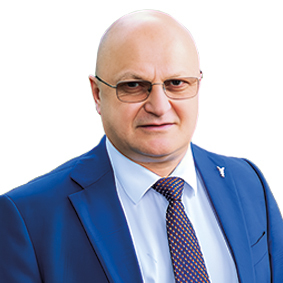
Yevgeny Tsarev, Chairman, NP “Leasing Union”
«INTERNATIONAL LEASING DEMANDS A NEW ARCHITECTURE»
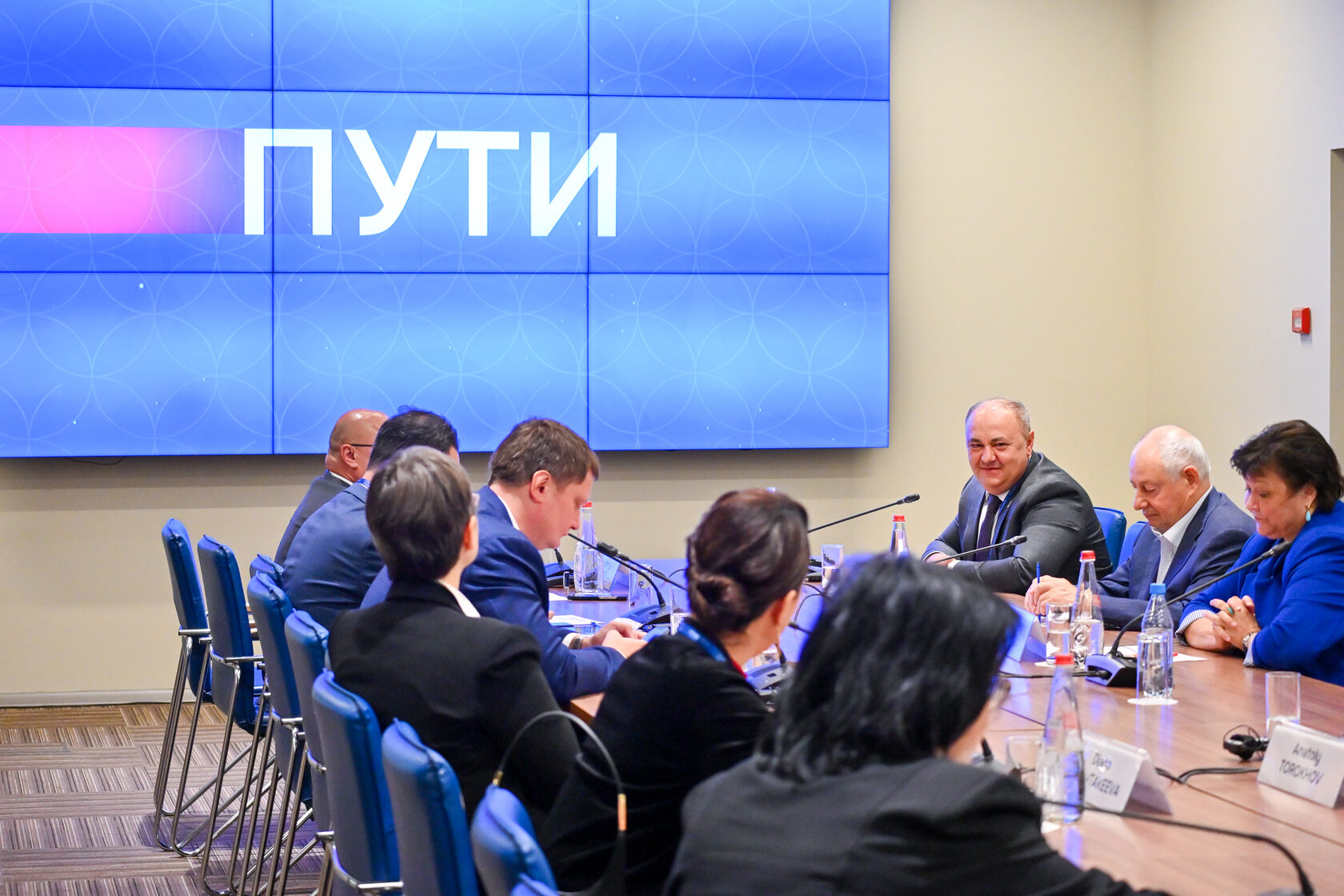
We met with Evgeny Tsarev at the World Forum “New Era—New Ways,” held in Moscow
on August 20–21, 2025. The event, organised by the International Organisation for Eurasian Cooperation (IOEC), featured its first-ever expert panel on international leasing, with a focus on its prospects and the establishment of the International Leasing Council, comprising leasing associations from Russia, Kazakhstan, Kyrgyzstan, Belarus, and Armenia.
— Mr. Tsarev, for a starter, the mat ter at core. Why was the Internation al Leasing Council established, and what is the primary challenge it aims to address?
— We are paving the way for system atic coordination within the industry across nations where leasing is already a proven tool and where there is demand for joint projects. The first and most enduring challenge is le gal. We need a new architecture for international leasing with friendly nations—from unifying key concepts and procedures to enforcing court rulings. The 1988 Ottawa Convention currently serves as the benchmark, a solid set of model rules, and many na tional legislations, including Russia’s leasing law, largely mirror its princi ples. But the mentioned rules are not binding, and this is critically insuffi cient for real transactions.
— So, the Convention itself is a good framework, but it lacks enforcement?
— That is so. The Convention outlines what is “correct,” but does not guaran tee that these principles will function seamlessly between given jurisdic tions. In practice, each country inter prets the text in its own way, while businesses face tax, customs, and pro cedural barriers. A case in point is the issue of double taxation and VAT on cross-border leasing deals. While we formally have double taxation avoid ance agreements, they do not always cover the nuances of leasing. With some agreements being terminated or renegotiated, companies are often left operating in a legal grey area.
— Which countries are currently bound by the Ottawa Convention, and how relevant is it to our region?
— The Convention was signed by eight countries: Russia, Belarus, Latvia, Hungary, Nigeria, Panama, as well as Italy and France—with reserva tions. Clearly, this scope is not vast enough to encompass Eurasian cooperation. So, we are discussing its revision and supplementation—not a replacement of the Ottawa Convention, but rather a framework built upon it under a multilateral agreement be tween Eurasian nations, to be further expanded to include a broader circle of partners.
— What must such an agreement in clude to make international leasing predictable?
— The indispensable prerequisite is for stakeholder countries to adopt a common set of rules. The sufficient condition is a comprehensive multi lateral agreement that addresses gaps in the Convention.
First and foremost is jurisdiction. Where will disputes be resolved, under which laws, and how will rulings be enforced? This could involve the national jurisdiction of a party or a neutral third country, but enforceability is paramount.
Second is the fiscal and customs framework—clear rules that eliminate double tax ation and unpredictable VAT implica tions.
Third are the practical appli cations, covering logistics, financial architecture, a unified information space for leased assets, and data ex change protocols between regulators and law enforcement agencies.
— How feasible is it to establish a shared database of leased assets and their status—including any restrictions—among interested Eurasian na tions?
— This is precisely the subject of agreements and administrative will. We need a binding interagency ex change system—if an asset is in de fault or under restriction in one country, it must not “pop up” under clean documentation in another. This protects both business and the state. Financial monitoring gains a legitimate channel for information exchange, law enforcement receives a tool for tracking and preventing abuses, and lessors benefit from transparency throughout the asset’s lifecycle.
— We are paving the way for system atic coordination within the industry across nations where leasing is already a proven tool and where there is demand for joint projects. The first and most enduring challenge is le gal. We need a new architecture for international leasing with friendly nations—from unifying key concepts and procedures to enforcing court rulings. The 1988 Ottawa Convention currently serves as the benchmark, a solid set of model rules, and many na tional legislations, including Russia’s leasing law, largely mirror its princi ples. But the mentioned rules are not binding, and this is critically insuffi cient for real transactions.
— So, the Convention itself is a good framework, but it lacks enforcement?
— That is so. The Convention outlines what is “correct,” but does not guaran tee that these principles will function seamlessly between given jurisdic tions. In practice, each country inter prets the text in its own way, while businesses face tax, customs, and pro cedural barriers. A case in point is the issue of double taxation and VAT on cross-border leasing deals. While we formally have double taxation avoid ance agreements, they do not always cover the nuances of leasing. With some agreements being terminated or renegotiated, companies are often left operating in a legal grey area.
— Which countries are currently bound by the Ottawa Convention, and how relevant is it to our region?
— The Convention was signed by eight countries: Russia, Belarus, Latvia, Hungary, Nigeria, Panama, as well as Italy and France—with reserva tions. Clearly, this scope is not vast enough to encompass Eurasian cooperation. So, we are discussing its revision and supplementation—not a replacement of the Ottawa Convention, but rather a framework built upon it under a multilateral agreement be tween Eurasian nations, to be further expanded to include a broader circle of partners.
— What must such an agreement in clude to make international leasing predictable?
— The indispensable prerequisite is for stakeholder countries to adopt a common set of rules. The sufficient condition is a comprehensive multi lateral agreement that addresses gaps in the Convention.
First and foremost is jurisdiction. Where will disputes be resolved, under which laws, and how will rulings be enforced? This could involve the national jurisdiction of a party or a neutral third country, but enforceability is paramount.
Second is the fiscal and customs framework—clear rules that eliminate double tax ation and unpredictable VAT implica tions.
Third are the practical appli cations, covering logistics, financial architecture, a unified information space for leased assets, and data ex change protocols between regulators and law enforcement agencies.
— How feasible is it to establish a shared database of leased assets and their status—including any restrictions—among interested Eurasian na tions?
— This is precisely the subject of agreements and administrative will. We need a binding interagency ex change system—if an asset is in de fault or under restriction in one country, it must not “pop up” under clean documentation in another. This protects both business and the state. Financial monitoring gains a legitimate channel for information exchange, law enforcement receives a tool for tracking and preventing abuses, and lessors benefit from transparency throughout the asset’s lifecycle.
— Who could act as the “mandated body” for such an initiative? Would regional associations suffice, or is a dedicated platform required?
— We need an organisation with in ternational standing and a broad spectrum of capabilities—one with a proven track record in fostering integration across various public domains and the potential to build interagency connections, including foreign ministries.
In this context, the natural plat form is the International Organisation for Eurasian Cooperation (IOEC), which engages with government bodies, international organisations, the business community, experts, academia, cultural figures, and religious leaders across the EAEU, CIS, East and Southeast Asia, Africa, Latin America and the Caribbean, and the Gulf.
Such a platform is ideal for navigating the initial “diplomatic mile,” fostering meetings at the level of for eign ministries, followed by engage ments with relevant associations and market participants. This is not about grand declarations, but rather the me thodical actions of working groups.
— How will the International Leasing Council operate in practice?
— We are making working packages. The legal segment will focus on revising norms, drafting a multilateral agreement, jurisdiction, recognition of judgments, and tax/customs modules. The regulatory and technical segment will address data exchange formats, restriction registries, and asset iden tification. The industry segment will develop standard contracts, compliance methodologies, insurance, risk assessment, and procedures for asset seizure and recovery. Concurrently, we are launching expert groups with associations from Russia, Kazakhstan, Kyrgyzstan, Belarus, and Armenia. These will involve regular meetings, pilot projects, and roadmaps. In the coming months, we plan to present an agenda and legislative initiatives.
— While the broader architecture is being developed, what can be done “here and now” to scale up international transactions?
— We should advance on two tracks.
First, rapidly unify standard docu ments among our five core countries—covering contracts, payment sched ules, insurance requirements, and so on. This reduces transaction costs immediately.
Second, establish “trust corridors,” with pilot transactions un der pre-agreed rules between pairs of countries, involving state banks and major lessors.
Alongside, we are preparing an agreement on the recognition of court rulings and enforce ment proceedings for a limited range of assets. This will make the market much more predictable, allowing participants to assess risk statistics, even without a full harmonisation.
— How do you see the Council’s geog raphy growing beyond the EAEU?
— The logic is straightforward. We will incorporate jurisdictions with mature leasing practices and a gen uine readiness for legal synchroni sation. We are looking at countries where market volumes are significant and there is interest in joint projects. Besides our core Eurasian members, this could include leasing powerhous es like India and Brazil.
— If you were to sum up in one sen tence, what would the Council change for business?
— It would transform international leasing from isolated, one-off trans actions into a regular practice—with clear rules, jurisdiction, and enforce ability—thereby reducing risks and accelerating joint projects.
— We need an organisation with in ternational standing and a broad spectrum of capabilities—one with a proven track record in fostering integration across various public domains and the potential to build interagency connections, including foreign ministries.
In this context, the natural plat form is the International Organisation for Eurasian Cooperation (IOEC), which engages with government bodies, international organisations, the business community, experts, academia, cultural figures, and religious leaders across the EAEU, CIS, East and Southeast Asia, Africa, Latin America and the Caribbean, and the Gulf.
Such a platform is ideal for navigating the initial “diplomatic mile,” fostering meetings at the level of for eign ministries, followed by engage ments with relevant associations and market participants. This is not about grand declarations, but rather the me thodical actions of working groups.
— How will the International Leasing Council operate in practice?
— We are making working packages. The legal segment will focus on revising norms, drafting a multilateral agreement, jurisdiction, recognition of judgments, and tax/customs modules. The regulatory and technical segment will address data exchange formats, restriction registries, and asset iden tification. The industry segment will develop standard contracts, compliance methodologies, insurance, risk assessment, and procedures for asset seizure and recovery. Concurrently, we are launching expert groups with associations from Russia, Kazakhstan, Kyrgyzstan, Belarus, and Armenia. These will involve regular meetings, pilot projects, and roadmaps. In the coming months, we plan to present an agenda and legislative initiatives.
— While the broader architecture is being developed, what can be done “here and now” to scale up international transactions?
— We should advance on two tracks.
First, rapidly unify standard docu ments among our five core countries—covering contracts, payment sched ules, insurance requirements, and so on. This reduces transaction costs immediately.
Second, establish “trust corridors,” with pilot transactions un der pre-agreed rules between pairs of countries, involving state banks and major lessors.
Alongside, we are preparing an agreement on the recognition of court rulings and enforce ment proceedings for a limited range of assets. This will make the market much more predictable, allowing participants to assess risk statistics, even without a full harmonisation.
— How do you see the Council’s geog raphy growing beyond the EAEU?
— The logic is straightforward. We will incorporate jurisdictions with mature leasing practices and a gen uine readiness for legal synchroni sation. We are looking at countries where market volumes are significant and there is interest in joint projects. Besides our core Eurasian members, this could include leasing powerhous es like India and Brazil.
— If you were to sum up in one sen tence, what would the Council change for business?
— It would transform international leasing from isolated, one-off trans actions into a regular practice—with clear rules, jurisdiction, and enforce ability—thereby reducing risks and accelerating joint projects.
REPRESENTATIVES OF THE LEASING COMMUNITY OF THE EAEU COUNTRIES SHARED THEIR COMMENTS ON INTERNATIONAL LEASING ISSUES:
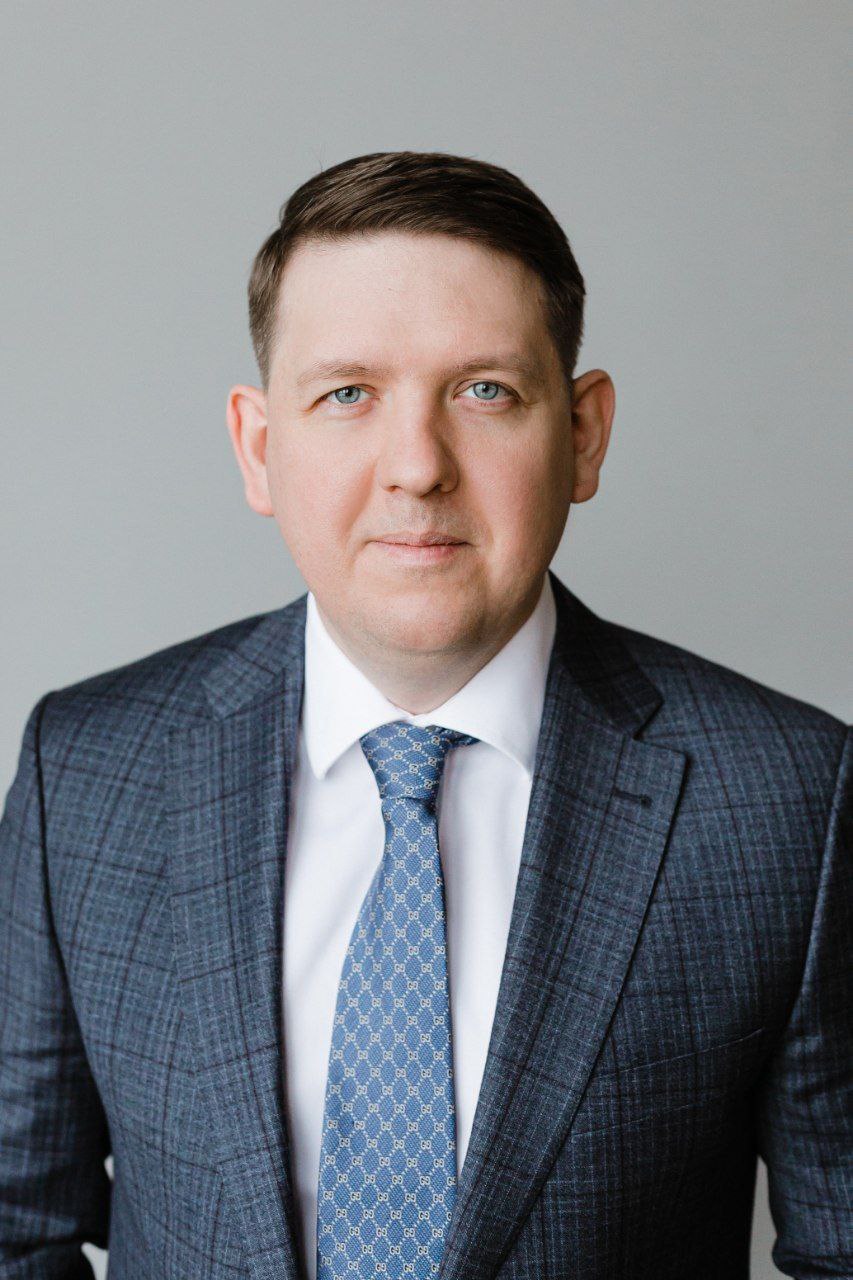
A NEW LOGIC FOR EURASIAN INTEGRATION
Leasing does not operate in a vacuum—it needs a real local supplier of machin ery and equipment. When production and service infrastructure are readily available, leasing transforms from an abstract concept into a handy way to get behind the wheel of a new car.
The fate favoured “Muras” project, put forward by a visionary Russian entrepreneur Anton Sobin and backed by Russia’s Ministry of Industry and Trade alongside Kyrgyz authorities, was unveiled in late August as a vivid example of the applied Eurasian integration. Muras, meaning “heri tage” in Kyrgyz, aims at localising the production of Russian vehicles under the brand. The choice of location is no accident: Kyrgyzstan is a rapidly growing economy, a flexible regula tory environment, and a member of the EAEU, which simplifies industrial cooperation.
Muras is not a one-off experi ment, but the next step in a series of successful localisations of Russian brands abroad. The benefits for Kyrgyzstan—a country which provided for the launch (building site, tax in centives, subsidies for leasing rates for domestic vehicles)—are tangi ble: up to 1% GDP growth by 2035, 12,000 new jobs, over 500 million KGS in annual budget revenue, and cut dependence on used vehicles. Localised production means stream lined service, affordable spare parts, and predictable ownership costs. Coupled with state support, a new vehicle becomes a real competitor to second-hand imports from Europe and Asia—both in price and quality.
A separate challenge lies in external financing. We are developing international leasing in partnership with Russia’s NP “Leasing Union” and the relevant associations of Kyrgyzstan, Armenia, Kazakhstan, and Belarus, addressing legal gaps—from double taxation to the harmonisation of practices.
Leasing does not operate in a vacuum—it needs a real local supplier of machin ery and equipment. When production and service infrastructure are readily available, leasing transforms from an abstract concept into a handy way to get behind the wheel of a new car.
The fate favoured “Muras” project, put forward by a visionary Russian entrepreneur Anton Sobin and backed by Russia’s Ministry of Industry and Trade alongside Kyrgyz authorities, was unveiled in late August as a vivid example of the applied Eurasian integration. Muras, meaning “heri tage” in Kyrgyz, aims at localising the production of Russian vehicles under the brand. The choice of location is no accident: Kyrgyzstan is a rapidly growing economy, a flexible regula tory environment, and a member of the EAEU, which simplifies industrial cooperation.
Muras is not a one-off experi ment, but the next step in a series of successful localisations of Russian brands abroad. The benefits for Kyrgyzstan—a country which provided for the launch (building site, tax in centives, subsidies for leasing rates for domestic vehicles)—are tangi ble: up to 1% GDP growth by 2035, 12,000 new jobs, over 500 million KGS in annual budget revenue, and cut dependence on used vehicles. Localised production means stream lined service, affordable spare parts, and predictable ownership costs. Coupled with state support, a new vehicle becomes a real competitor to second-hand imports from Europe and Asia—both in price and quality.
A separate challenge lies in external financing. We are developing international leasing in partnership with Russia’s NP “Leasing Union” and the relevant associations of Kyrgyzstan, Armenia, Kazakhstan, and Belarus, addressing legal gaps—from double taxation to the harmonisation of practices.
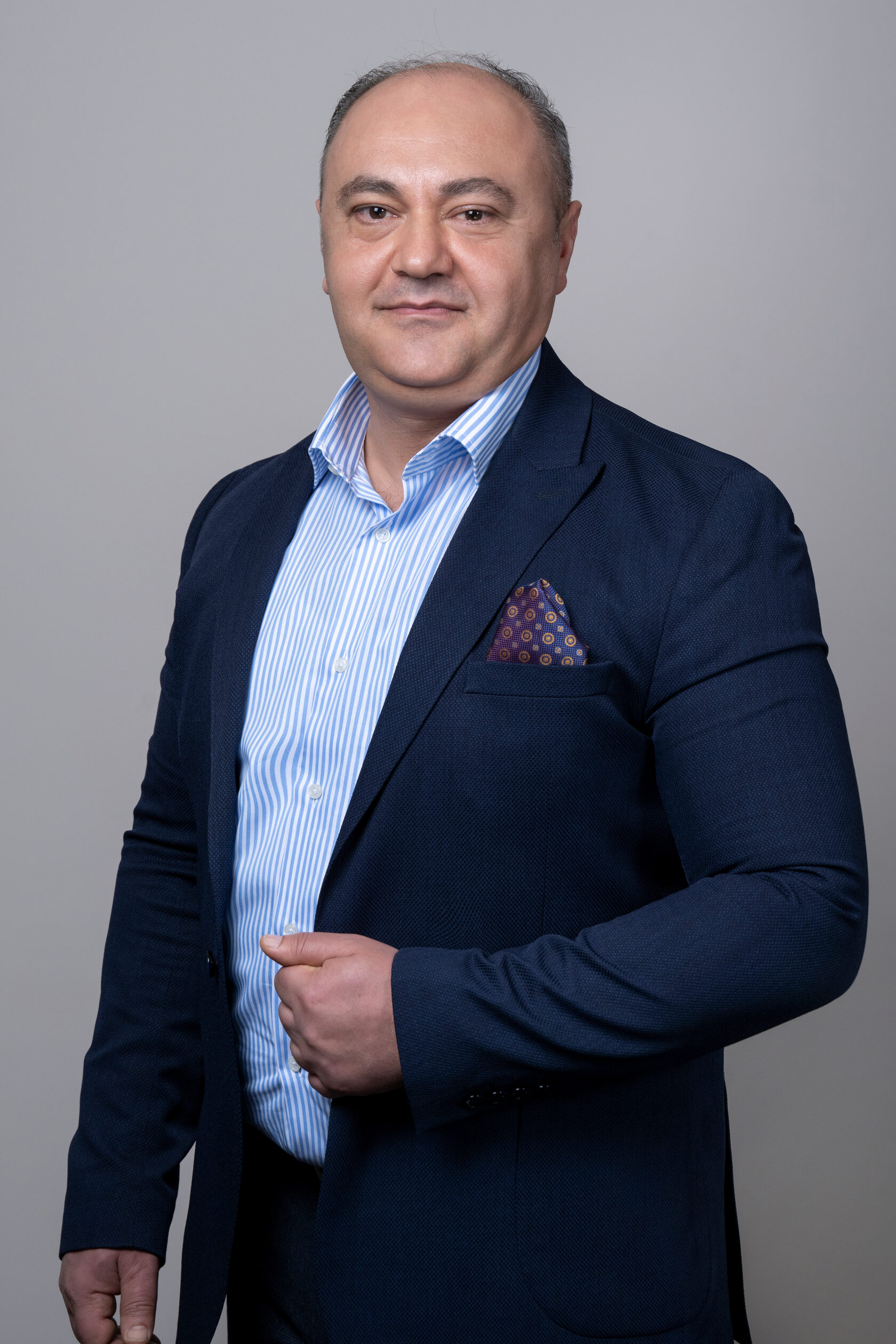
INTERNATIONAL LEASING: PLATFORM FOR GROWTH
For Armenia, international leasing is a versatile tool for expanding its industrial base and exports without being limited to the domestic market. It brings together suppliers, lessors, banks, and insurers into a single, man ageable structure where risks are distributed transparently. In cross-bor der transactions, we often deal with high-tech, field-specific assets that have low liquidity on the secondary market. Thus, collateral is effective only within a unified hedging system: insurance, service contracts, supplier guarantees, and sometimes bank participation. Where such frameworks are in place, deals proceed faster and at lower cost.
The key obstacle is the disparity of regulations and practices across different jurisdictions. There is a need in agreed definitions, recognition of leasing rights, clear risk transfer procedures, and comparable documentation and accounting standards. But this is no reason to wait for “perfect harmonisation.” Instead, we must advance gradually by refining regulatory practices. For instance, export and transit leasing facilitate transactions without restructuring national legislation. Each closed deal highlights specific inconsistencies—the issues to be systematically addressed.
I am confident that the International Leasing Council, in concert with the Russian NP “Leasing Union” and the relevant associations of Armenia, Kazakhstan, and Belarus, is a timely step. It will provide for project offices within the associations, unified checklists, and a roadmap for legal and tax matters, insurance and risk management, digital standards and workforce. This marks the shift from words to mechanics of international leasing in Armenian practice.
For Armenia, international leasing is a versatile tool for expanding its industrial base and exports without being limited to the domestic market. It brings together suppliers, lessors, banks, and insurers into a single, man ageable structure where risks are distributed transparently. In cross-bor der transactions, we often deal with high-tech, field-specific assets that have low liquidity on the secondary market. Thus, collateral is effective only within a unified hedging system: insurance, service contracts, supplier guarantees, and sometimes bank participation. Where such frameworks are in place, deals proceed faster and at lower cost.
The key obstacle is the disparity of regulations and practices across different jurisdictions. There is a need in agreed definitions, recognition of leasing rights, clear risk transfer procedures, and comparable documentation and accounting standards. But this is no reason to wait for “perfect harmonisation.” Instead, we must advance gradually by refining regulatory practices. For instance, export and transit leasing facilitate transactions without restructuring national legislation. Each closed deal highlights specific inconsistencies—the issues to be systematically addressed.
I am confident that the International Leasing Council, in concert with the Russian NP “Leasing Union” and the relevant associations of Armenia, Kazakhstan, and Belarus, is a timely step. It will provide for project offices within the associations, unified checklists, and a roadmap for legal and tax matters, insurance and risk management, digital standards and workforce. This marks the shift from words to mechanics of international leasing in Armenian practice.

FROM PILOTS TO STANDARDS AND AFFORDABLE FUNDING
For Kazakh businesses, leasing provides rapid access to equipment with out the traditional collateral, offer ing flexible payment schedules and the possibility to “blend” service and training into the deal. As companies integrate into global supply chains, leasing becomes a natural “bridge”—one which attracts investment, reduces funding costs through process standardisation, and enhances predictability for investors.
Differences in regulations across countries are a vital, yet surmountable challenge. The “people and processes” behind leasing are no less important. Standardising qualifications and mutually recognising accreditations for all—from appraisers and service com panies to insurers—is essential. When professionals in Almaty and Yerevan operate under comparable protocols, transactions proceed without “inter preters,” and risks are mitigated.
Digitalisation is another key factor: ratings, listings, standardised dis closure, and electronic workflow accelerate scoring, reduce transaction costs, and directly lower expenses. Some Kazakh leasing companies are already exchange-listed with invest ment ratings. Expanding this pool builds up trust and opens access to long-term capital. With that being said, relevant players must agree on insurance standards for cross-border projects to mitigate technological and logistical risks.
For Kazakh businesses, leasing provides rapid access to equipment with out the traditional collateral, offer ing flexible payment schedules and the possibility to “blend” service and training into the deal. As companies integrate into global supply chains, leasing becomes a natural “bridge”—one which attracts investment, reduces funding costs through process standardisation, and enhances predictability for investors.
Differences in regulations across countries are a vital, yet surmountable challenge. The “people and processes” behind leasing are no less important. Standardising qualifications and mutually recognising accreditations for all—from appraisers and service com panies to insurers—is essential. When professionals in Almaty and Yerevan operate under comparable protocols, transactions proceed without “inter preters,” and risks are mitigated.
Digitalisation is another key factor: ratings, listings, standardised dis closure, and electronic workflow accelerate scoring, reduce transaction costs, and directly lower expenses. Some Kazakh leasing companies are already exchange-listed with invest ment ratings. Expanding this pool builds up trust and opens access to long-term capital. With that being said, relevant players must agree on insurance standards for cross-border projects to mitigate technological and logistical risks.