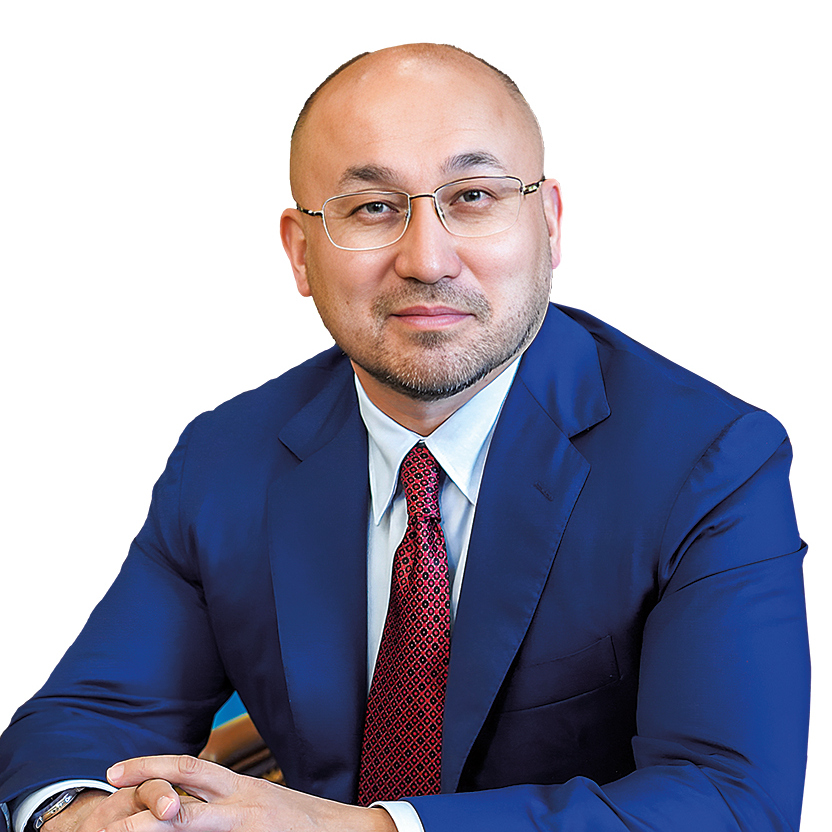
ASSUMING THE EAEU CHAIRMANSHIP, KAZAKHSTAN HAS REAFFIRMED ITS COMMITMENT TO STEADILY STRENGTHEN RESULT-ORIENTED ECONOMIC INTEGRATION.
– Dauren Abayev,Ambassador Extraordinary and Plenipotentiary of the Republic of Kazakhstan to the Russian Federation
Today’s world is wading through a recalibration of the global economy. On the one hand, deglobalisation is gaining momentum—disruptions in traditional trade and economic chains, sanctions, bloc mentality, and protectionism. On the other hand, the undeniable interdependence of nations is growing. Climate change, energy and food security cannot be addressed in isolation. In this context, economic diplomacy ceases to be a mere technical tool for advancing interests and instead becomes a key channel for supporting strategic resilience. The issue is no longer simply one of gaining market access, but of jointly managing risks and shaping new rules of the game— rules not “resetting to zero” on each political cycle.
UNION OF EQUAL OPPORTUNITIES
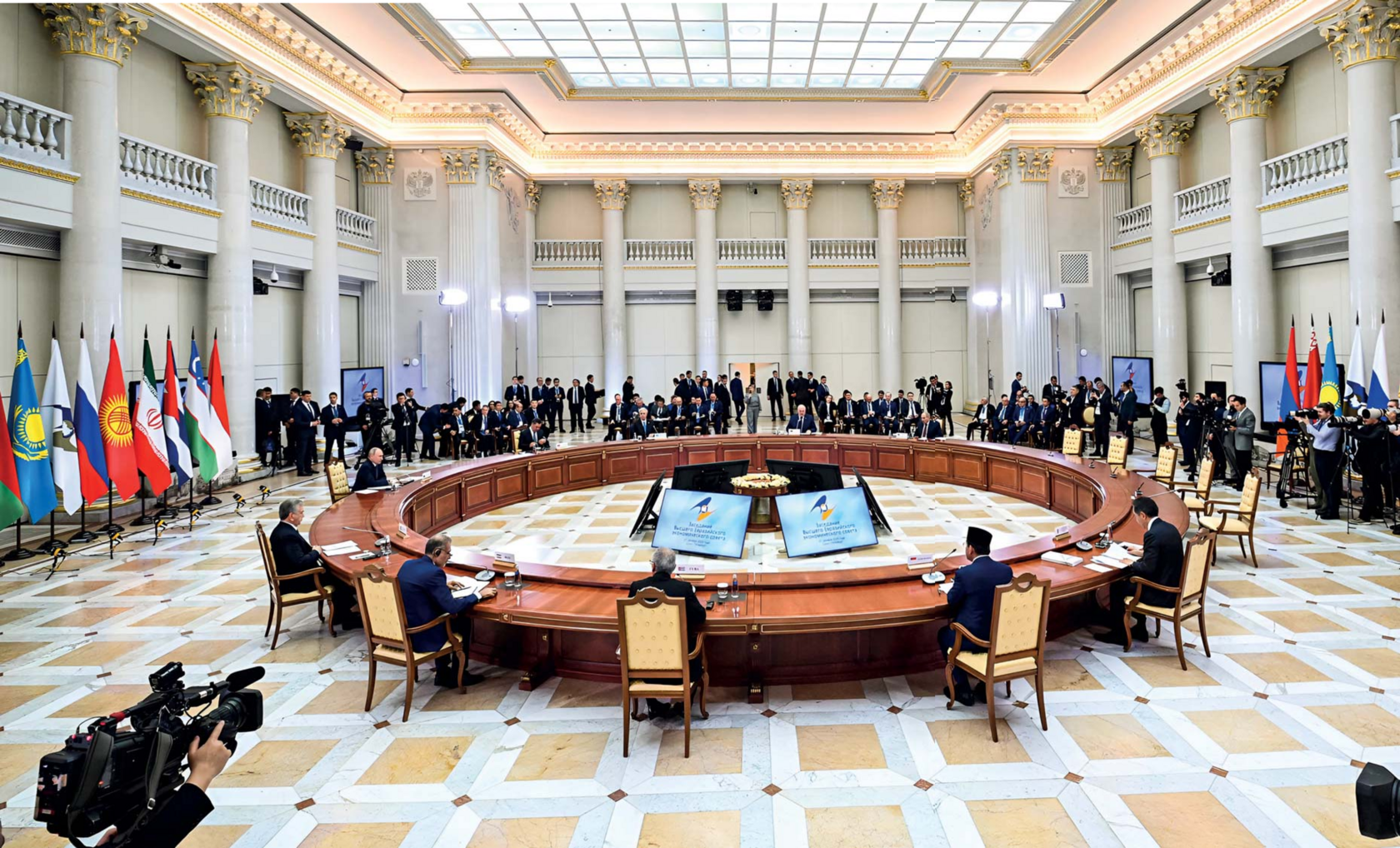
EAEU: KAZAKHSTAN’S STRATEGIC CHOICE
The Eurasian Economic Union (EAEU) seeks not to merely merge the markets but rather foster trust and harmonised rules that benefit all participants. In this respect, Kazakhstan sees the EAEU as not only a key economic platform but also a vital instrument in shaping a new architecture across Eurasia.
Put simply, the EAEU as a strategic choice that not only expands markets and attracts investment but also enhances resilience to external shocks, creating a “safety net” for national economies.
It is worth noting that the EAEU Treaty provides a robust toolkit to ensure that national interests are taken into account in decision-making. The Treaty mandates fair representation of officials from member states, and enshrines a consensus-based decision-making mechanism at all levels, which precludes any one state from dominating with member states holding veto power over decisions made by the Eurasian Economic Commission’s (EEC) Board. A host of additional regulatory tools are also in place.
It is vital to highlight that the EEC serves as a key platform for consultations, discussions, and disputes settlement in the course of economic cooperation. Through the efforts of this body and the collective endeavours of member states, trade barriers have been lowered and customs procedures simplified, fostering expanded mutual trade and investment.
TRADE AND PRODUCTION: NUMBERS SPEAK FOR THEMSELVES
The EAEU is a market of over 185 million people, with an aggregated GDP exceeding USD 2 trillion—a space that unlocks brave new opportunities.
Over the years, trade within the Union has shown steady growth and structural deepening. The transition to national currencies is proceeding apace: in 2025, such settlements accounted for more than 90% (compared to 71% in 2014).
The labour market has seen positive shifts, with more jobs, lower unemployment in absolute and relative terms. Wage growth across all EAEU member states is another indicator of positive momentum.
A key advantage of the Union is the free movement of labour, which grants citizens of Kazakhstan, Russia, and other EAEU states access to a broad labour market, facilitates qualification recognition, and enhances social protection for migrant workers.
Today, the EAEU ranks among the world’s leaders: it holds second place in oil and natural gas production, mineral fertilisers, and freshwater reserves, and fourth place in coal mining.
Agriculture, too, has delivered impressive results—over the past decade, production has grown by a quarter (25.5%). Today, the EAEU ranks third globally in wheat and potato production and fourth in meat and milk.
Integration has ensured a high level of food security, with the population’s needs for staple foods fully met by domestic resources.
Within the single market for goods, the Customs Union ensures the free movement of goods—border procedures and control have been abolished, and a uniform customs framework with harmonised export-import rules is now in place. A single system of technical regulation has been established, covering around 85% of products on the list of articles.
Yet the EAEU is more than statistics and growth rates—it is millions of people who work, study, and build their futures in our countries.
KAZAKHSTAN’S EAEU PRESIDENCY
As of 2026, Kazakhstan has assumed the EAEU chairmanship, a role it views not as a mere formality but as an opportunity to inject fresh momentum into the Union.
In his address to the heads of EAEU states on assuming the chairmanship, President of the Republic of Kazakhstan Kassym-Jomart Tokayev emphasised the country’s commitment to steadily deepen result-oriented economic integration and set out a number of priorities.
AI: A New Driver of Economic Integration
Our task is to harness these technologies for the benefit of our peoples and to make them a key driver of Eurasian economic integration.
Kazakhstan proposes leveraging AI to forecast trade flows, assess the impact of tariffs and trade agreements on economic development, and introduce smart solutions in customs administration and logistics.
In this context, a Joint Statement on the responsible development of AI within the EAEU is set to be signed at the Eurasian Economic Forum in Astana in May.
Building a Unified Transport and Logistics Framework for Eurasia
Situated at the very heart of Eurasia, Kazakhstan places strategic importance on interlinking Eurasian transport corridors, digitalising freight movement, enhancing transit capacities, and building a unified transport framework.
Consequently, urgent measures are needed to develop logistics and customs, international transport corridors, and multimodal freight solutions.
The overarching goal is for goods to move swiftly, predictably, and without undue administrative burden or bureaucratic red tape across the Union.
Kazakhstan is already advancing this agenda: the Smart Cargo pilot project has been launched, and documentation is being digitised. The platform is open for integration with the systems of our EAEU partners.
Digital Transformation of Industry and Agriculture
Industry and agribusiness remain the bedrock of our economies. Kazakhstan’s chairmanship is focused on supporting cooperative projects, funding innovative production, digitising enterprises, establishing centres of excellence, and creating demonstration platforms.
A pivotal role in delivering these goals is assigned to the EEC, which will provide holistic support to pioneering initiatives.
Removing Barriers in the Single Market
The Kazakh President has underscored the need to fully implement commitments to remove barriers within the EAEU’s single market.
The free movement of goods, services, capital, and workforce must be ensured not just in principle, but in practice. Kazakhstan will foster better monitoring mechanisms and the swift removal of restrictions.
Administrative constraints, excessive control, and artificial obstacles should not be used as a means of exerting pressure.
Expanding the Union’s International Cooperation
Free trade agreements with a number of external partners testify to the EAEU’s appeal.
The Union must continue to strengthen its position as an independent hub of economic attraction, deepening trade ties and dialogue with key regional blocs.
It is important to note that the priorities of Kazakhstan’s chairmanship are framed through the lens of AI, for it must serve as the driver for achieving a deeper integration, creating a seamless infrastructure, monitoring barriers, and bolstering the Union’s competitiveness in the global economy.
The core message is clear—the EAEU must transition from institutional development to technological and infrastructural leadership.
The Eurasian Economic Union (EAEU) seeks not to merely merge the markets but rather foster trust and harmonised rules that benefit all participants. In this respect, Kazakhstan sees the EAEU as not only a key economic platform but also a vital instrument in shaping a new architecture across Eurasia.
Put simply, the EAEU as a strategic choice that not only expands markets and attracts investment but also enhances resilience to external shocks, creating a “safety net” for national economies.
It is worth noting that the EAEU Treaty provides a robust toolkit to ensure that national interests are taken into account in decision-making. The Treaty mandates fair representation of officials from member states, and enshrines a consensus-based decision-making mechanism at all levels, which precludes any one state from dominating with member states holding veto power over decisions made by the Eurasian Economic Commission’s (EEC) Board. A host of additional regulatory tools are also in place.
It is vital to highlight that the EEC serves as a key platform for consultations, discussions, and disputes settlement in the course of economic cooperation. Through the efforts of this body and the collective endeavours of member states, trade barriers have been lowered and customs procedures simplified, fostering expanded mutual trade and investment.
TRADE AND PRODUCTION: NUMBERS SPEAK FOR THEMSELVES
The EAEU is a market of over 185 million people, with an aggregated GDP exceeding USD 2 trillion—a space that unlocks brave new opportunities.
Over the years, trade within the Union has shown steady growth and structural deepening. The transition to national currencies is proceeding apace: in 2025, such settlements accounted for more than 90% (compared to 71% in 2014).
The labour market has seen positive shifts, with more jobs, lower unemployment in absolute and relative terms. Wage growth across all EAEU member states is another indicator of positive momentum.
A key advantage of the Union is the free movement of labour, which grants citizens of Kazakhstan, Russia, and other EAEU states access to a broad labour market, facilitates qualification recognition, and enhances social protection for migrant workers.
Today, the EAEU ranks among the world’s leaders: it holds second place in oil and natural gas production, mineral fertilisers, and freshwater reserves, and fourth place in coal mining.
Agriculture, too, has delivered impressive results—over the past decade, production has grown by a quarter (25.5%). Today, the EAEU ranks third globally in wheat and potato production and fourth in meat and milk.
Integration has ensured a high level of food security, with the population’s needs for staple foods fully met by domestic resources.
Within the single market for goods, the Customs Union ensures the free movement of goods—border procedures and control have been abolished, and a uniform customs framework with harmonised export-import rules is now in place. A single system of technical regulation has been established, covering around 85% of products on the list of articles.
Yet the EAEU is more than statistics and growth rates—it is millions of people who work, study, and build their futures in our countries.
KAZAKHSTAN’S EAEU PRESIDENCY
As of 2026, Kazakhstan has assumed the EAEU chairmanship, a role it views not as a mere formality but as an opportunity to inject fresh momentum into the Union.
In his address to the heads of EAEU states on assuming the chairmanship, President of the Republic of Kazakhstan Kassym-Jomart Tokayev emphasised the country’s commitment to steadily deepen result-oriented economic integration and set out a number of priorities.
AI: A New Driver of Economic Integration
Our task is to harness these technologies for the benefit of our peoples and to make them a key driver of Eurasian economic integration.
Kazakhstan proposes leveraging AI to forecast trade flows, assess the impact of tariffs and trade agreements on economic development, and introduce smart solutions in customs administration and logistics.
In this context, a Joint Statement on the responsible development of AI within the EAEU is set to be signed at the Eurasian Economic Forum in Astana in May.
Building a Unified Transport and Logistics Framework for Eurasia
Situated at the very heart of Eurasia, Kazakhstan places strategic importance on interlinking Eurasian transport corridors, digitalising freight movement, enhancing transit capacities, and building a unified transport framework.
Consequently, urgent measures are needed to develop logistics and customs, international transport corridors, and multimodal freight solutions.
The overarching goal is for goods to move swiftly, predictably, and without undue administrative burden or bureaucratic red tape across the Union.
Kazakhstan is already advancing this agenda: the Smart Cargo pilot project has been launched, and documentation is being digitised. The platform is open for integration with the systems of our EAEU partners.
Digital Transformation of Industry and Agriculture
Industry and agribusiness remain the bedrock of our economies. Kazakhstan’s chairmanship is focused on supporting cooperative projects, funding innovative production, digitising enterprises, establishing centres of excellence, and creating demonstration platforms.
A pivotal role in delivering these goals is assigned to the EEC, which will provide holistic support to pioneering initiatives.
Removing Barriers in the Single Market
The Kazakh President has underscored the need to fully implement commitments to remove barriers within the EAEU’s single market.
The free movement of goods, services, capital, and workforce must be ensured not just in principle, but in practice. Kazakhstan will foster better monitoring mechanisms and the swift removal of restrictions.
Administrative constraints, excessive control, and artificial obstacles should not be used as a means of exerting pressure.
Expanding the Union’s International Cooperation
Free trade agreements with a number of external partners testify to the EAEU’s appeal.
The Union must continue to strengthen its position as an independent hub of economic attraction, deepening trade ties and dialogue with key regional blocs.
It is important to note that the priorities of Kazakhstan’s chairmanship are framed through the lens of AI, for it must serve as the driver for achieving a deeper integration, creating a seamless infrastructure, monitoring barriers, and bolstering the Union’s competitiveness in the global economy.
The core message is clear—the EAEU must transition from institutional development to technological and infrastructural leadership.
Cooperation between Kazakhstan and Russia within the EAEU is fundamental, as evidenced by the deep interdependence of their economies and the steady growth in joint projects.
COOPERATION WITH RUSSIA WITHIN EAEU
For us, the EAEU is a network of complementary routes—transport, energy, and technologies. The region must serve as the backbone of our shared development.
In this regard, cooperation with Russia—as our largest neighbour and strategic partner within the EAEU—remains fundamental. Russia accounts for around 90% of Kazakhstan’s external trade turnover within the Union, a figure that speaks to the deep links between our economies.
Between 2015 and 2025, the number of joint and cooperative projects involving Kazakh and Russian partners has nearly doubled, with the overall portfolio of agreements estimated at billions of dollars.
Amid the transformation of global markets, a new model of industrial cooperation is taking shape—one that moves beyond mere commodity trade towards joint production and localisation of high tech value added chains.
Thus, our countries are bound not only by shared history and person-to-person contacts but also by profound interdependence in industry, energy, and logistics.
Kazakhstan, alongside its partners, is developing several interconnected corridors—from traditional routes via Russia to the Trans-Caspian route towards the South and Southeast, connecting arteries from China to Europe. Implementing logistics projects calls for a finely tuned and carefully considered approach to economic diplomacy, one capable of aligning the interests of state and business across all Union countries.
Our shared task is not merely to harmonise tariffs and regulations but to ensure the seamless integration of transport corridors, so that every new kilometre of route contributes to the region’s overall competitiveness.
All in all, integration within the EAEU has enabled Kazakhstan to strengthen its stance as a regional manufacturing, logistics, and investment hub.
CHALLENGES AND RESPONSES: EAEU BY MID-CENTURY
It is fitting that in the year of Kazakhstan’s chairmanship—2026—the EAEU embarks on a brand-new phase of its development.
The implementation of the Strategic Directions for Developing the Eurasian Economic Integration until 2025 has concluded, laying a robust institutional and economic foundation for the Union.
Now, the EAEU is advancing to the next stage—endorsing the Declaration on further development of economic processes “Eurasian Economic Path”—which sets strategic benchmarks through to 2030 and beyond, up to 2045.
Kazakhstan envisions the EAEU as a self-sufficient, technologically advanced, and globally competitive macro-region capable of securing a high standard of living for its citizens. Integration must deliver tangible economic dividends.
As it assumes the chairmanship, Kazakhstan is guided by the principle that the EAEU strength lies in trust, mutual respect for interests, and a result-oriented approach.
We are confident that, through joint efforts, we can take Eurasian economic integration to a new level— one marked by sustainable development, technological modernisation, and global competitiveness.
Eurasian economic integration is unfolding amid a complex geopolitical landscape. Yet it is precisely in such circumstances that the EAEU’s resilience and potential become evident, providing member states with additional resources to adapt to external shocks and pursue internal modernisation.
Experts forecast that, between 2030 and 2045, the EAEU will significantly strengthen its stance in the global economy—provided we continue to advance along the path of mutual trust and respect for interests.
For Kazakhstan, it is vital that the EAEU remains a union of equal opportunities, where the voices of all member states are heard—and where the synergy of national economies strengthens us all.
As Ambassador of the Republic of Kazakhstan to the Russian Federation, I am convinced that it is harmonious economic coexistence, joint infrastructure projects, and person-to-person contacts that shape a new configuration of the Greater Eurasia—one rooted in competitiveness, openness, and equitable partnership.