
Svetlana Chupsheva, Director General, Agency for Strategic Initiatives
«BUILDING FUTURE COHERENTLY: TURNING CHALLENGES INTO OPPORTUNITIES»
— Ms. Chupsheva, as you know, the “Eurasian Dialogue” has traditionally served as a platform for discussing key vectors of economic development. This issue is dedicated to “Strategic Initiatives: Challenges and Solutions,” with a focus on practical outcomes and explicit case studies. Today, we would like to explore how Russia’s investment appeal is changing and what place it occupies in international relations, particularly in the Eurasian context.
The Agency for Strategic Initiatives (ASI) has established itself as an effective tool for launching and scaling projects that are shaping a new architecture for Russia’s long-term and sustainable development. What opportunities does your Agency see for deepening cooperation within the Eurasian Economic Union (EAEU)? In which industries do you see the greatest potential for creating Russian-Eurasian alliances?
— The Agency’s mission is to support and develop strategic initiatives and projects that drive Russia’s growth and international cooperation. The EAEU nations hold tremendous potential for advancing joint projects. Collaboration within this macro-region is convenient and straightforward—logistics are simpler, processes are more transparent, and geopolitically, such interaction is vital for the security of all neighbours. An undeniable indicator here is the 4.2% growth in the EAEU’s aggregate GDP in 2024, alongside annual double-digit increases in mutual trade among its states. While global trade chains are being disrupted and rebuilt at the regional level, Greater Eurasia is emerging as a prime example of this “regionalization,” where intra-regional trade is growing faster than with the outside world.
As for specific sectors, the digital revolution—particularly in AI, drones, robotics, and space-based communications—is gaining momentum and reshaping our traditional understanding of industries, challenging security and sovereignty. This demands new approaches to international cooperation, particularly in technology and many other fields. It is imperative that we learn to address the pressing issues facing our countries and shape our shared future through modern technology. Our Agency has a big portfolio of relevant projects and practices, and we are open to collaboration and partnerships with our colleagues.
Another critical priority is demographic preservation and family support, which has become the cornerstone of Russia’s demographic policy. Our National Social Initiative is built on the principle of prioritising support for families with children. If we want to preserve our population, every policy decision must be evaluated in terms of its impact on families. We work closely with Russian regions, analysing local legislation and support measures, and jointly developing specific proposals for fine-tuning them. We believe that many of our social programmes and practices have strong potential for international scaling. For instance, inclusive development—improving the quality of life for people with disabilities—is a key priority of our strategy.
We have reinforced mechanisms such as the National Inclusive Covenant, a public declaration by companies to develop programmes and tools that expand accessibility for customers, visitors, and employees with disabilities. Our goal is to achieve the employment target of 10,000 people with disabilities, including through the Covenant. Around 1,500 Russian companies have already signed it, and we are ready to replicate this mechanism in the EAEU, helping to improve the quality of life for citizens with disabilities across partner nations.
The Agency for Strategic Initiatives (ASI) has established itself as an effective tool for launching and scaling projects that are shaping a new architecture for Russia’s long-term and sustainable development. What opportunities does your Agency see for deepening cooperation within the Eurasian Economic Union (EAEU)? In which industries do you see the greatest potential for creating Russian-Eurasian alliances?
— The Agency’s mission is to support and develop strategic initiatives and projects that drive Russia’s growth and international cooperation. The EAEU nations hold tremendous potential for advancing joint projects. Collaboration within this macro-region is convenient and straightforward—logistics are simpler, processes are more transparent, and geopolitically, such interaction is vital for the security of all neighbours. An undeniable indicator here is the 4.2% growth in the EAEU’s aggregate GDP in 2024, alongside annual double-digit increases in mutual trade among its states. While global trade chains are being disrupted and rebuilt at the regional level, Greater Eurasia is emerging as a prime example of this “regionalization,” where intra-regional trade is growing faster than with the outside world.
As for specific sectors, the digital revolution—particularly in AI, drones, robotics, and space-based communications—is gaining momentum and reshaping our traditional understanding of industries, challenging security and sovereignty. This demands new approaches to international cooperation, particularly in technology and many other fields. It is imperative that we learn to address the pressing issues facing our countries and shape our shared future through modern technology. Our Agency has a big portfolio of relevant projects and practices, and we are open to collaboration and partnerships with our colleagues.
Another critical priority is demographic preservation and family support, which has become the cornerstone of Russia’s demographic policy. Our National Social Initiative is built on the principle of prioritising support for families with children. If we want to preserve our population, every policy decision must be evaluated in terms of its impact on families. We work closely with Russian regions, analysing local legislation and support measures, and jointly developing specific proposals for fine-tuning them. We believe that many of our social programmes and practices have strong potential for international scaling. For instance, inclusive development—improving the quality of life for people with disabilities—is a key priority of our strategy.
We have reinforced mechanisms such as the National Inclusive Covenant, a public declaration by companies to develop programmes and tools that expand accessibility for customers, visitors, and employees with disabilities. Our goal is to achieve the employment target of 10,000 people with disabilities, including through the Covenant. Around 1,500 Russian companies have already signed it, and we are ready to replicate this mechanism in the EAEU, helping to improve the quality of life for citizens with disabilities across partner nations.
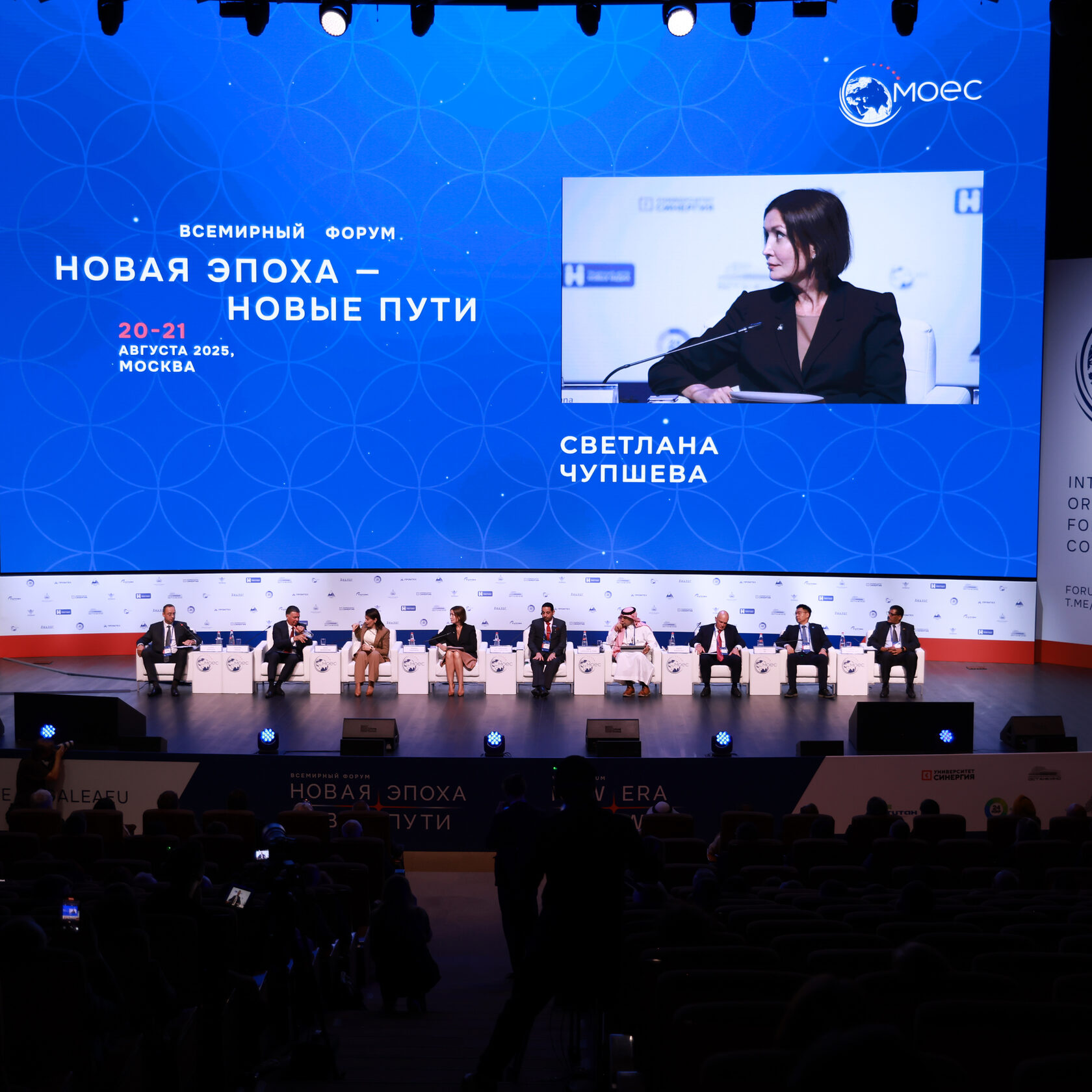
A further critical area is ecology and climate. Since 2023, we have been running the “Green Eurasia” competition in partnership with the Eurasian Economic Commission. It is a platform where the EAEU member states showcase their best practices in ecology and climate action. To date, nearly a thousand advanced climate practices have been registered.
Another cornerstone for international collaboration is energy. Russia’s approach remains consistent: every nation should have access to high-quality, reliable, affordable, and clean energy.
It is on this principle that we have advanced the concept of “energy justice.” As the technological and industrial landscape undergoes a profound shift, we believe that energy justice is a key imperative. Achieving it demands mutually beneficial international cooperation, aimed at widely integrating new technologies and practices, enhancing labour productivity, digitally transforming manufacturing and infrastructure, advancing AI, strengthening computation capacity, developing remote territories and protecting the natural environment.
Our success is built on the “Three COs,” i.e. Co-Supply (efficient integration and shared use of both traditional energy and renewables), Co-Organisation (digital platform-based energy management to enhance system reliability and efficiency), Co-Development (continuous adaptation of energy technologies and markets to evolving consumer demands and emerging challenges).
The nations of Greater Eurasia are uniquely positioned to become leaders in establishing new, fair mechanisms
for international energy cooperation and aligning diverse interests.
One of the most promising areas of mutually advantageous cooperation is unmanned systems. This year, we hosted an exhibition—first in Moscow, later at the International Forum of Unmanned Systems—where we introduced our foreign colleagues to a compelling “turnkey industry” concept, which leverages the expertise of leading Russian companies to offer a comprehensive package: rapid deployment of local production for cutting-edge drones and components, integration of regulatory frameworks, scenarios for civilian and specialised application, and educational standards.
Another area with tremendous economic and humanitarian potential is creative economy. Joint projects in creative industries—blending traditions, innovations, and competencies from different nations—can lay the foundation for long-term economic partnerships.
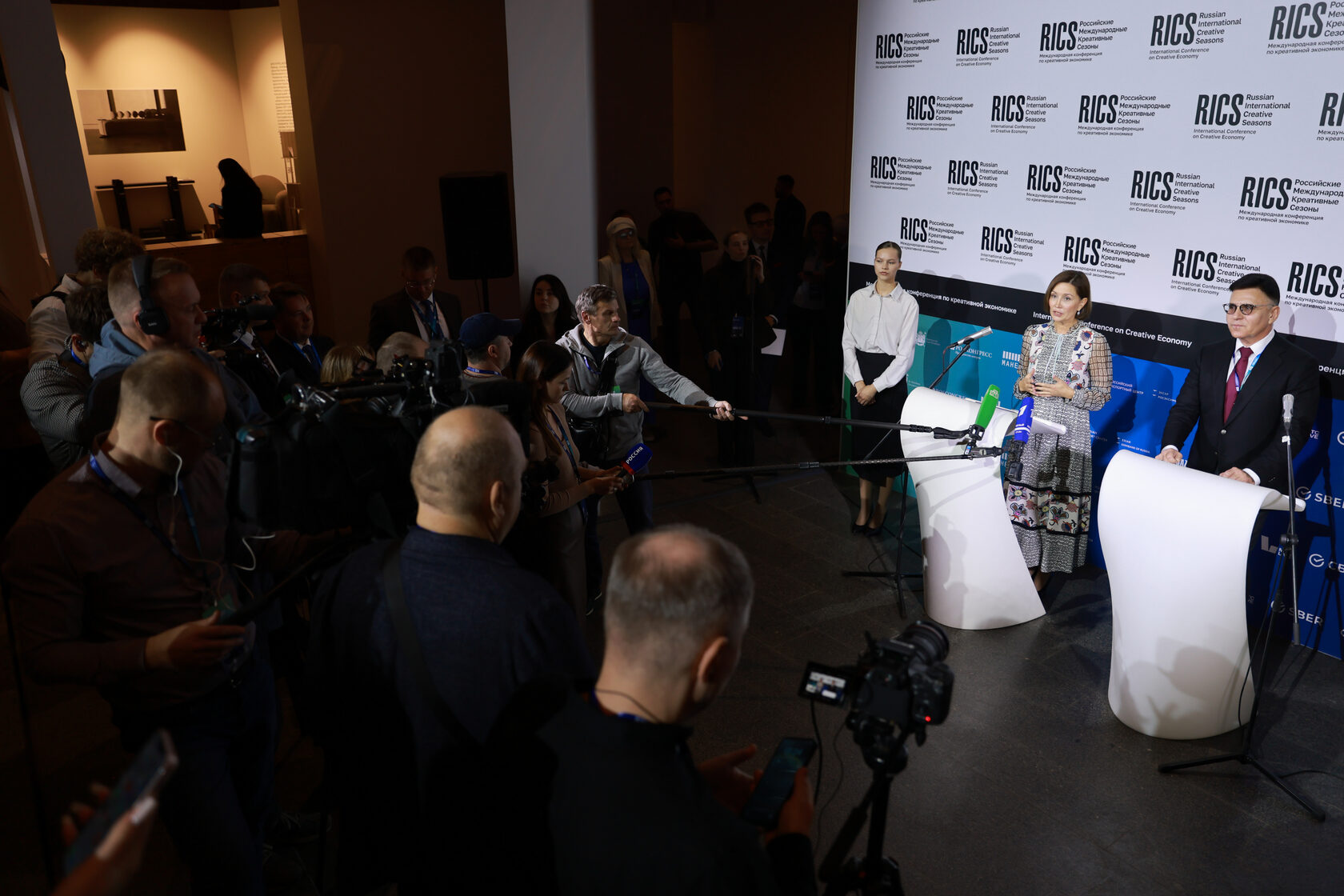
Having developed the Regional Standard for the creative industries, our agency has gained extensive experience in studying these sectors and shaping relevant legislation. We are eager to share it with other nations. In October, we held the first international conference on the creative economy in St. Petersburg, which saw broad participation from nations across the EAEU.
Member states are already demonstrating that cooperation is not merely a matter of economic expediency, but a strategic choice, rooted in shared values, history, and mutual trust.
Another cornerstone for international collaboration is energy. Russia’s approach remains consistent: every nation should have access to high-quality, reliable, affordable, and clean energy.
It is on this principle that we have advanced the concept of “energy justice.” As the technological and industrial landscape undergoes a profound shift, we believe that energy justice is a key imperative. Achieving it demands mutually beneficial international cooperation, aimed at widely integrating new technologies and practices, enhancing labour productivity, digitally transforming manufacturing and infrastructure, advancing AI, strengthening computation capacity, developing remote territories and protecting the natural environment.
Our success is built on the “Three COs,” i.e. Co-Supply (efficient integration and shared use of both traditional energy and renewables), Co-Organisation (digital platform-based energy management to enhance system reliability and efficiency), Co-Development (continuous adaptation of energy technologies and markets to evolving consumer demands and emerging challenges).
The nations of Greater Eurasia are uniquely positioned to become leaders in establishing new, fair mechanisms
for international energy cooperation and aligning diverse interests.
One of the most promising areas of mutually advantageous cooperation is unmanned systems. This year, we hosted an exhibition—first in Moscow, later at the International Forum of Unmanned Systems—where we introduced our foreign colleagues to a compelling “turnkey industry” concept, which leverages the expertise of leading Russian companies to offer a comprehensive package: rapid deployment of local production for cutting-edge drones and components, integration of regulatory frameworks, scenarios for civilian and specialised application, and educational standards.
Another area with tremendous economic and humanitarian potential is creative economy. Joint projects in creative industries—blending traditions, innovations, and competencies from different nations—can lay the foundation for long-term economic partnerships.
Having developed the Regional Standard for the creative industries, our agency has gained extensive experience in studying these sectors and shaping relevant legislation. We are eager to share it with other nations. In October, we held the first international conference on the creative economy in St. Petersburg, which saw broad participation from nations across the EAEU.
Member states are already demonstrating that cooperation is not merely a matter of economic expediency, but a strategic choice, rooted in shared values, history, and mutual trust.
Collaborating on technological sovereignty, climate resilience, and innovation is opening new vistas for the entire macro-region. Space exploration, digitalisation, sovereign technologies, and other priorities are defining the trajectory along which our nations are advancing together, strengthening not only their economies but also the multipolar global architecture. Designing this future systematically is of key importance, as only then can we transform the challenges of our time into opportunities for generations to come.
This year, as part of the “Archipelago 2025” educational intensive, we hosted the “Shared Future – 2050” International Foresight event. The goal was to develop a common vision of the future, based on the national technological priorities of participating countries, and to devise tools for cross-border collaboration. Twenty-five nations engaged in the foresight in three languages—Russian, English, and Chinese.
They analysed global challenges, threats, and opportunities, identified priorities for technological development in areas such as AI, robotics, and unmanned systems, and designed models for national technological sovereignty. A key aspect was building a shared vision of the future through collaboration with other teams, as well as identifying mechanisms for international cooperation. Special attention was given to the concept of “shared technological sovereignty,” which seeks to strike a balance between national interests and global partnership.
The final declaration, adopted by the foresight participants, outlines a commitment to pursue major future-oriented goals, such as population protection and family support, energy justice, a seamless digital sky, environmental conservation, common standards, and network educational programmes.
— How has the philosophy of import substitution evolved within the Agency? Has there been a shift from simply replacing goods to creating “sovereign technological platforms”? And how can the potential of friendly foreign investors be realised in this regard?
— We advocate for a model of technological sovereignty that each country can design and implement according to its unique needs, while staying open to international cooperation.
Through the National Technology Initiative (NTI), in collaboration with a broad pool of experts, we have already developed over 20 models of technological sovereignty across various sectors and fields—including energy, unmanned aerial and space systems, biotechnology, cybersecurity, and others. In total, more than 1,000 critical technologies have been integrated into these pyramid models.At the core of this model is a universal pyramid, serving as a universal language for discussing the future of technology—the well-known Maslow’s hierarchy of human needs. We adapted this concept to create a pyramid of state priorities, reflecting the key challenges that must be addressed to ensure citizen well-being and sustainable development.
The technologies are distributed across the levels, identifying those that will have the most significant impact on technological sovereignty beyond 2030. They are organised into nine distinct groups, forming a comprehensive model for achieving technological sovereignty. For a nation to successfully build this sovereignty, it must have
what we call the technological “keys”—fundamental scientific research, robust educational programmes, up-to-date norms, and the widespread use of AI and innovative materials.
This technological sovereignty model has already been presented to heads of state in Belarus and Uzbekistan,
as well as to the international community at the BRICS Business Council. It was also incorporated into the 2024 Kazan Declaration. Each country can now develop its own tailored models of technological sovereignty and leadership, drawing upon the methodology we have proposed.
This year, as part of the “Archipelago 2025” educational intensive, we hosted the “Shared Future – 2050” International Foresight event. The goal was to develop a common vision of the future, based on the national technological priorities of participating countries, and to devise tools for cross-border collaboration. Twenty-five nations engaged in the foresight in three languages—Russian, English, and Chinese.
They analysed global challenges, threats, and opportunities, identified priorities for technological development in areas such as AI, robotics, and unmanned systems, and designed models for national technological sovereignty. A key aspect was building a shared vision of the future through collaboration with other teams, as well as identifying mechanisms for international cooperation. Special attention was given to the concept of “shared technological sovereignty,” which seeks to strike a balance between national interests and global partnership.
The final declaration, adopted by the foresight participants, outlines a commitment to pursue major future-oriented goals, such as population protection and family support, energy justice, a seamless digital sky, environmental conservation, common standards, and network educational programmes.
— How has the philosophy of import substitution evolved within the Agency? Has there been a shift from simply replacing goods to creating “sovereign technological platforms”? And how can the potential of friendly foreign investors be realised in this regard?
— We advocate for a model of technological sovereignty that each country can design and implement according to its unique needs, while staying open to international cooperation.
Through the National Technology Initiative (NTI), in collaboration with a broad pool of experts, we have already developed over 20 models of technological sovereignty across various sectors and fields—including energy, unmanned aerial and space systems, biotechnology, cybersecurity, and others. In total, more than 1,000 critical technologies have been integrated into these pyramid models.At the core of this model is a universal pyramid, serving as a universal language for discussing the future of technology—the well-known Maslow’s hierarchy of human needs. We adapted this concept to create a pyramid of state priorities, reflecting the key challenges that must be addressed to ensure citizen well-being and sustainable development.
The technologies are distributed across the levels, identifying those that will have the most significant impact on technological sovereignty beyond 2030. They are organised into nine distinct groups, forming a comprehensive model for achieving technological sovereignty. For a nation to successfully build this sovereignty, it must have
what we call the technological “keys”—fundamental scientific research, robust educational programmes, up-to-date norms, and the widespread use of AI and innovative materials.
This technological sovereignty model has already been presented to heads of state in Belarus and Uzbekistan,
as well as to the international community at the BRICS Business Council. It was also incorporated into the 2024 Kazan Declaration. Each country can now develop its own tailored models of technological sovereignty and leadership, drawing upon the methodology we have proposed.
— Beyond attracting investment, what role does the Agency see for the export of Russian technological and managerial solutions to the markets of the EAEU, BRICS+, and SCO? Which know-how is currently in the highest demand?
— Such is a strategic priority for strengthening technological sovereignty and building mutually beneficial partnerships with our allies in the EAEU, BRICS+, and SCO. We actively support the export of solutions that drive development, digital transformation, and improved quality of life—particularly in areas where Russia holds strong competencies and competitive advantages. Nowadays, the most sought-after solutions are in information security, smart city technologies, agricultural tech, and remote education, all adapted to the specific needs of local markets.
A key indicator of demand for these solutions comes from the results of our international competitions, such as Green Eurasia and the BRICS Solutions Awards. These serve to identify leaders in green technologies, sustainable development for EAEU member states, bioeconomy innovations, and high-tech industrial solutions.
Our collaborative efforts extend across a broad agenda, including with EAEU observer states. Uzbekistan with its Agency for Strategic Reforms under the President of the Republic is a case in point. Last year, the first overseas “Point of Attraction” was inaugurated in Tashkent at the INNO Technopark to strengthen ties between our nations in science, education, and economy. It is a unique space where companies gain access to talent pools, innovations, and international cooperation, while the state benefits from tools to mitigate staff shortages, to balance the labour market, to foster innovation and bolster international relations.
This April, we signed a cooperation roadmap with Uzbekistan’s National Agency for Social Protection under the President. The agreement focuses on upskilling specialists in corrective pedagogy, developing inclusive educational practices, and conducting joint research on employ ment opportunities for people with disabilities.
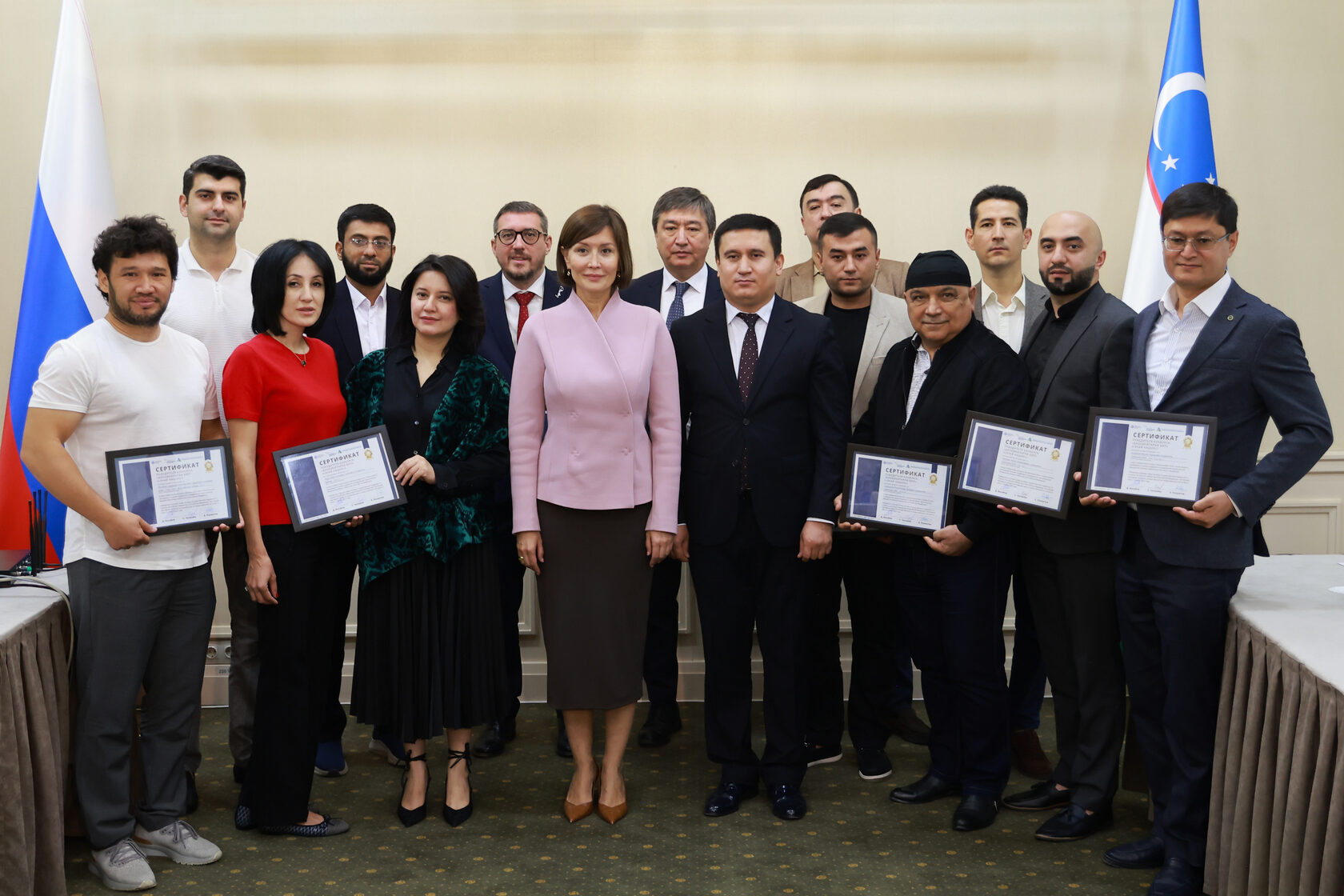
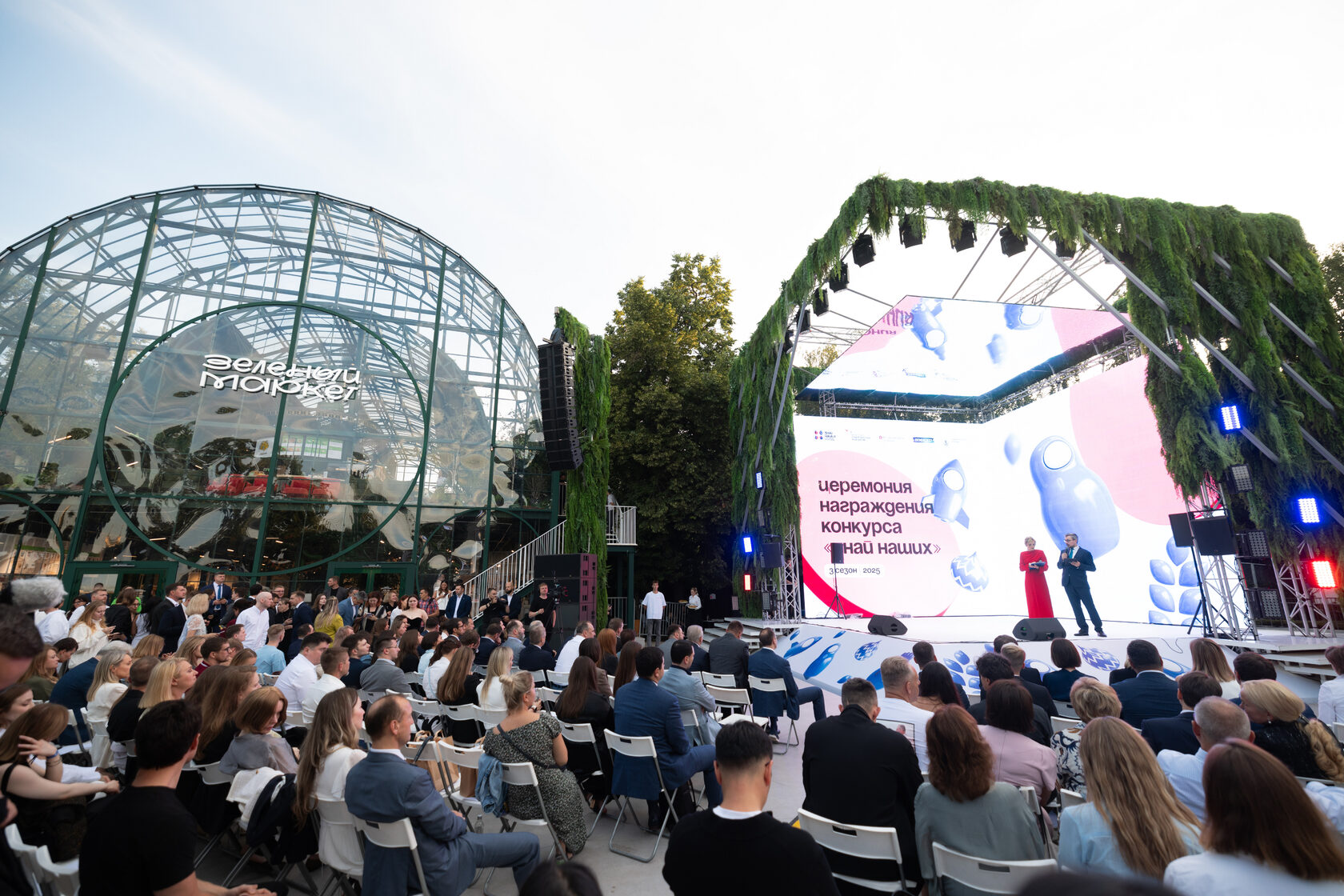
Additionally, Uzbekistan became the first country to adopt our “Know Our Brands” competition (“Biznikilarni Bil”). And this year, we jointly awarded its winners, who will receive support not only from Uzbek partners but also from Russian organisers, including through the ASI and Wildberries&Russ “Growth Platform” project.
— Turning from the international agenda to domestic priorities, the Agency focuses on improving the business climate across Russia. Today, investors are looking beyond just resources—they’re assessing talent, infrastructure, and a region’s readiness for innovation. What is the current “key to attractiveness” for Russia’s regions?
— You’re absolutely right, a region’s investment appeal is now assessed by investors in a holistic manner. While each region has its own geography, climate, and logistics, there is a core set of business aspects that must be well-structured everywhere. To attract and retain investors, regional administration must continuously monitor and refine these processes.
— Such is a strategic priority for strengthening technological sovereignty and building mutually beneficial partnerships with our allies in the EAEU, BRICS+, and SCO. We actively support the export of solutions that drive development, digital transformation, and improved quality of life—particularly in areas where Russia holds strong competencies and competitive advantages. Nowadays, the most sought-after solutions are in information security, smart city technologies, agricultural tech, and remote education, all adapted to the specific needs of local markets.
A key indicator of demand for these solutions comes from the results of our international competitions, such as Green Eurasia and the BRICS Solutions Awards. These serve to identify leaders in green technologies, sustainable development for EAEU member states, bioeconomy innovations, and high-tech industrial solutions.
Our collaborative efforts extend across a broad agenda, including with EAEU observer states. Uzbekistan with its Agency for Strategic Reforms under the President of the Republic is a case in point. Last year, the first overseas “Point of Attraction” was inaugurated in Tashkent at the INNO Technopark to strengthen ties between our nations in science, education, and economy. It is a unique space where companies gain access to talent pools, innovations, and international cooperation, while the state benefits from tools to mitigate staff shortages, to balance the labour market, to foster innovation and bolster international relations.
This April, we signed a cooperation roadmap with Uzbekistan’s National Agency for Social Protection under the President. The agreement focuses on upskilling specialists in corrective pedagogy, developing inclusive educational practices, and conducting joint research on employ ment opportunities for people with disabilities.
Additionally, Uzbekistan became the first country to adopt our “Know Our Brands” competition (“Biznikilarni Bil”). And this year, we jointly awarded its winners, who will receive support not only from Uzbek partners but also from Russian organisers, including through the ASI and Wildberries&Russ “Growth Platform” project.
— Turning from the international agenda to domestic priorities, the Agency focuses on improving the business climate across Russia. Today, investors are looking beyond just resources—they’re assessing talent, infrastructure, and a region’s readiness for innovation. What is the current “key to attractiveness” for Russia’s regions?
— You’re absolutely right, a region’s investment appeal is now assessed by investors in a holistic manner. While each region has its own geography, climate, and logistics, there is a core set of business aspects that must be well-structured everywhere. To attract and retain investors, regional administration must continuously monitor and refine these processes.
First, regions must optimise internal operations and build effective communication between local authorities,
utility providers, and federal bodies on the ground. The more transparent this system is—with fewer so-called administrative silos—the easier and more appealing it becomes for potential investors to launch and run businesses.
Second, government services need to become digital. Regional authorities must constantly improve data processing and service delivery. The less time entrepreneurs spend navigating paperwork and accessing information, the wider the pool of businesses willing to invest in the region.
Third, and most challenging, is the targeted improvement of regional infrastructure and the implementation of tailored support measures. It entails improving regional infrastructure and implementing the bespoke measures, which demands a qualitative analysis of the work described.
Today, the vast majority of the regions are actively working to enhance their investment appeal. The Agency is not only continuously monitoring progress but also accumulating the most effective administrative practices and assisting regions with their implementation. We are now embarking on a new journey under the National Target Model for Business Conditions, as regions will achieve specific benchmarks in their business environments through federal reforms by the government and their own work on the ground.
— When it comes to reducing investment risks, what matters more—federal support or governors’ initiatives, particularly in regions with less diversified economies? Which regions in Russia, excluding metropolitan agglomerations, are leading the way in creating a favourable climate for investment?
— Success always depends on both—the governor’s team and federal-level decisions. That’s why the ongoing monitoring of the living and business environment is so crucial. The Agency has been engaged in this work for years, and we now have two national rankings—one for regional investment attractiveness and another for quality of life across regions.
We’ve seen that well-informed governance decisions can drive remarkable progress. For instance, in recent years, Sakhalin, Nizhny Novgorod, and Novgorod regions have demonstrated outstanding results in enhancing their business climates.Another notable example is Saratov. Over the past few years, it has consistently improved conditions for new businesses and enhanced the quality of government services for entrepreneurs. It has actively adopted best practices from leading regions like Chelyabinsk and Tyumen, particularly in seamless interaction between regional investment authorities and investors.
As a result, the time and number of procedures within the investment-construction cycle have been reducing every year, net investments have increased by 20%, and, for the first time, the region has entered the top 10 of the National Investment Rating. Saratov has now developed its own land and property regulations, which it is sharing with other regions.
utility providers, and federal bodies on the ground. The more transparent this system is—with fewer so-called administrative silos—the easier and more appealing it becomes for potential investors to launch and run businesses.
Second, government services need to become digital. Regional authorities must constantly improve data processing and service delivery. The less time entrepreneurs spend navigating paperwork and accessing information, the wider the pool of businesses willing to invest in the region.
Third, and most challenging, is the targeted improvement of regional infrastructure and the implementation of tailored support measures. It entails improving regional infrastructure and implementing the bespoke measures, which demands a qualitative analysis of the work described.
Today, the vast majority of the regions are actively working to enhance their investment appeal. The Agency is not only continuously monitoring progress but also accumulating the most effective administrative practices and assisting regions with their implementation. We are now embarking on a new journey under the National Target Model for Business Conditions, as regions will achieve specific benchmarks in their business environments through federal reforms by the government and their own work on the ground.
— When it comes to reducing investment risks, what matters more—federal support or governors’ initiatives, particularly in regions with less diversified economies? Which regions in Russia, excluding metropolitan agglomerations, are leading the way in creating a favourable climate for investment?
— Success always depends on both—the governor’s team and federal-level decisions. That’s why the ongoing monitoring of the living and business environment is so crucial. The Agency has been engaged in this work for years, and we now have two national rankings—one for regional investment attractiveness and another for quality of life across regions.
We’ve seen that well-informed governance decisions can drive remarkable progress. For instance, in recent years, Sakhalin, Nizhny Novgorod, and Novgorod regions have demonstrated outstanding results in enhancing their business climates.Another notable example is Saratov. Over the past few years, it has consistently improved conditions for new businesses and enhanced the quality of government services for entrepreneurs. It has actively adopted best practices from leading regions like Chelyabinsk and Tyumen, particularly in seamless interaction between regional investment authorities and investors.
As a result, the time and number of procedures within the investment-construction cycle have been reducing every year, net investments have increased by 20%, and, for the first time, the region has entered the top 10 of the National Investment Rating. Saratov has now developed its own land and property regulations, which it is sharing with other regions.
Beyond an efficient regulatory framework for construction, the overall interaction between investors and regulatory or law enforcement bodies also impacts the business environment. The Amur region, for example, has taken on the challenge of curbing excessive pressure on business by launching a programme to identify and resolve problem cases. The result speaks for itself: over three years, the region has reduced unjustified pressure by nearly 90% and cut corruption involving government agencies or natural monopolies by 72%.
This initiative—recognised as one of the best—propelled Amur to second place in the “Business Protection” category of the National Investment Rating. The quality of governance has also reflected in investment inflows: last year, the region attracted nearly a trillion roubles (956 billion roubles), accounting for 24% of total investments in the Far Eastern regions.
This year, we are working with updated methodologies for national ratings, which are aligned with Russia’s new national development goals and the performance indicators for regional governors. Our ratings serve as an integrated tool for evaluating how effectively regions are improving the business climate and the quality of life. Ultimately, our goal is to bridge the gap between leading regions and those lagging behind across all key metrics.
The Investment Rating covers every aspect of running a business—from land lease and state permits to regional support, infrastructure development, competition, and administrative pressures. It also includes the largest entrepreneur survey in the country, which, alongside official statistics, is used to create individual analytical profiles for each region. We are continuously ameliorating our approach to make our findings more detailed. For instance, starting this year, we provide regions with analyses of set timeframes and procedures within the investment-construction cycle, as identified through our surveys.
This enables government bodies to adjust their work in a more targeted way. Furthermore, from 2025, the Russian Government plans to set benchmark targets for all regions under the National Model, aligned with the key criteria of the Investment Rating. Each region is now drafting a detailed action plan to meet these targets by 2030, with progress monitored within the framework of the Rating.
The Quality of Life Rating is built on comprehensive statistics, geospatial analysis, and extensive survey research. Each year, as part of our sociological study, we survey around 500,000 respondents, enabling us to break down the results right down to the municipal level. This year, the rating has undergone significant change.
In collaboration with expert communities, regional authorities, and federal agencies, our Agency has updated and enhanced the methodology to provide more detailed analytics on how regions are progressing toward national development goals. A particular focus will be placed on four demographic groups: veterans and combatants and their families, large families, people with disabilities, and youth.
This initiative—recognised as one of the best—propelled Amur to second place in the “Business Protection” category of the National Investment Rating. The quality of governance has also reflected in investment inflows: last year, the region attracted nearly a trillion roubles (956 billion roubles), accounting for 24% of total investments in the Far Eastern regions.
This year, we are working with updated methodologies for national ratings, which are aligned with Russia’s new national development goals and the performance indicators for regional governors. Our ratings serve as an integrated tool for evaluating how effectively regions are improving the business climate and the quality of life. Ultimately, our goal is to bridge the gap between leading regions and those lagging behind across all key metrics.
The Investment Rating covers every aspect of running a business—from land lease and state permits to regional support, infrastructure development, competition, and administrative pressures. It also includes the largest entrepreneur survey in the country, which, alongside official statistics, is used to create individual analytical profiles for each region. We are continuously ameliorating our approach to make our findings more detailed. For instance, starting this year, we provide regions with analyses of set timeframes and procedures within the investment-construction cycle, as identified through our surveys.
This enables government bodies to adjust their work in a more targeted way. Furthermore, from 2025, the Russian Government plans to set benchmark targets for all regions under the National Model, aligned with the key criteria of the Investment Rating. Each region is now drafting a detailed action plan to meet these targets by 2030, with progress monitored within the framework of the Rating.
The Quality of Life Rating is built on comprehensive statistics, geospatial analysis, and extensive survey research. Each year, as part of our sociological study, we survey around 500,000 respondents, enabling us to break down the results right down to the municipal level. This year, the rating has undergone significant change.
In collaboration with expert communities, regional authorities, and federal agencies, our Agency has updated and enhanced the methodology to provide more detailed analytics on how regions are progressing toward national development goals. A particular focus will be placed on four demographic groups: veterans and combatants and their families, large families, people with disabilities, and youth.