ECONOMIC DIPLOMACY: THROUGH AGES
In 2024, the Economic Department of the Russian Foreign Ministry marked a significant milestone—it celebrated 80 years since its establishment within the Ministry as a specialised unit dedicated to the international aspects of the financial and economic agenda.
The decision to create the Economic Department was made in 1944, at a time when the fierce battles of World War II were still raging. This move was driven by the growing importance of practical economic cooperation within the system of international relations and foreign policy.
In its early years, it played a key role in talks aimed at shaping post-war institutions and addressing the material and social consequences of hostilities.
The decision to create the Economic Department was made in 1944, at a time when the fierce battles of World War II were still raging. This move was driven by the growing importance of practical economic cooperation within the system of international relations and foreign policy.
In its early years, it played a key role in talks aimed at shaping post-war institutions and addressing the material and social consequences of hostilities.
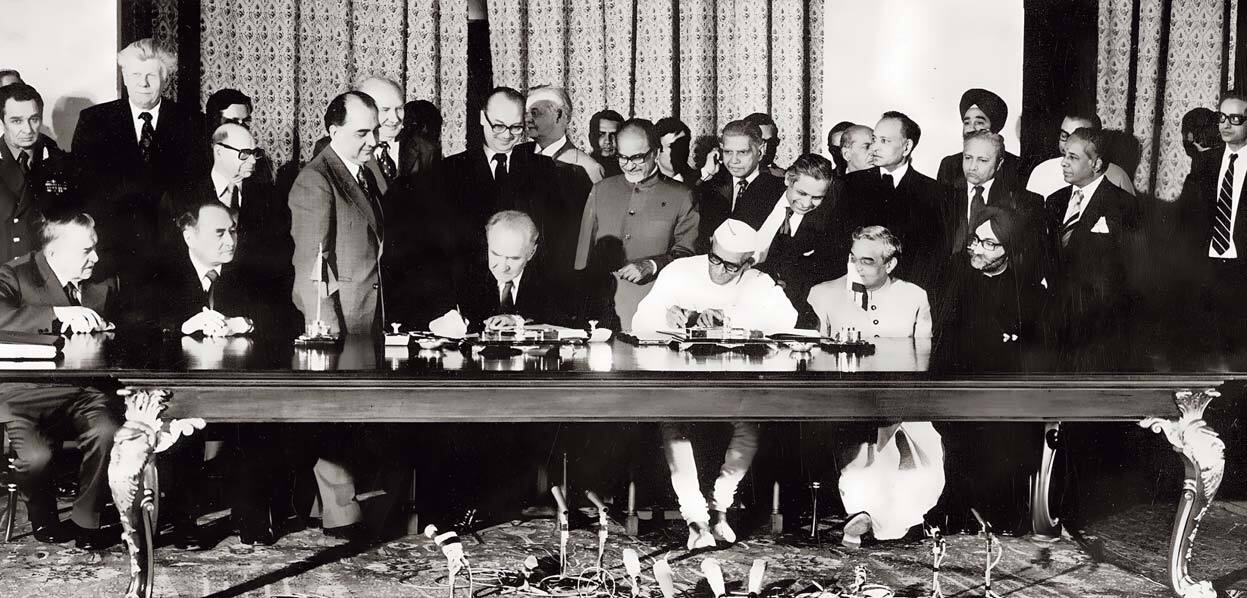
Once the war ended, the department turned its focus to economic issues within the UN, as well as to the activities of the International Monetary Fund (IMF) and the International Bank for Reconstruction and Development (IBRD). Soviet diplomacy also directed its efforts towards forging ties with developing nations, strengthening the international standing of the socialist republics, and coordinating activities within the Council for Mutual Economic Assistance.
The 1960s marked the collapse of the colonial system, giving rise to numerous newly independent states, and with them came the need to forge entirely new forms of trade, financial, scientific and technical cooperation, while also strengthening ties within multilateral organisations. Once again, the Economic Department of the Soviet Foreign Ministry found itself at the forefront of this work.
The 1960s marked the collapse of the colonial system, giving rise to numerous newly independent states, and with them came the need to forge entirely new forms of trade, financial, scientific and technical cooperation, while also strengthening ties within multilateral organisations. Once again, the Economic Department of the Soviet Foreign Ministry found itself at the forefront of this work.
In the 1980s, the functions of the Economic Department expanded significantly following the abolition of the state monopoly on export-import operations and the entry of domestic producers into foreign markets. It was during this period—between 1988and1990—thatthecurrentRussian Foreign Minister, Sergey Lavrov, served as Deputy Head of the Department.
The historic transformations that swept the country in the early 1990s did not bypass the Foreign Ministry. After a series of reforms, in April 1993, the Economic Department was renamed the Department of Economic Cooperation (DEC). It immediately engaged in efforts to integrate Russia into the global economy, secure the country’s full-fledged participation in international financial institutions, and promote a fair global financial system and equitable multilateral trade.
At the time, Russian diplomacy faced the challenge of diversifying the country’s presence in foreign markets—both by expanding the geographic scope of economic ties and by improving their structure. At the same time, it was vital to transfer the USSR’s membership in international organisations to the Russian Federation, settle foreign debts, and build partnerships within emerging economic alliances, including the CIS.
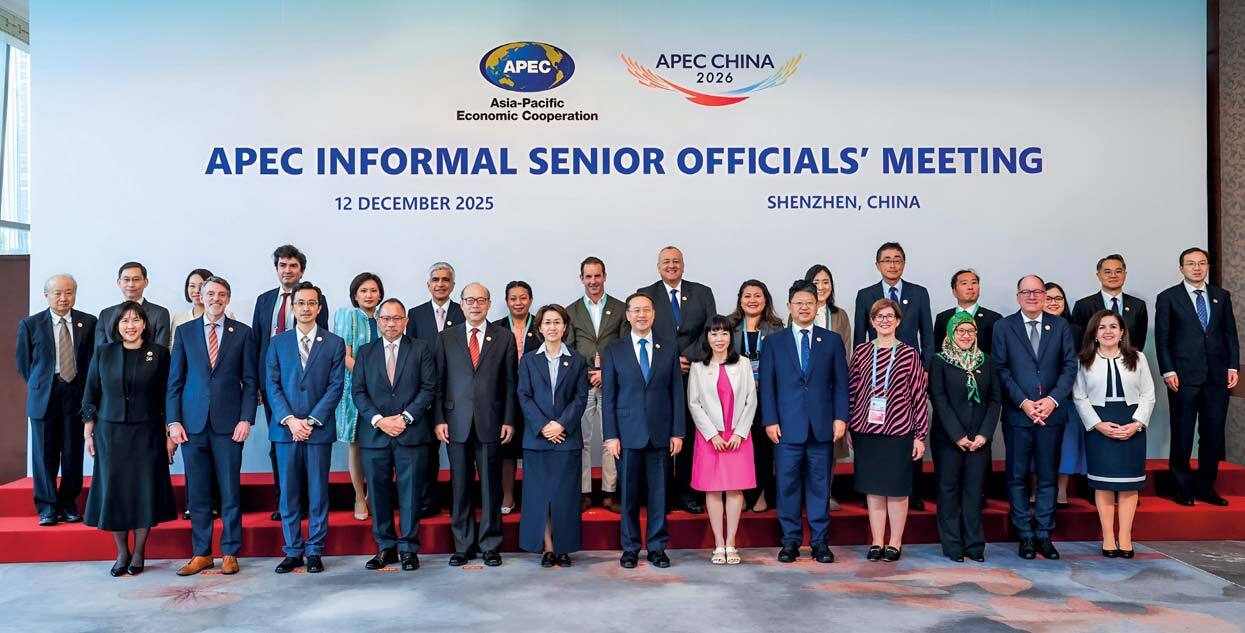
The geopolitical shifts at the turn of the millennium further broadened the scope of DEC’s responsibilities. Attracting foreign investment and establishing cooperation in priority industries came to the fore. The Department became the central hub in shaping Russia’s accession to APEC and the OECD, while also playing an active role in the trade and economic dialogue with the EU. Working alongside other government agencies, DEC experts also developed the parameters for Russia’s entry into the WTO.
The historic transformations that swept the country in the early 1990s did not bypass the Foreign Ministry. After a series of reforms, in April 1993, the Economic Department was renamed the Department of Economic Cooperation (DEC). It immediately engaged in efforts to integrate Russia into the global economy, secure the country’s full-fledged participation in international financial institutions, and promote a fair global financial system and equitable multilateral trade.
At the time, Russian diplomacy faced the challenge of diversifying the country’s presence in foreign markets—both by expanding the geographic scope of economic ties and by improving their structure. At the same time, it was vital to transfer the USSR’s membership in international organisations to the Russian Federation, settle foreign debts, and build partnerships within emerging economic alliances, including the CIS.
The geopolitical shifts at the turn of the millennium further broadened the scope of DEC’s responsibilities. Attracting foreign investment and establishing cooperation in priority industries came to the fore. The Department became the central hub in shaping Russia’s accession to APEC and the OECD, while also playing an active role in the trade and economic dialogue with the EU. Working alongside other government agencies, DEC experts also developed the parameters for Russia’s entry into the WTO.
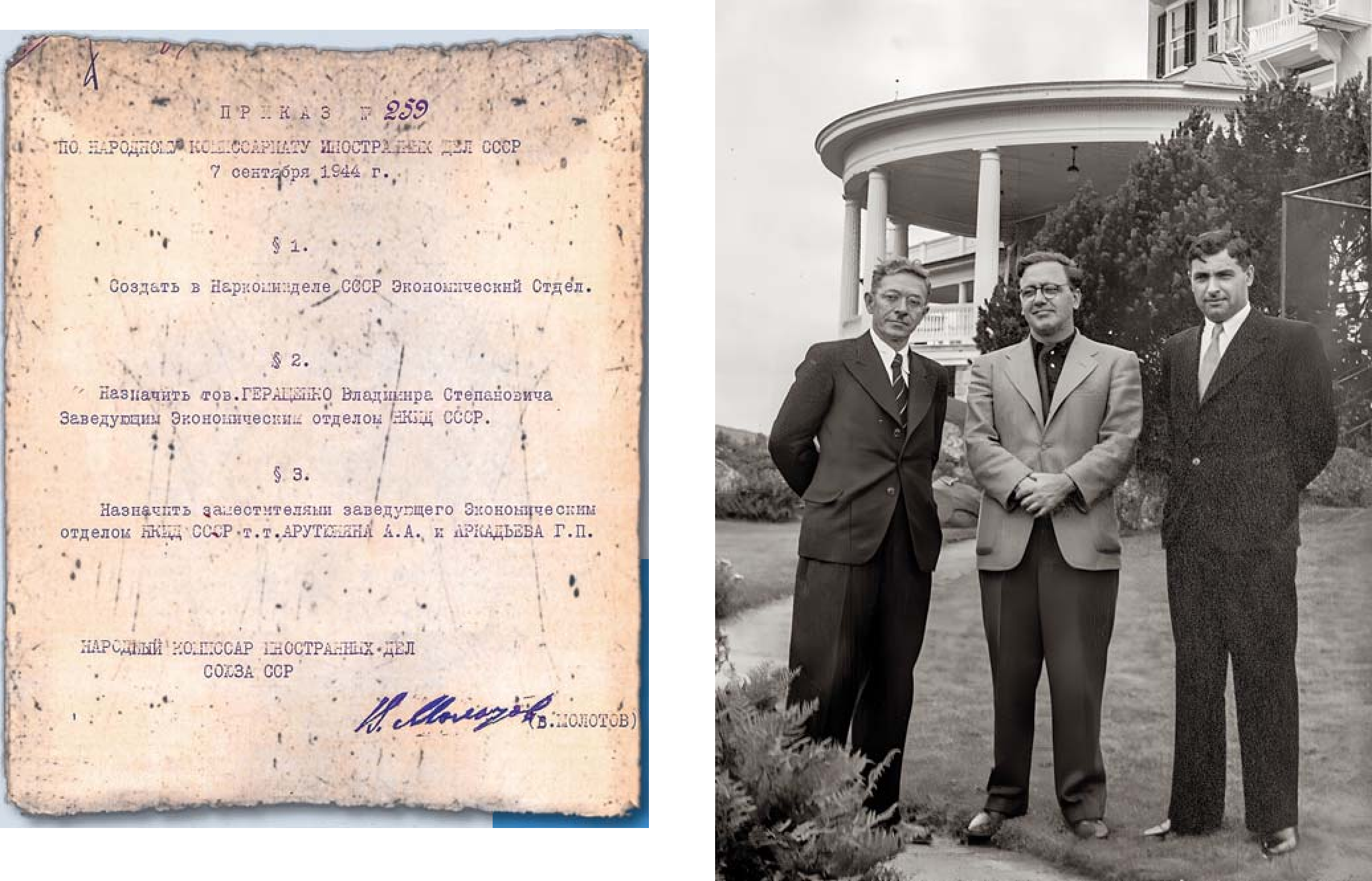
In 1944, one of the first tasks of the newly created Economic Department was to participate in talks aimed at establishing the post-war institutions and addressing the war’s fallout.
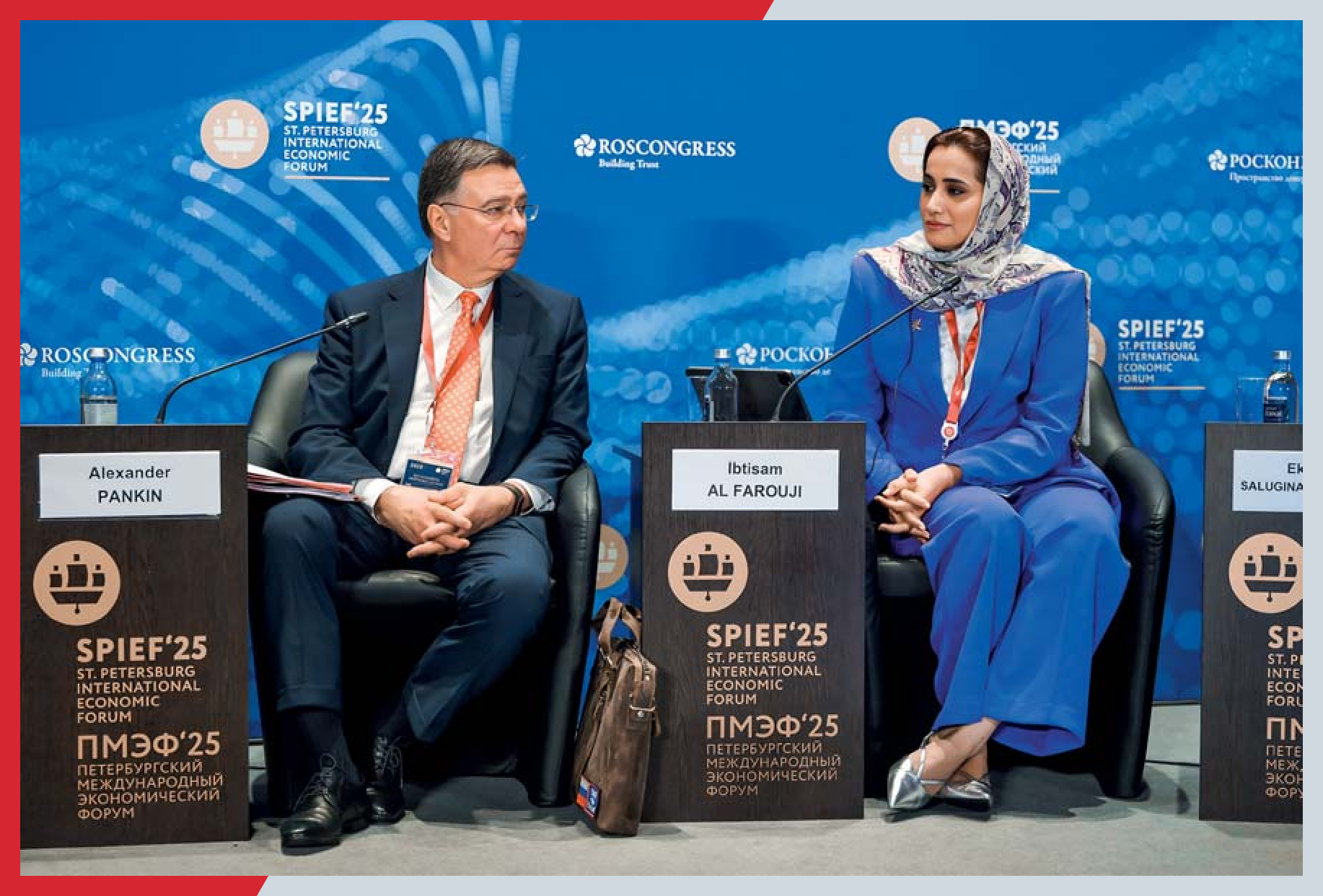
In recent years, amid unprecedented Western sanctions, issues related to foreign trade, finance, energy and transport—and, with them, the role of the Department—have taken on a particular urgency. Cooperation with constructive partners has intensified across platforms such as the G20, BRICS, SCO, ASEAN, and APEC. As traditional ties have weakened, mutually beneficial relations with friendly nations have taken their place, and new mechanisms of cooperation are emerging—alternatives to the tools Western economies have long used to maintain and reinforce their dominance.
A promising new framework for holistic cooperation across the vast Eurasian region is the Greater Eurasian Partnership, proposed by Russian President Putin. This initiative aimstofosterdeepereconomic,political, and strategic ties across the continent.
The DEC plays a pivotal role in helping Russian businesses adapt to modern challenges. Its experts conduct in-depth analysis of global economy, trade dynamics, energy markets, monetary and credit systems, and agricultural trends. Specialised divisions focus on transport corridors, energy market conditions, low-carbon economy, digital transformation, payment mechanisms, and cutting-edge financial platforms. A particular emphasis is placed on organising flagship economic events in Russia, including the St. Petersburg International Economic Forum and the Russian Energy Week.
Drawing on eight decades of experience across shifting geopolitical landscapes, the DEC continues to effectively safeguard Russia’s national interests. With confidence, the Department looks ahead to a multipolar world order—one that opens up new opportunities for Russian economic diplomacy.
A promising new framework for holistic cooperation across the vast Eurasian region is the Greater Eurasian Partnership, proposed by Russian President Putin. This initiative aimstofosterdeepereconomic,political, and strategic ties across the continent.
The DEC plays a pivotal role in helping Russian businesses adapt to modern challenges. Its experts conduct in-depth analysis of global economy, trade dynamics, energy markets, monetary and credit systems, and agricultural trends. Specialised divisions focus on transport corridors, energy market conditions, low-carbon economy, digital transformation, payment mechanisms, and cutting-edge financial platforms. A particular emphasis is placed on organising flagship economic events in Russia, including the St. Petersburg International Economic Forum and the Russian Energy Week.
Drawing on eight decades of experience across shifting geopolitical landscapes, the DEC continues to effectively safeguard Russia’s national interests. With confidence, the Department looks ahead to a multipolar world order—one that opens up new opportunities for Russian economic diplomacy.