
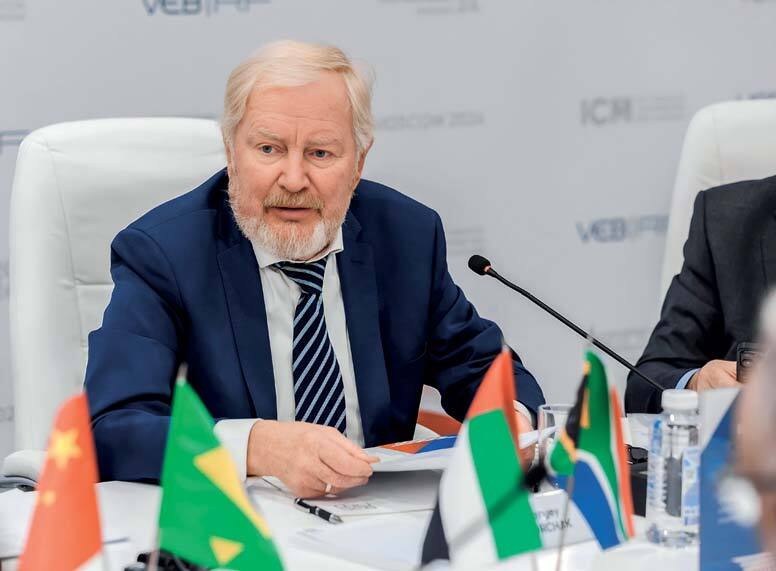
Sergey STORCHAK, Senior Banker, State Development Corporation VEB.RF, Candidate of Economic Sciences.
In recent years, it has become widely acknowledged that multilateralism as a mechanism, as a means of tackling global challenges, is in deep decline. There is, unfortunately, ample evidence to support this claim. Yet, there remains an area of interstate relations where multilateralism—and one of its key components, multilateral financial diplomacy—has not only retained its relevance but continues to play a crucial role in global governance. This is sovereign debt restructuring, where stakeholders engage in resolving one of the most politically and financially sensitive issues of our time. Despite challenges—many of which stem from geopolitical tensions—multilateral financial diplomacy remains effective and continues to yield tangible outcomes.
2020–2025: LANDMARK ACHIEVEMENTS OF MULTILATERAL FINANCIAL DIPLOMACY
DEBT SERVICE DEFERRALS
In 2020, the G20 initiated the establishment of what is now known as the Debt Service Suspension Initiative (DSSI). In fact, this programme aimed to defer debt repayment and servicing obligations for a large group of developing nations by rescheduling payments to later dates. This was as a direct response to the shocks caused by the pandemic, which demanded the urgent mobilisation of financial resources to mitigate its consequences.
The key parameters of the DSSI were agreed upon by the G20 members in record time—within six months.
Payments falling due (principal and interest) between May 2020 and late December 2021 were to be consolidated and repaid in ten equal instalments between early 2023 and late 2027. Notably, 2022 was designated a grace year, during which debtors were not required to service the principal amount of their debt. Additionally, creditors agreed to waive any penalty interest—a standard feature of loan agreements in the event of payment schedule breaches.
As for the reciprocal obligations of debtor countries under the DSSI, these were unprecedentedly light. First, participating nations committed to redirect the funds saved from deferred external payments towards financing social spending, primarily in healthcare. Second, beneficiaries voluntarily refrained from obtaining commercial (non-concessional) loans throughout the Initiative.
This undertaking benefited 48 countries, which secured deferrals totalling approximately USD 13 billion. These nations used the resources freed up at the creditors’ expense chiefly to finance measures combating the impact of the pandemic. The successful collaboration between the G20 and the Paris Club on the DSSI paved the way for further success of the multilateral financial diplomacy (MFD)1.
COMMON FRAMEWORK FOR DEBT SETTLEMENT BEYOND THE DSSI
The Common Framework (CF) is another joint “product” of the Paris Club and the G20. Following intensive engagement among their members, which secured agreement on the final text, the CF was endorsed by G20 leaders on November 13, 2020. From that moment onward, the principles and approaches to debt restructuring set out in the CF—applicable to 73 developing nations (the so-called eligible countries)—have implied a deliberate use by stakeholders2 to alleviate the burden of the Least Developed Countries, as classified by the World Bank. That said, a closer look at the CF reveals that it is, to a large extent, a replica of the principles (by the author’s count, eleven in number) that have underpinned the Paris Club’s multilateral sovereign debt restructuring talks for decades.
Among the aforementioned principles—now firmly embedded within the CF—is the requirement for an IMF-endorsed economic programme, which must justify the debtor’s request for restructuring and set out a clear list of measures planned to restore debt sustainability. Also mandatory is a “cutoff date,” designed to exempt from restructuring any debt incurred under new loans, the proceeds of which are used to fund social spending and/ or pay for critical imports. A crucial precondition for granting a debtor’s request is its commitment to ensure comparability of treatment across different categories of creditors—commercial banks, bondholders, and so forth. In other words, the debtor must adhere to the principle of Comparability of Treatment (CoT).
Furthermore, an understanding is reached with the debtor that, throughout the restructuring, the privileged status of multilateral development banks (MDBs) will be preserved—meaning that such claims will not be subject to debt settlement. That said, as a quid pro quo for this concession, creditors are expected to ensure a “net positive flow” of financing. In other words, disbursements under the new loans must exceed debt service payments on accumulated debt. Crucially, the cornerstone of both the original principles and the CF is the consensus around the “caseby-case approach” to determining the final terms of any restructuring. The debtor’s acceptance of this practice— notwithstanding the rules and the findings of the IMF and World Bank’s debt sustainability analysis—grants creditors a certain leverage to impose their own conditions for normalising financial relations, such as demanding the clearance of arrears.
Whether it is a good or a bad thing to have a de facto tight linkage between the principles of the Paris Club and the CF—for it is nowhere enshrined de jure—is a matter of perspective, and the author believes it is neither one nor the other. On the one hand, the G20 is entirely justified in drawing on the Club’s extensive and highly successful experience in resolving often complex financial and political challenges—such as, for instance, the restructuring of the former USSR’s sovereign external debt. On the other hand, the CF can hardly be described as a breakthrough in terms of predictability, efficiency, or cost-effectiveness in debt restructuring.
That said, within a relatively short period of time—around ten months from a debtor’s initial request to the IMF for assistance—stakeholders, guided by the pre-agreed procedures and steps set out in the Common Framework, have managed to reach final multilateral agreements with Zambia, Ghana, Chad, and Ethiopia—countries that include non-Paris Club members. Before such processes could take up to eighteen months. Under the CF, Sri Lanka’s complex and multifaceted debt has also been restructured. Many experts view these developments as the CF’s key achievement and an undeniable success for the G20, which has deliberately anchored its activities in the IMF’s expertise.
That said, within a relatively short period of time—around ten months from a debtor’s initial request to the IMF for assistance—stakeholders, guided by the pre-agreed procedures and steps set out in the Common Framework, have managed to reach final multilateral agreements with Zambia, Ghana, Chad, and Ethiopia—countries that include non-Paris Club members. Before such processes could take up to eighteen months. Under the CF, Sri Lanka’s complex and multifaceted debt has also been restructured. Many experts view these developments as the CF’s key achievement and an undeniable success for the G20, which has deliberately anchored its activities in the IMF’s expertise.
GLOBAL SOVEREIGN DEBT ROUNDTABLE
By the standards of multilateral financial diplomacy, however, the agreement struck at the turn of 2023–2024 to establish the Global Sovereign Debt Roundtable (GSDR) appears to have been an even more significant milestone than the CF. Several factors serve as a testament to that.
To begin with, its membership is truly unique. Participants include France, as chair of the Paris Club, alongside China, Japan, Saudi Arabia, the UK, and the US—all members of the G20. From the developing world, Zambia, Ghana, Sri Lanka, Suriname, Ecuador, and Ethiopia have been invited to join. The choice, it seems, has fallen to sovereigns that have either recently completed or are currently undergoing debt restructuring—in other words, states with direct experience of engaging with both creditors and the IMF. The private sector is represented by BlackRock, an American asset manager, and Standard Chartered, a British bank, as well as by the Institute of International Finance and the International Capital Market Association. The permanent co-chairs of this “club of shared interest” are the IMF, the World Bank, and the current G20 presidency. In 2024, Brazil held this role; in 2025, South Africa took the baton; and in 2026, the United States—apparently in a dual capacity, both as G20 president and as GSDR co-chair. Who selected this particular line-up, and on what basis, has not been disclosed.
The organisation of the GSDR has also proved rather unconventional.
First, it involves regular (!) meetings at the level of deputy finance ministers from member states—dubbed the “principals.” However, it remains unclear who—and at what level—represents the private sector in these talks.
Second, each meeting of the “principals” is invariably preceded by a series of workshops focused on examining the issues that will later be put before the deputies. Over the course of the GSDR, several such deep-diving and exploratory events have been held. These have addressed nearly a dozen critical issues: (1) the transparency of sovereign debt data, (2) the CoT principle—particularly in light of deep-seated disagreements between official and private creditors over the assessments, developed and championed by the Paris Club, of their respective “contributions” to debt relief, (3) accelerating the reassessment of sovereign credit ratings by major agencies once a restructuring is complete, (4) streamlining the role of MDBs in restoring sovereign solvency, (5) the rules governing the establishment and functioning of official creditor committees, among others.
Unlike the many international debt forums—typically held once a year under the auspices of the IMF, the World Bank, the OECD, and the UN—the GSDR has been established as a permanent platform, and it is this that sets it apart. First and foremost, it serves as a negotiating platform for coordinating the efforts of all stakeholders in optimising the sovereign debt resolution, fostering mutual understanding and trust. It is important to note, however, that substantive talks and final agreements remain the exclusive remit of creditor committees and do not fall under the “responsibility” of GSDR members—a feature that is both practically and politically significant.
Over a relatively short period of existence, the GSDR has achieved remarkably impressive results.
First and foremost, it has produced a set of recommendations for debtor countries, outlining the steps and stages to be followed should they determine that debt restructuring is both desirable and inevitable. The proposed framework begins with “step zero”: the relevant political decision by the authorities of the debtor state, followed by a request to the IMF for the preparation of an economic programme, the achievement of a staff-level agreement on its parameters, the engagement of financial and legal advisors, and the identification of a “cut-off date.” The next step involves securing financial guarantees from official creditors regarding their participation in the restructuring. This is followed by the IMF Executive Board’s approval of the economic programme, the establishment of a creditor committee, and the election of two (or occasionally three) co-chairs. Where feasible, MDBs are also brought into debt relief.
Finally, the third stage entails finalising the terms of the restructuring with official creditors and initiating talks with their private sector counterparts. While this phased approach is already well established in the Paris Club, the IMF—having initiated the GSDR—ensured that the corresponding document (A Playbook for Country Authorities) was endorsed by the G20. It is now an official reference guide for debtor countries considering the feasibility of restructuring their accumulated debt.
Another product developed under the GSDR aspires to become something of a “code” for international debt restructuring. This is the so called Compendium of GSDR Common Understanding of Technical Issues, a concise guide to the key technical concepts used in this field. The document comprises 17 articles, each setting out essential definitions and outlining the key focus for the GSDR— some are also addressed, albeit partially, in frameworks such as the CF.
In this context, let us single out only those that have yet to be mentioned in the overview. They include: (1) developing a framework to integrate the restructuring of domestic sovereign debt—particularly the part held by non-residents—into the overall process, (2) seeking ways to resolve the debt of state enterprises, finding solutions to restructure secured debt—often the most contentious component of a sovereign debtor’s total obligations due to the complexities of the CoT, (3) assessing the feasibility and desirability of granting debtors a moratorium on debt servicing during talks, among others.
In this regard, the following points are worth noting.
First, the provisions of all 17 articles are debated not only by the GSDR participants during plenary sessions of the principals and expert seminars, but also during the Paris Club and G20 meetings.
Second—and this is particularly noteworthy—many of the aforementioned “complex” issues were previously discussed in the early 2000s when the IMF was pushing an initiative widely known as the Sovereign Debt Restructuring Mechanism (SDRM). However, these were never fully resolved, as creditor countries opposed the “institutional approach” (mechanism), favouring instead a “contractual approach” to sovereign debt restructuring. Undoubtedly, the IMF’s new concept, which seeks to harness the potential of the GSDR, aims to address the evident challenges—such as the difficulties in agreeing on the terms for restructuring debt secured by assets like railways or seaports. These challenges proved insurmountable due to a lack of understanding and support from other stakeholders in the restructuring. Time will tell just how effective the GSDR can prove to be in its original, previously established lineup.
ACCELERATION?
Another aspect of the current evolution of the international financial architecture—and indeed a source of intrigue— lies in the fact that improving debt restructuring has been declared a priority of the US G20 presidency for the financial track in 2026. This means that the world’s largest debt market—and one of its biggest sovereign debtors, with nearly USD 40 trillion in government debt—is now taking the lead in shaping solutions in this area.
One can only speculate as to why the US has chosen to flag this priority. On the one hand, it may simply be the usual desire of any G20 presidency to deliver a tangible outcome by the end of its term. On the other, Washington may be seeking to spur its G20 partners into unblocking the bottlenecks that have long hampered the existing debt restructuring, and to find answers to those challenges that the most active stakeholders in multilateral financial diplomacy—the IMF, the World Bank, and the Paris Club of official creditors—have been grappling with, unsuccessfully, for years.
At the heart of the American proposal is the ambition to secure multilateral agreements that could accelerate restructuring while making it more predictable in terms of longterm financial outcomes—for both debtor and creditor alike. A more elusive objective, however, is to reduce the cost of restructuring, particularly by mitigating the impact of sovereign credit rating downgrades and the subsequent exclusion of debtor nations from global financial markets. Prior to the US presidency, repeated attempts to engage credit rating agencies on this matter had failed. The dominant trio—Moody’s, Standard & Poor’s, and Fitch—are all US-based, meaning American financial regulators could, in theory, exert pressure on them.
The primary method for achieving the goal of expediting restructuring is the development and adoption—under the G20’s auspices—of a standard multilateral (!) memorandum of understanding (MoU) for the CF, which would outline target benchmarks for key financial parameters (such as the restructuring timeline) and the legal terms of the final intergovernmental agreement to be signed bilaterally between the debtor and each creditor. A clear understanding of the terms both debtors and creditors can expect would indeed streamline talks and help shorten the timeline for reaching final bilateral (!) agreements.
Some elements of the US debt agenda appear less ambitious, though no less significant. For instance, there is a push to encourage G20 partners to step up their support for the IMF’s efforts in fostering closer coordination between official and private creditors. At the very least, the aim is to ensure that talks with sovereign debtors proceed in parallel, rather than sequentially, as is the case now. Other priorities under the US G20 presidency include improving the quality of data submitted by debtor countries to the World Bank’s Sovereign Debtor Reporting System (SDRS), and providing these nations with technical assistance—through international financial institutions— to help mitigate the effects of temporary liquidity shortages required to meet current budgetary obligations.
As a member of both the G20 and the Paris Club, as well as the IMF and World Bank, Russia has a clear interest in seeing the US debt agenda successfully implemented. A positive outcome would undoubtedly strengthen the role of multilateral financial diplomacy in global economic governance—a system that, as we know, is currently facing considerable challenges.
1 In Russia, the key actors in multilateral financial diplomacy are the Russian Ministry of Finance, VEB.RF State Development Corporation, as well as Russia’s executive directors to the IMF and World Bank.
2 Stakeholders include creditor and debtor governments, the IMF, the World Bank, the Paris Club, committees of official and private lenders, credit rating agencies, and multilateral development banks (MDBs).
2 Stakeholders include creditor and debtor governments, the IMF, the World Bank, the Paris Club, committees of official and private lenders, credit rating agencies, and multilateral development banks (MDBs).