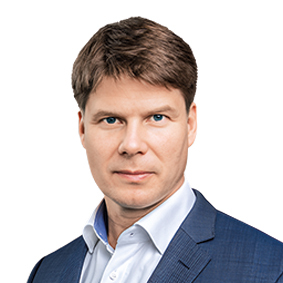
Steffen Kotré, Member of the Bundestag for the Alternative for Germany (Federal Republic of Germany)
PRAGMATISM VS POLITICAL PRESSURE: GERMAN-RUSSIAN MUTUAL INTERESTS
Sooner or later the era of Western sanctions against Russia will come to an end. Yet even now, voices in Germany are already calling for the resumption of Russian energy supplies—a move that could mark the first step towards reviving cooperation between the two nations.
Cooperation between Germany and Russia has always proved worthwhile. Entrepreneurs have long found promising opportunities for development in Russia, while raw material suppliers in turn have reliably found grateful customers in Germany. This was already true in the days of the King and the Tsar and remained so through many social and political changes. There has also always been a firm conviction that trade between the two countries strengthens relations and brings mutual benefit.
There were the heavy strains of major political upheavals during World War I. There was Hitler’s fascist attack on Russia with all its crimes. Yet none of this prevented Germans and Russians from once again finding common ground, both economically and culturally. Today, relations are again under strain due to Western policy, marked by sanctions and accusations. But this, too, will pass. In Germany, voices are already calling for an end to the sanctions policy and for the resumption of energy supplies. In the post-sanctions era, there will once again be a solid foundation for cooperation.
From a strategic perspective, Germany depends on inexpensive energy. This has always been a decisive advantage for German industry. What is inexpensive is not LNG or oil shipped from overseas, but pipeline deliveries from regions that are geographically and geopolitically close. Germany must therefore do everything in its power to bring Nord Stream back into operation for gas and to reactivate the Druzhba pipeline. With these sources cut off, Germany is facing a doubling and even tripling of energy prices. Energy-intensive production is being shut down or moved abroad. Deindustrialization has already begun. The chemical and automotive industries are suffering significant damage.
The key to restoring Germany’s competitiveness lies in affordable, reliable energy. And this must be ensured through the long-term, predictable framework that was once provided by the former Soviet Union and later by Russia. The Germans must first rebuild the trust they have destroyed. But the Russian people are known for allowing old wounds to heal and for looking to the future.
From a strategic perspective, Germany depends on inexpensive energy. This has always been a decisive advantage for German industry. What is inexpensive is not LNG or oil shipped from overseas, but pipeline deliveries from regions that are geographically and geopolitically close. Germany must therefore do everything in its power to bring Nord Stream back into operation for gas and to reactivate the Druzhba pipeline. With these sources cut off, Germany is facing a doubling and even tripling of energy prices. Energy-intensive production is being shut down or moved abroad. Deindustrialization has already begun. The chemical and automotive industries are suffering significant damage.
The key to restoring Germany’s competitiveness lies in affordable, reliable energy. And this must be ensured through the long-term, predictable framework that was once provided by the former Soviet Union and later by Russia. The Germans must first rebuild the trust they have destroyed. But the Russian people are known for allowing old wounds to heal and for looking to the future.
But it is not only oil and gas that are of interest to Germany. Nuclear energy also plays an important role. After the ideologically driven, misguided, and costly phase-out of nuclear power, Germany is rapidly losing expertise and qualified personnel. Research has largely been discontinued as well. There is no doubt that Germany must and will return to this technology. However, this will no longer be possible with its own resources and workforce alone. It therefore makes sense to pursue cooperation in the nuclear sector too. The research sector is also crucial.
German and Russian research institutions and companies can collaborate on issues such as cutting-edge reactor technologies, high safety standards, and, if necessary, small modular reactors (SMR). Such cooperation would strengthen the energy foundation and, in the long term, improve the competitive position of both sides.
Solutions for the utilization of unused waste materials are of particular interest. Germany and Russia can work together as technology and knowledge partners in the field of recycling and the circular economy. German companies have decades of experience in sorting, recovering, and recycling materials. In the chemical, plastics, and automotive industries in particular, efficient recovery processes can conserve resources and reduce waste. Through targeted cooperation, joint value chains can be created that are not only more sustainable but also economically viable.
In 2022, the German Aerospace Center ended its cooperation with Russian institutions. Yet it was precisely in this field that numerous joint projects had emerged. As more and more countries push into space, Russia brings established space capabilities, while Germany offers complementary technologies and depends on reliable space infrastructure. Without these foundations, Germany’s ability to participate in the peaceful use of space is increasingly limited. Past cooperation has shown that the potential for joint projects is by no means exhausted.
There is also significant potential for Germany and Russia to combine their scientific capacities in marine and polar research. Climate change, along with the opportunities and risks associated with the economic use of the Arctic, are key issues that warrant deeper exploration. The opportunities for mutually beneficial cooperation are clear.
It should also be noted that Germany is becoming increasingly dependent on rare earths to strengthen its industrial base, particularly in the automotive sector. Neodymium (Nd), praseodymium (Pr), dysprosium (Dy), and terbium (Tb) are therefore of particular interest for electric motors, batteries, and electronics. German companies could contribute to developing and accessing these resources. A reliable supply relationship would enhance the strategic sovereignty of both countries.
German companies could strengthen the manufacturing sector. There is still considerable room for improvement. More and more countries attach importance to extending the value chains of products within their own borders. Germany has long, highly developed value chains and is capable of establishing the foundations for increased value creation in other countries as well.
There were the heavy strains of major political upheavals during World War I. There was Hitler’s fascist attack on Russia with all its crimes. Yet none of this prevented Germans and Russians from once again finding common ground, both economically and culturally. Today, relations are again under strain due to Western policy, marked by sanctions and accusations. But this, too, will pass. In Germany, voices are already calling for an end to the sanctions policy and for the resumption of energy supplies. In the post-sanctions era, there will once again be a solid foundation for cooperation.
From a strategic perspective, Germany depends on inexpensive energy. This has always been a decisive advantage for German industry. What is inexpensive is not LNG or oil shipped from overseas, but pipeline deliveries from regions that are geographically and geopolitically close. Germany must therefore do everything in its power to bring Nord Stream back into operation for gas and to reactivate the Druzhba pipeline. With these sources cut off, Germany is facing a doubling and even tripling of energy prices. Energy-intensive production is being shut down or moved abroad. Deindustrialization has already begun. The chemical and automotive industries are suffering significant damage.
The key to restoring Germany’s competitiveness lies in affordable, reliable energy. And this must be ensured through the long-term, predictable framework that was once provided by the former Soviet Union and later by Russia. The Germans must first rebuild the trust they have destroyed. But the Russian people are known for allowing old wounds to heal and for looking to the future.
From a strategic perspective, Germany depends on inexpensive energy. This has always been a decisive advantage for German industry. What is inexpensive is not LNG or oil shipped from overseas, but pipeline deliveries from regions that are geographically and geopolitically close. Germany must therefore do everything in its power to bring Nord Stream back into operation for gas and to reactivate the Druzhba pipeline. With these sources cut off, Germany is facing a doubling and even tripling of energy prices. Energy-intensive production is being shut down or moved abroad. Deindustrialization has already begun. The chemical and automotive industries are suffering significant damage.
The key to restoring Germany’s competitiveness lies in affordable, reliable energy. And this must be ensured through the long-term, predictable framework that was once provided by the former Soviet Union and later by Russia. The Germans must first rebuild the trust they have destroyed. But the Russian people are known for allowing old wounds to heal and for looking to the future.
But it is not only oil and gas that are of interest to Germany. Nuclear energy also plays an important role. After the ideologically driven, misguided, and costly phase-out of nuclear power, Germany is rapidly losing expertise and qualified personnel. Research has largely been discontinued as well. There is no doubt that Germany must and will return to this technology. However, this will no longer be possible with its own resources and workforce alone. It therefore makes sense to pursue cooperation in the nuclear sector too. The research sector is also crucial.
German and Russian research institutions and companies can collaborate on issues such as cutting-edge reactor technologies, high safety standards, and, if necessary, small modular reactors (SMR). Such cooperation would strengthen the energy foundation and, in the long term, improve the competitive position of both sides.
Solutions for the utilization of unused waste materials are of particular interest. Germany and Russia can work together as technology and knowledge partners in the field of recycling and the circular economy. German companies have decades of experience in sorting, recovering, and recycling materials. In the chemical, plastics, and automotive industries in particular, efficient recovery processes can conserve resources and reduce waste. Through targeted cooperation, joint value chains can be created that are not only more sustainable but also economically viable.
In 2022, the German Aerospace Center ended its cooperation with Russian institutions. Yet it was precisely in this field that numerous joint projects had emerged. As more and more countries push into space, Russia brings established space capabilities, while Germany offers complementary technologies and depends on reliable space infrastructure. Without these foundations, Germany’s ability to participate in the peaceful use of space is increasingly limited. Past cooperation has shown that the potential for joint projects is by no means exhausted.
There is also significant potential for Germany and Russia to combine their scientific capacities in marine and polar research. Climate change, along with the opportunities and risks associated with the economic use of the Arctic, are key issues that warrant deeper exploration. The opportunities for mutually beneficial cooperation are clear.
It should also be noted that Germany is becoming increasingly dependent on rare earths to strengthen its industrial base, particularly in the automotive sector. Neodymium (Nd), praseodymium (Pr), dysprosium (Dy), and terbium (Tb) are therefore of particular interest for electric motors, batteries, and electronics. German companies could contribute to developing and accessing these resources. A reliable supply relationship would enhance the strategic sovereignty of both countries.
German companies could strengthen the manufacturing sector. There is still considerable room for improvement. More and more countries attach importance to extending the value chains of products within their own borders. Germany has long, highly developed value chains and is capable of establishing the foundations for increased value creation in other countries as well.
A long-term strategic course for win-win economic partnership should acknowledge that economic relations should not be harmed simply because political views differ—only then can a fair system of international relations be restored.
The necessary technologies exist across many industries. This means that not only individual machines and systems are exported, but also fully operational production facilities. Such developments would narrow Germany’s traditional export base. However, imported goods would sooner or later be replaced by domestic production in any case.
A word about small and medium-sized enterprises. Germany’s economic and social success has been driven to a large extent by small and medium-sized businesses. Without them, there is a risk of a sharp divide between the wealthy and the poor. Without small and medium-sized enterprises, many people end up as low earners with low net worth on the one hand, while very high incomes produce excessive concentrations of wealth on the other. SMEs serve as a structural instrument to prevent incomes and assets from diverging to an unhealthy degree. They also contribute to social stability. If there is political will, German policymakers and business initiatives could support a Russian SME initiative. Germany has SME-friendly framework conditions. Although these are currently being undermined by elements of a planned economy, they have not disappeared. Russia would benefit from a broader foundation for entrepreneurial activity. However, this would require substantial legislative efforts to make it possible.
The framework for reviving cooperation at all levels must be shaped by an interest-driven German realpolitik. The current policy, which lacks sovereignty and operates under external constraints to Germany’s detriment, must come to an end. Even if resistance to a multipolar world order still exists in Germany, this order will gradually become a reality.
After the political turbulence of recent years, marked by sanctions and political disruption of international cooperation, only a long-term strategic course can restore a fair system of international relations, especially in trade. This also means acknowledging that economic relations should not be harmed simply because political views differ. Such framework conditions would not only enable German companies to operate in Russia, but would also significantly strengthen German-Russian economic cooperation. We see this as a strategic win-win situation for both sides: Russia’s raw materials and energy security combined with Germany’s technological and industrial strength.
Germany must set a political course that enables German companies to once again establish themselves and operate in Russia. Any potential strategic partnership—including investment and trade agreements, as well as mutual support for scientific research projects—must ensure political and economic security guarantees for both parties.
In conclusion, it should be recalled that in the past institutional platforms for business and trade have generated substantial mutual benefits. The Petersburg Dialogue contributed to mutual understanding as a general forum. The Strategic Working Group on Economics and Finance, in particular, aimed to improve economic conditions. The German Committee on Eastern European Economic Relations advocated for support in foreign trade. German-Russian government consultations helped to resolve misunderstandings. Reviving such mechanisms of cooperation, alongside the joint implementation of concrete projects, could foster constructive dialogue—and, one hopes, pave the way for a shared future.
A word about small and medium-sized enterprises. Germany’s economic and social success has been driven to a large extent by small and medium-sized businesses. Without them, there is a risk of a sharp divide between the wealthy and the poor. Without small and medium-sized enterprises, many people end up as low earners with low net worth on the one hand, while very high incomes produce excessive concentrations of wealth on the other. SMEs serve as a structural instrument to prevent incomes and assets from diverging to an unhealthy degree. They also contribute to social stability. If there is political will, German policymakers and business initiatives could support a Russian SME initiative. Germany has SME-friendly framework conditions. Although these are currently being undermined by elements of a planned economy, they have not disappeared. Russia would benefit from a broader foundation for entrepreneurial activity. However, this would require substantial legislative efforts to make it possible.
The framework for reviving cooperation at all levels must be shaped by an interest-driven German realpolitik. The current policy, which lacks sovereignty and operates under external constraints to Germany’s detriment, must come to an end. Even if resistance to a multipolar world order still exists in Germany, this order will gradually become a reality.
After the political turbulence of recent years, marked by sanctions and political disruption of international cooperation, only a long-term strategic course can restore a fair system of international relations, especially in trade. This also means acknowledging that economic relations should not be harmed simply because political views differ. Such framework conditions would not only enable German companies to operate in Russia, but would also significantly strengthen German-Russian economic cooperation. We see this as a strategic win-win situation for both sides: Russia’s raw materials and energy security combined with Germany’s technological and industrial strength.
Germany must set a political course that enables German companies to once again establish themselves and operate in Russia. Any potential strategic partnership—including investment and trade agreements, as well as mutual support for scientific research projects—must ensure political and economic security guarantees for both parties.
In conclusion, it should be recalled that in the past institutional platforms for business and trade have generated substantial mutual benefits. The Petersburg Dialogue contributed to mutual understanding as a general forum. The Strategic Working Group on Economics and Finance, in particular, aimed to improve economic conditions. The German Committee on Eastern European Economic Relations advocated for support in foreign trade. German-Russian government consultations helped to resolve misunderstandings. Reviving such mechanisms of cooperation, alongside the joint implementation of concrete projects, could foster constructive dialogue—and, one hopes, pave the way for a shared future.