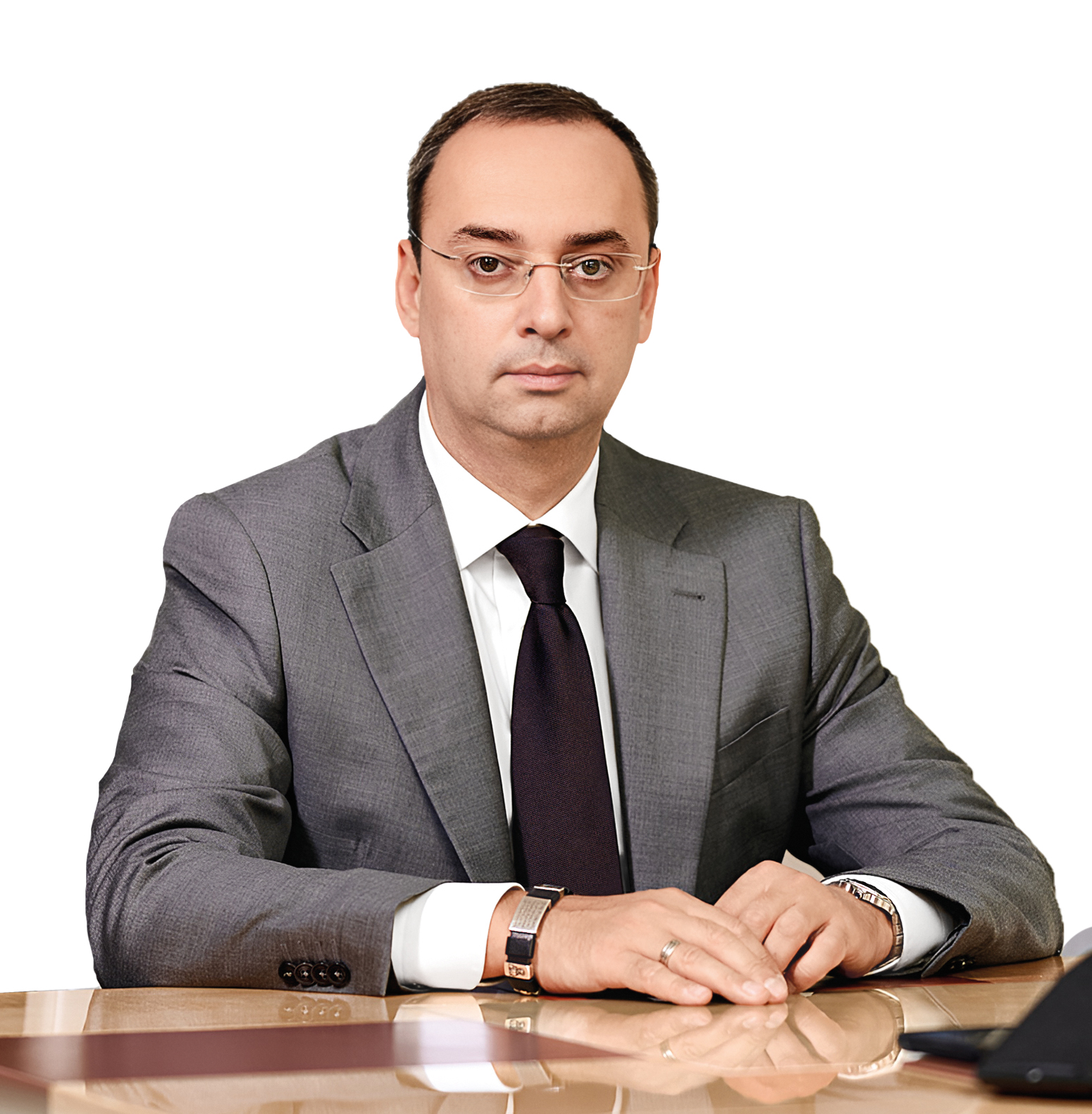
Interview with Dmitry STASYULIS, President of the International Organisation for Eurasian Cooperation
FUTURE LIES IN OUR COMMON ACTIONS OF TODAY
— Mr. Stasyulis, as President of the International Organisation for Eurasian Cooperation and Russia’s C20 Sherpa, you are actively involved in public diplomacy while also contributing to the economic agenda. What do you see as the IOEC’s core mission, and what distinguishes it from other public and business platforms?
— The International Organisation for Eurasian Cooperation is a relatively young organisation, yet it has already delivered a considerable number of international projects, including those carried out in partnership with the Russian Foreign Ministry. Our mission—the purpose that has guided us since our founding—is to promote Russia’s foreign policy and foreign economic agenda. For the IOEC, these are not just hollow buzzwords, but ideas we share and live by, and the cause we champion in our everyday work.
What does this mean in practice? Upholding the sovereignty and cultural historical identity of nations and peoples; building a fair, mutually beneficial system of economic cooperation; putting an end to the neocolonial policies imposed by the West; protecting traditional values and the institution of the traditional family; preserving historical memory and preventing the distortion of history; and advancing Russia’s role as a centre of the emerging multipolar world.
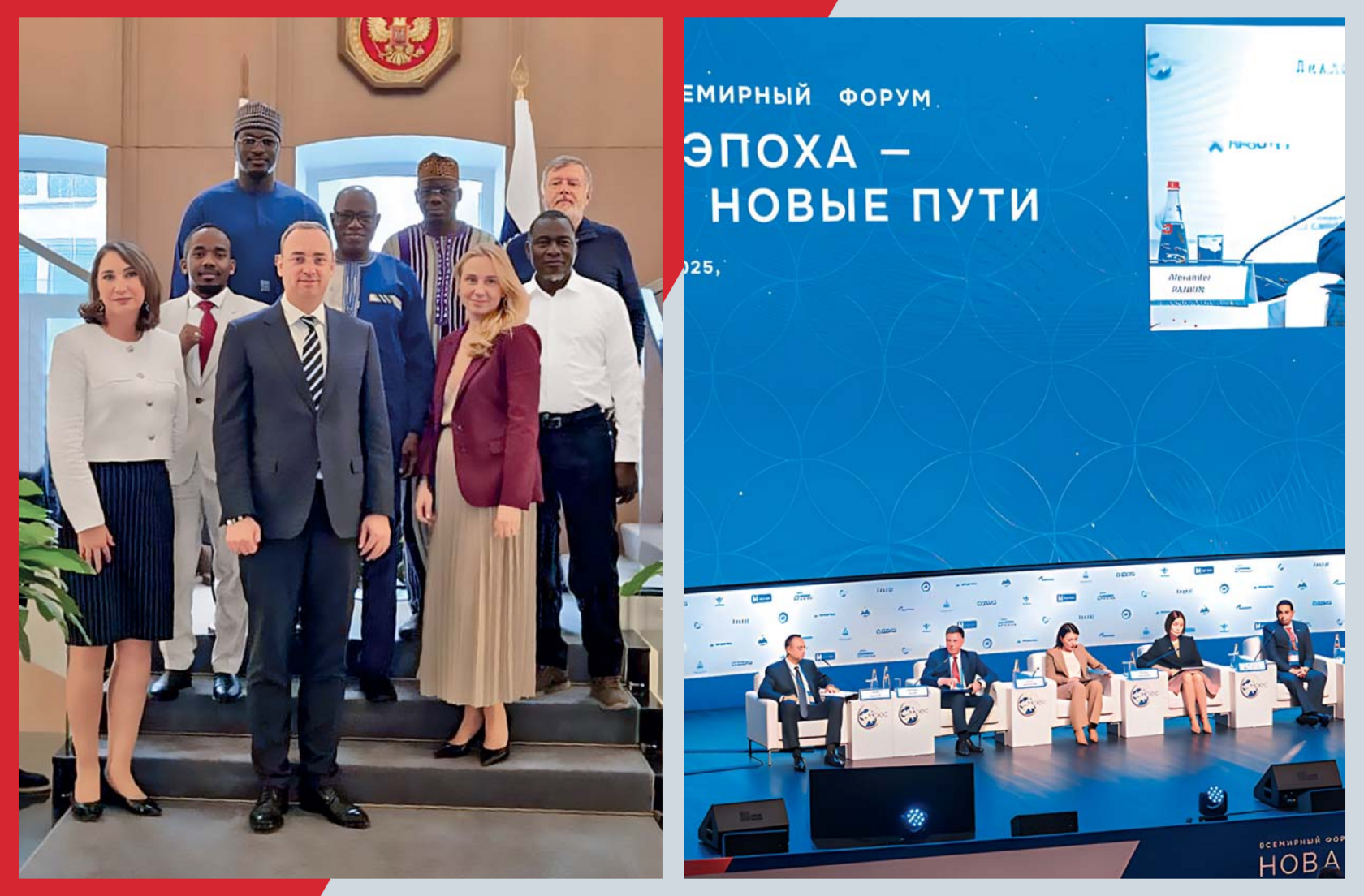
We are open and honest in voicing our position to our foreign partners and friends, drawing a positive response, a desire to engage and deepen ties. This is evident from their active involvement in the 2025 World Forum “New Era—New Ways,” which brought together some 1,000 delegates from 53 countries. Their engagement at the meetings of IOEC’s sectoral committees, and their regular participation in the IOEC Business Centre events are a testament to that, too.
What distinguishes us is the unique nature of our work—an approach that brings together public diplomacy, dialogue with government, business cooperation and expert analysis. This synergy allows us to find fresh solutions to the challenges we face and to implement audacious projects and plans. More broadly, we always stay in the loop: we keep abreast of the news and new trends, while also taking part in Russia’s largest domestic and international events.
— The International Organisation for Eurasian Cooperation is a relatively young organisation, yet it has already delivered a considerable number of international projects, including those carried out in partnership with the Russian Foreign Ministry. Our mission—the purpose that has guided us since our founding—is to promote Russia’s foreign policy and foreign economic agenda. For the IOEC, these are not just hollow buzzwords, but ideas we share and live by, and the cause we champion in our everyday work.
What does this mean in practice? Upholding the sovereignty and cultural historical identity of nations and peoples; building a fair, mutually beneficial system of economic cooperation; putting an end to the neocolonial policies imposed by the West; protecting traditional values and the institution of the traditional family; preserving historical memory and preventing the distortion of history; and advancing Russia’s role as a centre of the emerging multipolar world.
We are open and honest in voicing our position to our foreign partners and friends, drawing a positive response, a desire to engage and deepen ties. This is evident from their active involvement in the 2025 World Forum “New Era—New Ways,” which brought together some 1,000 delegates from 53 countries. Their engagement at the meetings of IOEC’s sectoral committees, and their regular participation in the IOEC Business Centre events are a testament to that, too.
What distinguishes us is the unique nature of our work—an approach that brings together public diplomacy, dialogue with government, business cooperation and expert analysis. This synergy allows us to find fresh solutions to the challenges we face and to implement audacious projects and plans. More broadly, we always stay in the loop: we keep abreast of the news and new trends, while also taking part in Russia’s largest domestic and international events.
What distinguishes the IOEC is its unique nature—an approach that brings together public diplomacy, dialogue with government, business cooperation and expert analysis. This synergy makes it possible to implement audacious projects and plans.
— How would you describe the current stage of multilateral economic formats? What contribution is the IOEC making to their development?
— I would describe it as a time of change and transformation. It is not merely our present that is being shaped right now, but our future. We are witnessing the global architecture shifting before our eyes. New centres of gravity are emerging, integration is gathering pace. And despite the ongoing escalation and the West’s attempts to check these trends, we are steadily moving towards a multipolar world. What shape it ultimately takes depends on our common actions.
This is true for multilateral economic formats as well. Regional integration is becoming increasingly important. Among the countries of the Global South, there is a growing demand for sovereignty in decision making, as the West persists in its efforts to preserve its dominance. The struggle for resources has also become a key factor shaping the multilateral economic formats.
As for IOEC’s contribution in this area, one could say that since its founding, it has been actively involved in advancing the Greater Eurasian Partnership (GEP), put forward by Russia’s President Putin. This initiative is a practical embodiment of the idea of forging a Greater Eurasia—a space defined by equal partnership, a polycentric world order, and equitable, multi speed, mutually beneficial economic cooperation.
— Within the C20 you take part in its working groups on trade and sustainable development, as well as on democratic governance. How can these mechanisms be used to advance the principles of mutual benefit and fairness that also underpin the Greater Eurasian Partnership?
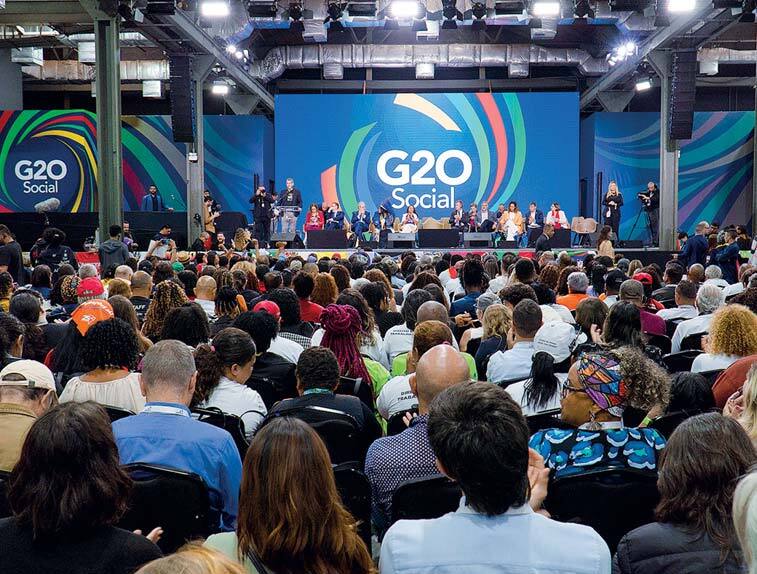
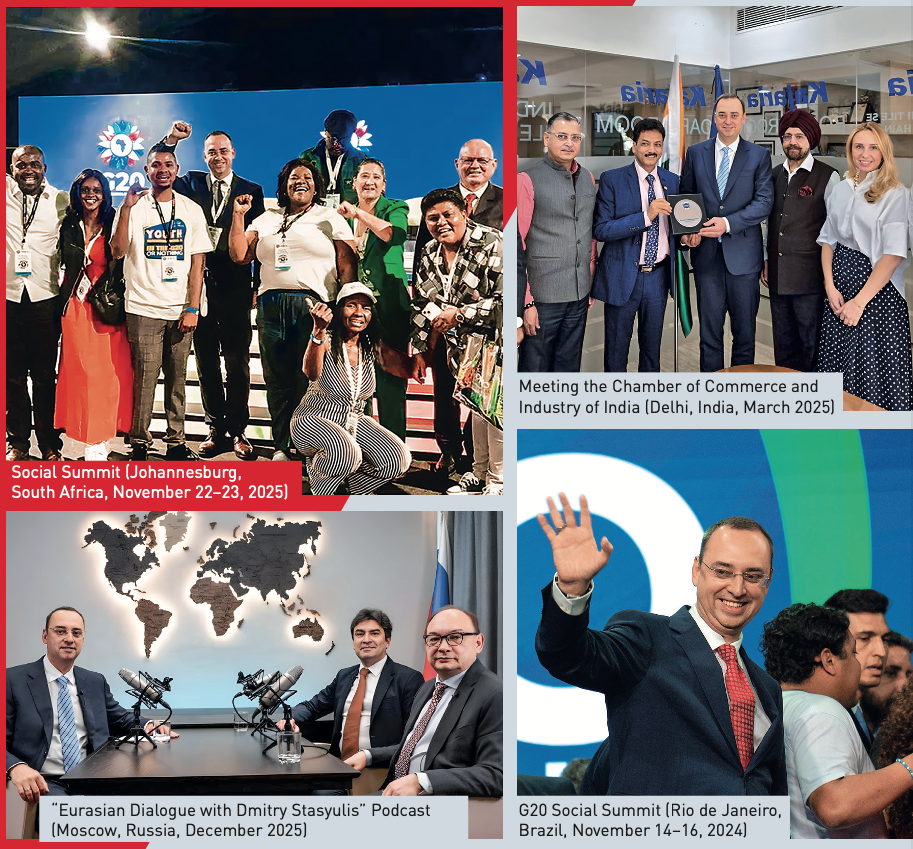
— Since 2024, I have served as Russia’s Sherpa—in other words, its representative—to the C20, a G20 official engagement group. Although this format was established to facilitate interaction among civil society members, a significant part of the issues under discussion relate to international politics and economy.
In 2025, during South Africa’s presidency, I was a co-coordinator of the working group on Trade, Financial Architecture and Sustainable Development. Its work culminated in a civil society policy brief, which was then presented to the G20 leaders.
The 2025 C20 Declaration, as suggested by the Russian side, incorporated provisions on supporting and engaging worldwide in the Greater Eurasian Partnership; abandoning unilateral economic sanctions not authorised by the UN Security Council; backing reforms of global financial and trade institutions such as the WTO, the IMF and the World Bank; establishing and strengthening the North–South trade corridor; preserving historical memory as a foundation for peace and international solidarity; and eradicating the neocolonial agenda and fascism in all its forms and manifestations.
The inclusion of these provisions in the Declaration shows that Russia’s voice has been heard. In these respects, it is accepted and echoed by civil society of the Global Majority.
— I would describe it as a time of change and transformation. It is not merely our present that is being shaped right now, but our future. We are witnessing the global architecture shifting before our eyes. New centres of gravity are emerging, integration is gathering pace. And despite the ongoing escalation and the West’s attempts to check these trends, we are steadily moving towards a multipolar world. What shape it ultimately takes depends on our common actions.
This is true for multilateral economic formats as well. Regional integration is becoming increasingly important. Among the countries of the Global South, there is a growing demand for sovereignty in decision making, as the West persists in its efforts to preserve its dominance. The struggle for resources has also become a key factor shaping the multilateral economic formats.
As for IOEC’s contribution in this area, one could say that since its founding, it has been actively involved in advancing the Greater Eurasian Partnership (GEP), put forward by Russia’s President Putin. This initiative is a practical embodiment of the idea of forging a Greater Eurasia—a space defined by equal partnership, a polycentric world order, and equitable, multi speed, mutually beneficial economic cooperation.
— Within the C20 you take part in its working groups on trade and sustainable development, as well as on democratic governance. How can these mechanisms be used to advance the principles of mutual benefit and fairness that also underpin the Greater Eurasian Partnership?
— Since 2024, I have served as Russia’s Sherpa—in other words, its representative—to the C20, a G20 official engagement group. Although this format was established to facilitate interaction among civil society members, a significant part of the issues under discussion relate to international politics and economy.
In 2025, during South Africa’s presidency, I was a co-coordinator of the working group on Trade, Financial Architecture and Sustainable Development. Its work culminated in a civil society policy brief, which was then presented to the G20 leaders.
The 2025 C20 Declaration, as suggested by the Russian side, incorporated provisions on supporting and engaging worldwide in the Greater Eurasian Partnership; abandoning unilateral economic sanctions not authorised by the UN Security Council; backing reforms of global financial and trade institutions such as the WTO, the IMF and the World Bank; establishing and strengthening the North–South trade corridor; preserving historical memory as a foundation for peace and international solidarity; and eradicating the neocolonial agenda and fascism in all its forms and manifestations.
The inclusion of these provisions in the Declaration shows that Russia’s voice has been heard. In these respects, it is accepted and echoed by civil society of the Global Majority.
The 2025 C20 Declaration, as suggested by the Russian side, incorporated important and timely provisions—a clear indication that Russia’s voice is echoed by many in civil society within the Global Majority.
— In May 2026, Kazan will host the 17th International Economic Forum “Russia — Islamic World: KazanForum.” The IOEC is acting as an information partner for the event and as a co-organiser of one of its sessions, dedicated to the Greater Eurasian Partnership. Could you spill the tea on this initiative? What topics will be at the forefront? What are your expectations, and why, in your view, is this forum the right platform for addressing the GEP?
— The IOEC is indeed taking a very active role in covering the upcoming International Economic Forum “Russia — Islamic World: KazanForum” as an information partner. And we are pleased to note that the idea of developing dialogue on the GEP on the margins of the Kazan forum was supported by the Rais of Tatarstan, Chairman of the Group of Strategic Vision “Russia — Islamic World,” Rustam Minnikhanov.
So, one of the sessions will cover the Greater Eurasian Partnership. I believe that Russia’s dialogue on the GEP with the countries of the Islamic world—which represent a substantial part of the Greater Eurasia—is timely and entirely justified, particularly now, as the world is undergoing a fundamental restructuring of the global architecture.
The discussions will bring together foreign diplomats, integration associations, the Group of Strategic Vision “Russia — Islamic World,” as well as officials, business and academia. The session is jointly organised by the Russian Foreign Ministry, the Group of Strategic Vision “Russia — Islamic World,” the Institute of Public Administration and Civil Service of RANEPA, the International Organisation for Eurasian Cooperation, and the Economic Society of the Republic of Tatarstan.
As an organiser, the IOEC hopes that, firstly, the event will draw greater attention to the GEP among our foreign colleagues and, secondly, will develop new mechanisms and proposals to take it forward.
— The IOEC has established a Business Centre. What projects is it currently advancing? Amid the shifts in logistics and finance, what kinds of requests do you receive most often from entrepreneurs?
— The reason we launched the Business Centre in 2025 was the growing number of requests from Russian companies seeking assistance and support as they entered foreign markets.
Business today needs more than merely advice—it needs practical levers: help in finding reliable business partners, handling the necessary paperwork in foreign jurisdictions, establishing new logistics chains, and carrying out financial settlements in places where the usual tools no longer work.
Our centre is not a classic consulting agency, but an integration hub that operates in line with the GEP. We focus on concrete projects aimed at advancing integration and building its instruments in a systematic way.
As far as business requests are concerned, companies today are more eager than ever to enter new markets, export their products, and set up joint ventures with foreign partners. They are concerned about legal security and dispute resolution without reference to unfriendly jurisdictions, the stability of settlements in national currencies, and new logistics routes. The countries currently drawing the greatest interest from entrepreneurs who approach us are in Asia (China, India), the Gulf (Saudi Arabia, the UAE, Bahrain), Latin America (Brazil, Ecuador), and Africa (Algeria, Egypt, Mauritania, Senegal, South Africa, Namibia, Ghana).
In short, the establishment of the IOEC Business Centre was a response to the demands of the times. We have evolved from a discussion platform into a practical tool that helps businesses not only adapt to a changing environment but also leverage the emerging multipolar world architecture for their own growth—building on the principles of mutual respect and sovereignty that we champion across all international forums, including the G20.
— The IOEC is indeed taking a very active role in covering the upcoming International Economic Forum “Russia — Islamic World: KazanForum” as an information partner. And we are pleased to note that the idea of developing dialogue on the GEP on the margins of the Kazan forum was supported by the Rais of Tatarstan, Chairman of the Group of Strategic Vision “Russia — Islamic World,” Rustam Minnikhanov.
So, one of the sessions will cover the Greater Eurasian Partnership. I believe that Russia’s dialogue on the GEP with the countries of the Islamic world—which represent a substantial part of the Greater Eurasia—is timely and entirely justified, particularly now, as the world is undergoing a fundamental restructuring of the global architecture.
The discussions will bring together foreign diplomats, integration associations, the Group of Strategic Vision “Russia — Islamic World,” as well as officials, business and academia. The session is jointly organised by the Russian Foreign Ministry, the Group of Strategic Vision “Russia — Islamic World,” the Institute of Public Administration and Civil Service of RANEPA, the International Organisation for Eurasian Cooperation, and the Economic Society of the Republic of Tatarstan.
As an organiser, the IOEC hopes that, firstly, the event will draw greater attention to the GEP among our foreign colleagues and, secondly, will develop new mechanisms and proposals to take it forward.
— The IOEC has established a Business Centre. What projects is it currently advancing? Amid the shifts in logistics and finance, what kinds of requests do you receive most often from entrepreneurs?
— The reason we launched the Business Centre in 2025 was the growing number of requests from Russian companies seeking assistance and support as they entered foreign markets.
Business today needs more than merely advice—it needs practical levers: help in finding reliable business partners, handling the necessary paperwork in foreign jurisdictions, establishing new logistics chains, and carrying out financial settlements in places where the usual tools no longer work.
Our centre is not a classic consulting agency, but an integration hub that operates in line with the GEP. We focus on concrete projects aimed at advancing integration and building its instruments in a systematic way.
As far as business requests are concerned, companies today are more eager than ever to enter new markets, export their products, and set up joint ventures with foreign partners. They are concerned about legal security and dispute resolution without reference to unfriendly jurisdictions, the stability of settlements in national currencies, and new logistics routes. The countries currently drawing the greatest interest from entrepreneurs who approach us are in Asia (China, India), the Gulf (Saudi Arabia, the UAE, Bahrain), Latin America (Brazil, Ecuador), and Africa (Algeria, Egypt, Mauritania, Senegal, South Africa, Namibia, Ghana).
In short, the establishment of the IOEC Business Centre was a response to the demands of the times. We have evolved from a discussion platform into a practical tool that helps businesses not only adapt to a changing environment but also leverage the emerging multipolar world architecture for their own growth—building on the principles of mutual respect and sovereignty that we champion across all international forums, including the G20.
— One last question. You are both head of the IOEC and a lawyer. How does your experience in corporate and civil law help you shape the work of the Business Centre? What legal barriers currently stand in the way of international business in Eurasia, and how is the IOEC helping to overcome them?
— Indeed, combining the management of the organisation with legal practice offers a fundamentally different perspective on many issues. We pay attention both to the business model of projects and to the legal risks and barriers that arise when negotiating and executing contracts.
Several challenges stand out when it comes to implementing international business projects in Eurasia. For example, there is a divergence in regulations. Differences in state support measures and project selection procedures across the EAEU create obstaclestosecuringinvestment.Many problems are linked to certification and technical regulation of goods, works and services. When rules on the recognition of certificates of conformity are tightened, product deliveries are delayed, which in turn disrupts cooperation chains.
That is why one of the Business Centre’s tasks is to help companies overcome these hurdles and barriers. We intend to continue combining best practices and expertise to help businesses enter new markets.
Thank you for your interest in our work.
— Indeed, combining the management of the organisation with legal practice offers a fundamentally different perspective on many issues. We pay attention both to the business model of projects and to the legal risks and barriers that arise when negotiating and executing contracts.
Several challenges stand out when it comes to implementing international business projects in Eurasia. For example, there is a divergence in regulations. Differences in state support measures and project selection procedures across the EAEU create obstaclestosecuringinvestment.Many problems are linked to certification and technical regulation of goods, works and services. When rules on the recognition of certificates of conformity are tightened, product deliveries are delayed, which in turn disrupts cooperation chains.
That is why one of the Business Centre’s tasks is to help companies overcome these hurdles and barriers. We intend to continue combining best practices and expertise to help businesses enter new markets.
Thank you for your interest in our work.