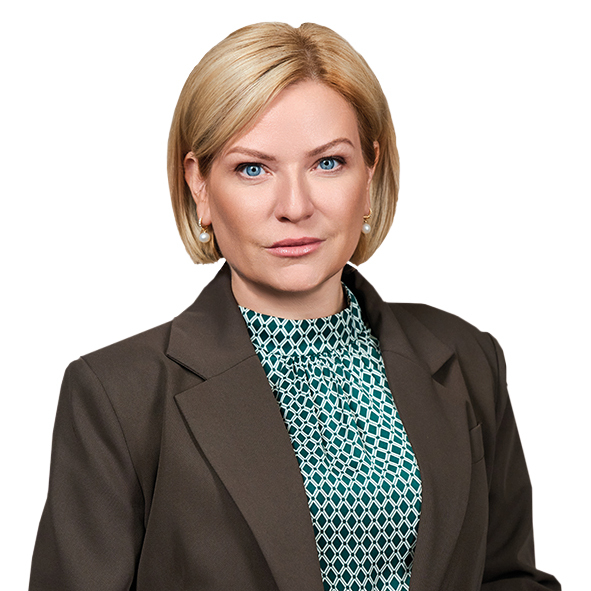
MINISTER OF CULTURE OF THE RUSSIAN FEDERATION OLGA LYUBIMOVA ON THE ROLE OF KAZAN AS A KEY EURASIAN CENTRE FOR THE DISSEMINATION AND PROMOTION OF UNIQUE SPIRITUAL AND MORAL VALUES, AND ON THE SIGNIFICANCE OF THE STATUS “CULTURAL CAPITAL OF THE ISLAMIC WORLD 2026” FOR RUSSIAN‐ISLAMIC DIALOGUE
Here in Kazan, the capital of one of Russia’s most distinctive regions— Tatarstan—one frequently encounters traditional ornamentation. The melodious Tatar pattern has absorbed the diversity of both Muslim and Slavic cultures. This is, perhaps, the finest illustration of the ongoing evolution of cultural dialogue across Greater Eurasia. At the same time, Tatarstan’s musical, soulful, and hospitable pattern faithfully represents the diversity and richness of the Republic’s people.
For us, Kazan is a recognisable symbol of multi-confessional Russia, a university city and a centre of technology, the “gateway” to the Volga region, and the birthplace of the great Russian opera singer Fyodor Chaliapin. For the international community, Kazan is increasingly becoming an exemplar of contemporary cultural interaction.
The designation of Kazan as the 2026 Cultural Capital of the Islamic World is not merely a tribute to a vibrant regional brand; it symbolises recognising the role that the capital of Tatarstan has long played within Eurasia—one of a city where historical memory meets modernity, Russian statehood converges with Islamic tradition, and national identity opens up to the wider world.
Kazan’s strength lies in the fact that the city has long transcended the status of the administrative centre of Tatarstan or one of Russia’s metropolises. It is a mediator—in the truest civilisational sense of the word.
As history demonstrates, interaction between cultures may be based not on the principle of one tradition displacing another, but rather on mutual enrichment. Kazan, at the crossroads of Europe and Asia, serves as an example of Orthodox Christian and Islamic traditions coexisting harmoniously. It is precisely this that renders it especially comprehensible and close to the Islamic world: here, Islam is neither an exotic curiosity nor an external element, but an organic component of the historical development of society and of collective identity.
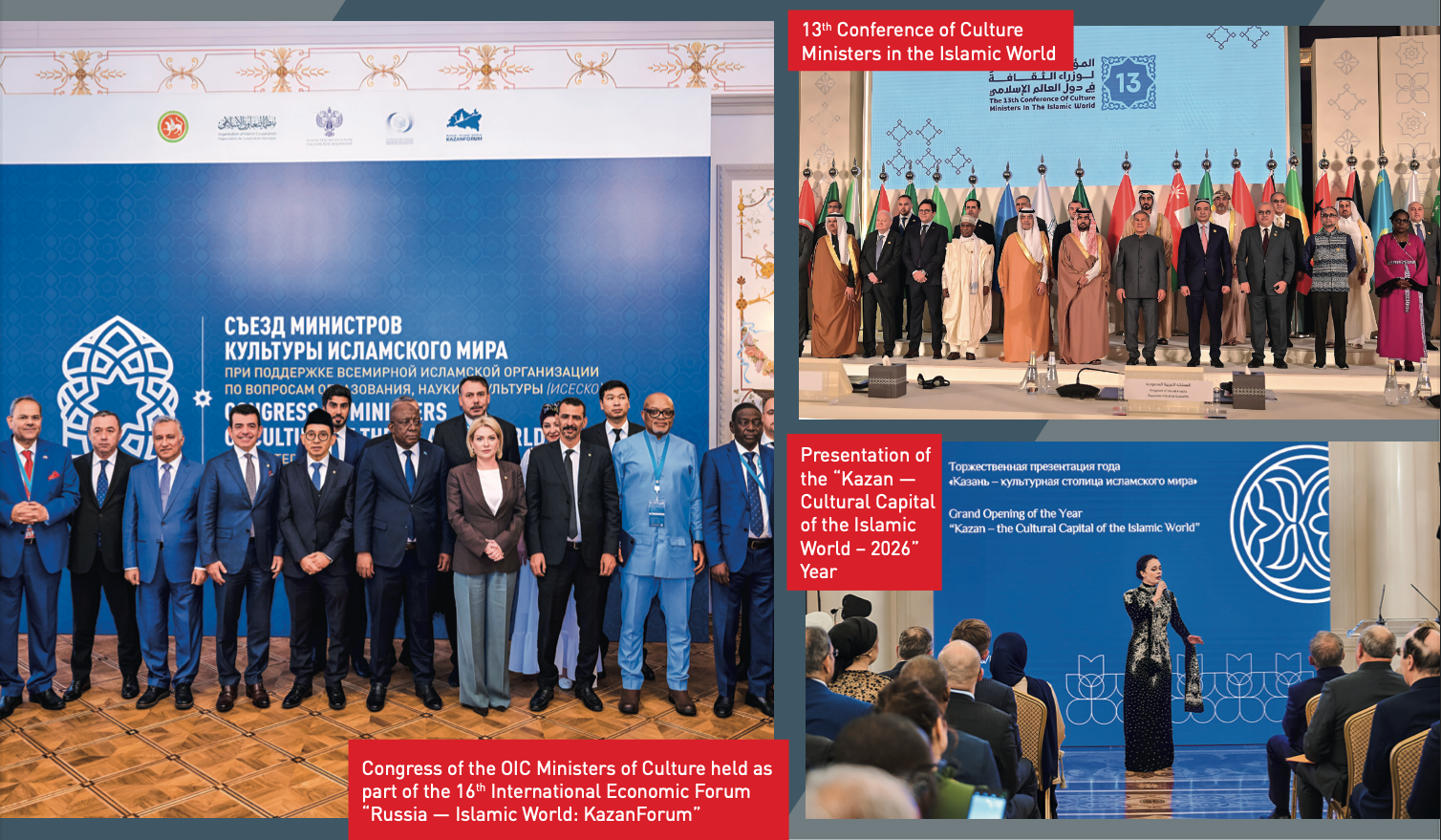
Over the past two decades, the dialogue between Russia and the Islamic world has acquired a stable institutional foundation. In June 2005, Russia was granted observer status with the Organisation of the Islamic Conference (from 2011 onwards, the Organisation of Islamic Cooperation), and 2006 saw the Group of Strategic Vision “Russia — Islamic World,” a permanent mechanism for intellectual, socio-political, and humanitarian engagement, established.
The Group convenes regularly on the margins of the International Forum “Russia — Islamic World: KazanForum,” which in recent years has evolved beyond a bridge for economic cooperation between Russia and the Islamic world into a landmark platform for deliberating youth policy, education, humanitarian ties, digital development, transport, investment, and cultural exchange.
For us, Kazan is a recognisable symbol of multi-confessional Russia, a university city and a centre of technology, the “gateway” to the Volga region, and the birthplace of the great Russian opera singer Fyodor Chaliapin. For the international community, Kazan is increasingly becoming an exemplar of contemporary cultural interaction.
The designation of Kazan as the 2026 Cultural Capital of the Islamic World is not merely a tribute to a vibrant regional brand; it symbolises recognising the role that the capital of Tatarstan has long played within Eurasia—one of a city where historical memory meets modernity, Russian statehood converges with Islamic tradition, and national identity opens up to the wider world.
Kazan’s strength lies in the fact that the city has long transcended the status of the administrative centre of Tatarstan or one of Russia’s metropolises. It is a mediator—in the truest civilisational sense of the word.
As history demonstrates, interaction between cultures may be based not on the principle of one tradition displacing another, but rather on mutual enrichment. Kazan, at the crossroads of Europe and Asia, serves as an example of Orthodox Christian and Islamic traditions coexisting harmoniously. It is precisely this that renders it especially comprehensible and close to the Islamic world: here, Islam is neither an exotic curiosity nor an external element, but an organic component of the historical development of society and of collective identity.
Over the past two decades, the dialogue between Russia and the Islamic world has acquired a stable institutional foundation. In June 2005, Russia was granted observer status with the Organisation of the Islamic Conference (from 2011 onwards, the Organisation of Islamic Cooperation), and 2006 saw the Group of Strategic Vision “Russia — Islamic World,” a permanent mechanism for intellectual, socio-political, and humanitarian engagement, established.
The Group convenes regularly on the margins of the International Forum “Russia — Islamic World: KazanForum,” which in recent years has evolved beyond a bridge for economic cooperation between Russia and the Islamic world into a landmark platform for deliberating youth policy, education, humanitarian ties, digital development, transport, investment, and cultural exchange.
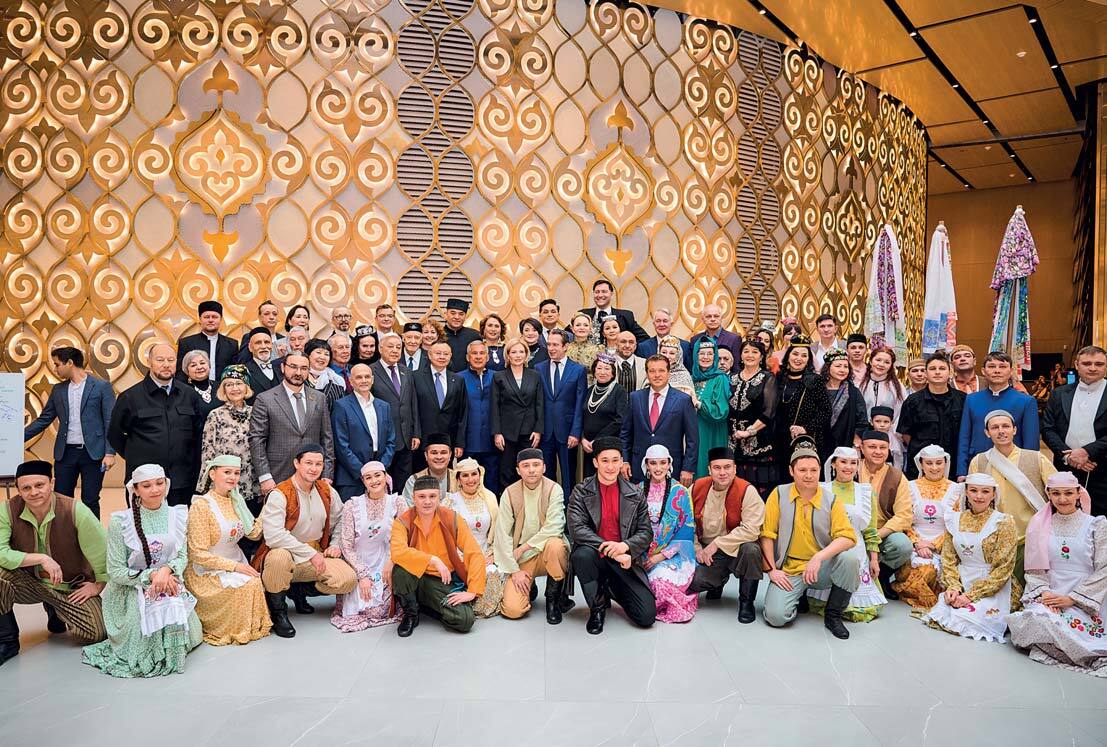
Consequently, for Russia, the significance of the decision to designate Kazan as the Cultural Capital of the Islamic World extends far beyond cultural diplomacy.
In addition to major business events, the capital of Tatarstan hosts numerous vibrant international cultural events. The Kazan International Film Festival (known as “Altyn Minbar”) has, since 2005, built a cultural channel wherein discourse on Islam is conducted through humanistic themes—dignity, peace, mutual respect, and the dialogue of traditions. Similarly, the International Festival of Folklore and Ethnic Music “Salute, Victory!” attracts ensembles from across the world, presenting traditional folk culture and music, thereby contributing to the preservation of cultural heritage and the development of creative collaboration. Furthermore, international scientific and cultural forums and congresses centred around the history, languages, and traditions of the Volga region and the wider Eurasia hold considerable significance.
The city’s cultural infrastructure warrants particular mention. A venue of paramount importance is the Museum of Islamic Culture at the Kul Sharif Mosque, in the very tourist core, presenting Islam both as a world religion and as an integral part of the history and culture of the Tatar people.
The Tatarstan’s cultural code formed as part of the grand history of Islamic civilisation across Eurasia. The historical and architectural ensemble of the Kazan Kremlin was inscribed ontheUNESCOWorldHeritageList in 2000, and its very structure visibly reflects how diverse traditions meet. Also of particular significance is Bolgar—a UNESCO World Heritage Site regarded both as a symbol of Volga Bulgaria adopting Islam in 922 and as a sacred place for Tatar Muslims. UNESCO itself underscores that Bolgar bears witness to centuries of cultural exchange across Eurasia and to the mutual influence of Turkic, Finno-Ugric, Slavic, and other traditions. Thus, Kazan’s status as one of Russia’s multi-confessional centres rests not upon an artificial image but upon concrete historical facts.
In addition to major business events, the capital of Tatarstan hosts numerous vibrant international cultural events. The Kazan International Film Festival (known as “Altyn Minbar”) has, since 2005, built a cultural channel wherein discourse on Islam is conducted through humanistic themes—dignity, peace, mutual respect, and the dialogue of traditions. Similarly, the International Festival of Folklore and Ethnic Music “Salute, Victory!” attracts ensembles from across the world, presenting traditional folk culture and music, thereby contributing to the preservation of cultural heritage and the development of creative collaboration. Furthermore, international scientific and cultural forums and congresses centred around the history, languages, and traditions of the Volga region and the wider Eurasia hold considerable significance.
The city’s cultural infrastructure warrants particular mention. A venue of paramount importance is the Museum of Islamic Culture at the Kul Sharif Mosque, in the very tourist core, presenting Islam both as a world religion and as an integral part of the history and culture of the Tatar people.
The Tatarstan’s cultural code formed as part of the grand history of Islamic civilisation across Eurasia. The historical and architectural ensemble of the Kazan Kremlin was inscribed ontheUNESCOWorldHeritageList in 2000, and its very structure visibly reflects how diverse traditions meet. Also of particular significance is Bolgar—a UNESCO World Heritage Site regarded both as a symbol of Volga Bulgaria adopting Islam in 922 and as a sacred place for Tatar Muslims. UNESCO itself underscores that Bolgar bears witness to centuries of cultural exchange across Eurasia and to the mutual influence of Turkic, Finno-Ugric, Slavic, and other traditions. Thus, Kazan’s status as one of Russia’s multi-confessional centres rests not upon an artificial image but upon concrete historical facts.
A crucial feature of the Kazan experience is that the historical heritage here is not tightly sealed within a museum display case but is actively integrated with contemporary cultural development. A notable cultural project in modern Russia is the new building of the Galiaskar Kamal Theatre, inaugurated in January 2025. This is a multifunctional, in the true sense of word, complex covering about 57,000 square metres, housing several auditoria and extensive creative infrastructure. The symbolismhereisapparent:theIslamic world perceives Kazan as not only a reverent custodian but also a creator of a modern cultural environment in which national tradition finds new artistic expression.
It is for this reason that Kazan today is perceived not as a space of retrospection, but of the future. For the Islamic world, as for the wider Eurasia, the search for models of development that do not need the renunciation of one’s own cultural foundations is becoming ever more urgent. The Kazan experience is significant precisely because it demonstrates such a path: development is possible without the identity dissolving; international openness is possible without cultural self-effacement; technological and infrastructural modernisation is possible without a rupture with historical tradition. In this sense, its experience is becoming especially sought after in an era when many nations strive to reinforce their own civilisational sovereignty while preserving the capacity for broad international cooperation.
It is for this reason that Kazan today is perceived not as a space of retrospection, but of the future. For the Islamic world, as for the wider Eurasia, the search for models of development that do not need the renunciation of one’s own cultural foundations is becoming ever more urgent. The Kazan experience is significant precisely because it demonstrates such a path: development is possible without the identity dissolving; international openness is possible without cultural self-effacement; technological and infrastructural modernisation is possible without a rupture with historical tradition. In this sense, its experience is becoming especially sought after in an era when many nations strive to reinforce their own civilisational sovereignty while preserving the capacity for broad international cooperation.
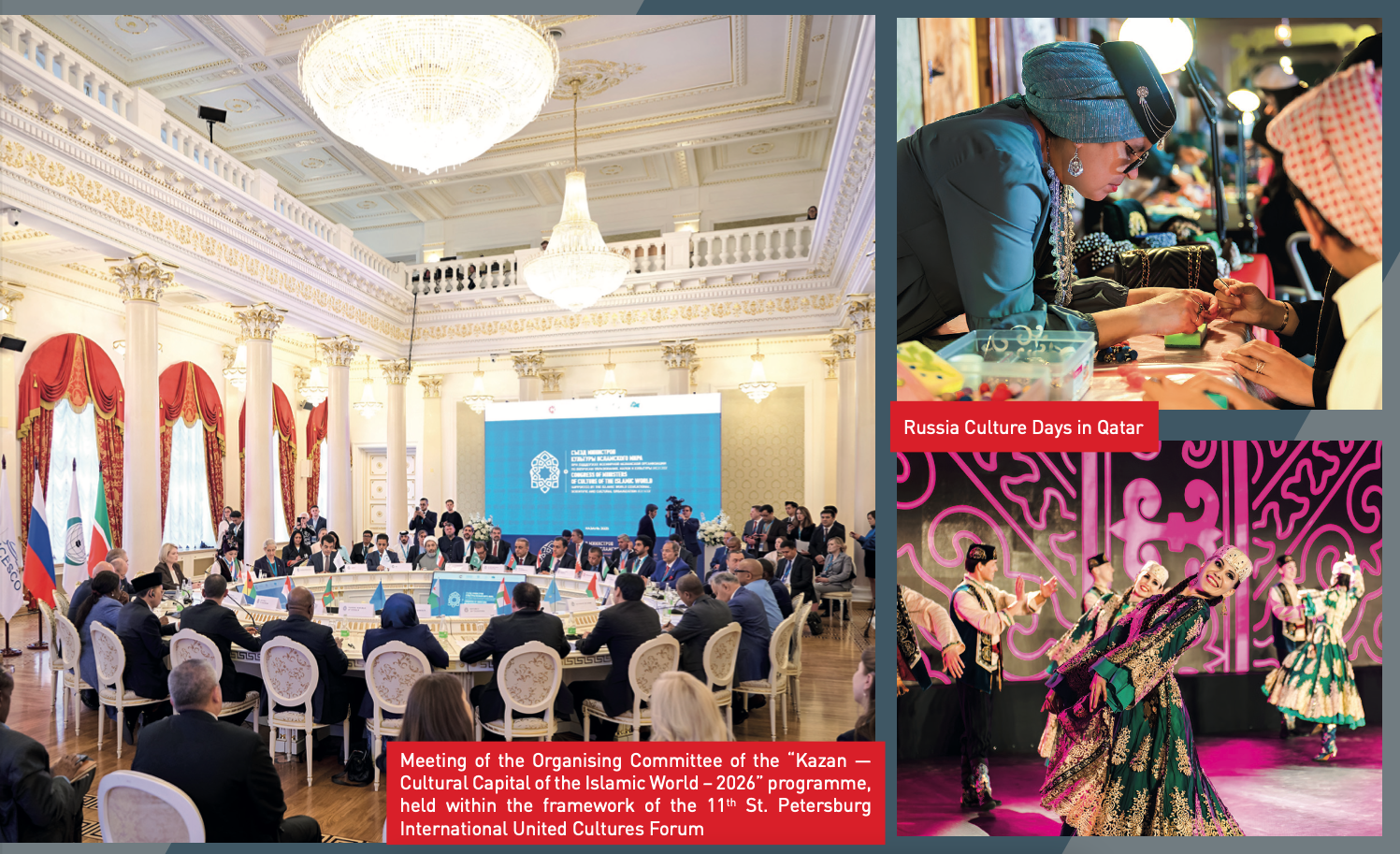
Kazan, being the 2026 Cultural Capital of the Islamic World, can attain widespread international renown and attract an even greater number of visitors. At the same time, with it comes a considerable responsibility: this status entails not only conducting solemn ceremonies but also devising a substantive, multigenre programme of interest to both audiences and the professional community alike.
In this regard, a multitude of events recounting Kazan’s centuries-long history and the cultural diversity of the region where many peoples live side by side has been planned. The programme for 2026 includes: a meeting of OIC ministers of culture; a forum on preserving linguistic diversity; events marking the day of the official adoption of Islam by Volga Bulgaria; the Ethno-Fashion Festival; the “Altyn Minbar” Kazan International Film Festival; an international festival of Islamic art; and an exhibition of calligraphy.
The example of Kazan proves that the engagement between our country and the Islamic world is not a situational foreign policy dictated by current circumstances. Rather, it is founded upon an intrinsic historical and cultural affinity. Islam is an integral part of Russian civilisation, and Tatarstan is one of the most compelling proofs that the Muslim tradition can develop naturally within a tightknit multi-ethnic state.
It is particularly important that, here, culture is not subservient to politics and economy, but exists as their basis of meaning. Enduring partnership extends beyond contracts and diplomatic instruments to mutual respect for historical memory, religious traditions, languages, and the ways of life. It is for this reason that the designation of Kazan as the Cultural Capital of the Islamic World should be viewed as an investment in the future of Russia–Islamic world relations. Culture creates a space of trust. It is through trust that educational, youth, tourism, business, and scientific projects come into fruition; and through these, a resilient architecture of cooperation takes shape—one founded not upon dominance, but the recognition of the dignity of each civilisation.
Kazan has earned the right to be called the Cultural Capital of the Islamic World not only by virtue of its rich past but also owing to its capacity to transform historical heritage into a resource for current development. Within it are conjoined the memory of Volga Bulgaria and the traditions of Russian Islam, the experience of the peaceful coexistence of cultures, a robust educational and intellectual environment, modern arts institutions, and international platforms for dialogue. It is for these reasons that Kazan may today be regarded as one of the key Eurasian centres for the dissemination and promotion of unique culture as well as spiritual and moral values.
In this regard, a multitude of events recounting Kazan’s centuries-long history and the cultural diversity of the region where many peoples live side by side has been planned. The programme for 2026 includes: a meeting of OIC ministers of culture; a forum on preserving linguistic diversity; events marking the day of the official adoption of Islam by Volga Bulgaria; the Ethno-Fashion Festival; the “Altyn Minbar” Kazan International Film Festival; an international festival of Islamic art; and an exhibition of calligraphy.
The example of Kazan proves that the engagement between our country and the Islamic world is not a situational foreign policy dictated by current circumstances. Rather, it is founded upon an intrinsic historical and cultural affinity. Islam is an integral part of Russian civilisation, and Tatarstan is one of the most compelling proofs that the Muslim tradition can develop naturally within a tightknit multi-ethnic state.
It is particularly important that, here, culture is not subservient to politics and economy, but exists as their basis of meaning. Enduring partnership extends beyond contracts and diplomatic instruments to mutual respect for historical memory, religious traditions, languages, and the ways of life. It is for this reason that the designation of Kazan as the Cultural Capital of the Islamic World should be viewed as an investment in the future of Russia–Islamic world relations. Culture creates a space of trust. It is through trust that educational, youth, tourism, business, and scientific projects come into fruition; and through these, a resilient architecture of cooperation takes shape—one founded not upon dominance, but the recognition of the dignity of each civilisation.
Kazan has earned the right to be called the Cultural Capital of the Islamic World not only by virtue of its rich past but also owing to its capacity to transform historical heritage into a resource for current development. Within it are conjoined the memory of Volga Bulgaria and the traditions of Russian Islam, the experience of the peaceful coexistence of cultures, a robust educational and intellectual environment, modern arts institutions, and international platforms for dialogue. It is for these reasons that Kazan may today be regarded as one of the key Eurasian centres for the dissemination and promotion of unique culture as well as spiritual and moral values.