
Eduardo PEDROSA, Executive Director, APEC Secretariat
The Strengthened and Enhanced APEC Agenda for Structural Reform 2026–2030 encompasses a set of measures designed to unlock opportunities for promoting sustainable economic growth, ensuring market competitiveness, and fostering an enabling business environment.
APEC’S CRITICAL ROLE IN MULTIPOLAR WORLD
For almost 40 years since the foundation of the Asia-Pacific Economic Cooperation (APEC), the AsiaPacific and the world have gone through an unprecedented period of rising incomes and technological innovation.
These improvements should not be taken as part of a linear progression or just fruits of technological development but also as a result of a favourable policy environment, both domestically and internationally.
The international enabling factor for the mass adoption of advanced technology products including the Internet was the World Trade Organization (WTO) Information Technology Agreement. Without that agreement in place, the prices of IT products would be higher and investment in them less likely.
However, the international environment that has contributed to raising prosperity in the past 40 years, is now under threat. When APEC Leaders met for their annual meeting in 2025 in Gyeongju, they underscored the challenges facing the world: rapid technological change including artificial intelligence; demographic shifts; but also, the global trading system itself. Throughout its history, APEC has underscored the importance of an effective multilateral trading system and its importance to the region’s growth.
The point is that we are at an inflection point now. Economies can choose to cooperate and rebuild trust, or we refuse to cooperate at the risk of losing the substantial gains the world has made. When APEC Leaders first met in Seattle in 1993, they committed to “deepening our spirit of community based on our shared vision of achieving stability, security and prosperity for our peoples.” That shared vision formed the basis for the building of trust.
These improvements should not be taken as part of a linear progression or just fruits of technological development but also as a result of a favourable policy environment, both domestically and internationally.
The international enabling factor for the mass adoption of advanced technology products including the Internet was the World Trade Organization (WTO) Information Technology Agreement. Without that agreement in place, the prices of IT products would be higher and investment in them less likely.
However, the international environment that has contributed to raising prosperity in the past 40 years, is now under threat. When APEC Leaders met for their annual meeting in 2025 in Gyeongju, they underscored the challenges facing the world: rapid technological change including artificial intelligence; demographic shifts; but also, the global trading system itself. Throughout its history, APEC has underscored the importance of an effective multilateral trading system and its importance to the region’s growth.
The point is that we are at an inflection point now. Economies can choose to cooperate and rebuild trust, or we refuse to cooperate at the risk of losing the substantial gains the world has made. When APEC Leaders first met in Seattle in 1993, they committed to “deepening our spirit of community based on our shared vision of achieving stability, security and prosperity for our peoples.” That shared vision formed the basis for the building of trust.
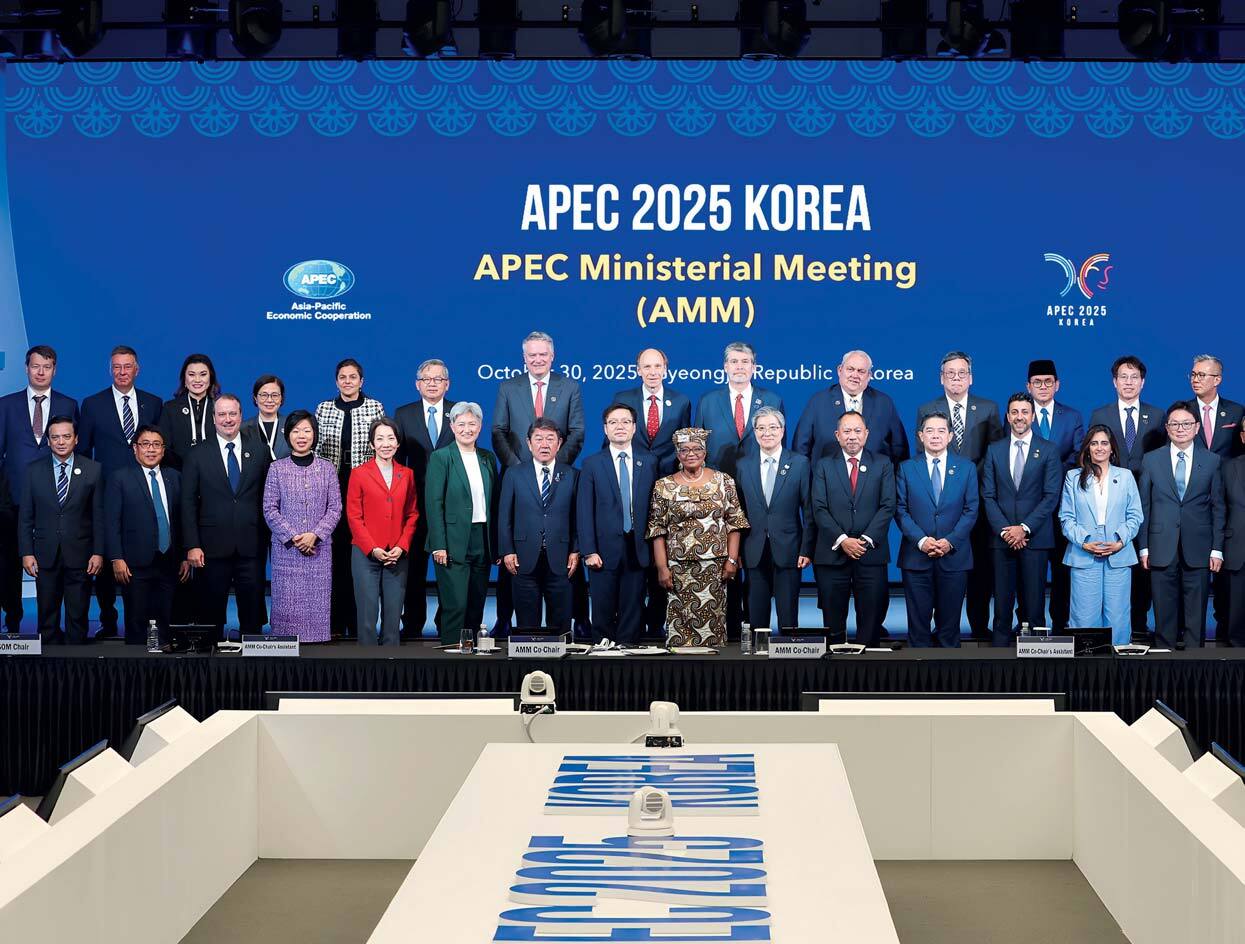
The rules-based multilateral trading system has been central to APEC work since its creation, and it should come as no surprise that the challenges facing the system are also challenges for APEC. In 1994, APEC members adopted the Bogor Goals of free and open trade and investment in the Asia-Pacific by 2020. While committing to this goal, APEC members emphasized that its achievement would be pursued in a manner consistent with the multilateral trading system and serve as a “powerful impetus for further liberalization at the multilateral level.” The decision to pursue the Bogor Goals was not one taken lightly. There was a significant risk that multilateral trade negotiations (the Uruguay Round) would fail, bilateral trade disputes were rising, and there were fears that the world was fragmenting into trading blocs. Those words could, with a few adjustments, have been written today. APEC played a significant role in the finalization of the Uruguay Round and committed to a non-discriminatory form of regionalism.
While recognizing the value of regional and free trade areas, APEC has also set out best practices and principles that facilitate and accelerate trade among APEC members but also keep markets open to others. These 21st century agreements keep the momentum going and facilitate a common approach on how new trade issues are addressed.
The most prominent example of this approach is the Comprehensive and Progressive Agreement for Trans-Pacific Partnership (CPTPP). What began as an agreement among just four relatively small sized economies now has 12 members. Originally an agreement specifically aimed at APEC members through its accession clause, it has also attracted interest across the world as seen with the accession of the United Kingdom. Other regional economies have also begun negotiations or expressed an interest in joining such as China, Indonesia, the Philippines, Chinese Taipei and Thailand. Many CPTPP members are also members of the Regional Comprehensive Economic Partnership (RCEP) which are considered “pathways to a Free Trade Area of the Asia-Pacific (FTAAP).” As with APEC’s conceptual notion of “open regionalism,” these agreements are not centrifugal but are also outward looking, with interest from the United Arab Emirates as well as the establishment of a CPTPP–EU Trade and Investment Dialogue.
While recognizing the value of regional and free trade areas, APEC has also set out best practices and principles that facilitate and accelerate trade among APEC members but also keep markets open to others. These 21st century agreements keep the momentum going and facilitate a common approach on how new trade issues are addressed.
The most prominent example of this approach is the Comprehensive and Progressive Agreement for Trans-Pacific Partnership (CPTPP). What began as an agreement among just four relatively small sized economies now has 12 members. Originally an agreement specifically aimed at APEC members through its accession clause, it has also attracted interest across the world as seen with the accession of the United Kingdom. Other regional economies have also begun negotiations or expressed an interest in joining such as China, Indonesia, the Philippines, Chinese Taipei and Thailand. Many CPTPP members are also members of the Regional Comprehensive Economic Partnership (RCEP) which are considered “pathways to a Free Trade Area of the Asia-Pacific (FTAAP).” As with APEC’s conceptual notion of “open regionalism,” these agreements are not centrifugal but are also outward looking, with interest from the United Arab Emirates as well as the establishment of a CPTPP–EU Trade and Investment Dialogue.
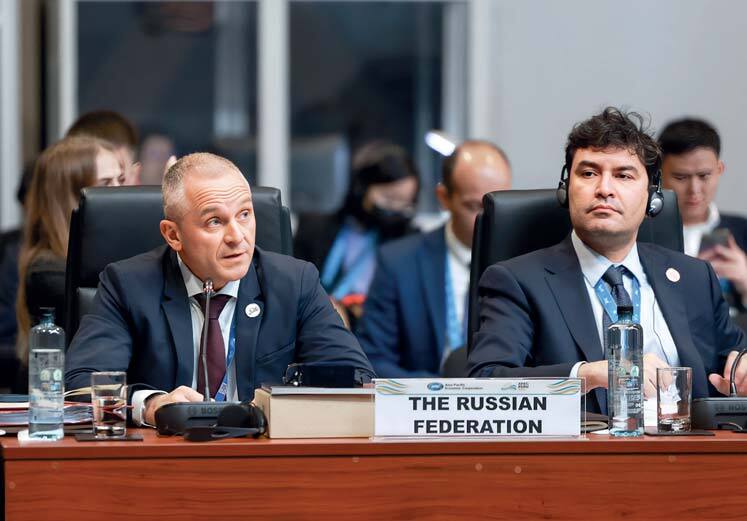
APEC has played a significant role in this trend serving as an ‘incubator’ of ideas. Through its various initiatives APEC contributes to the multilateral trading system. Despite or because of its non-binding approach, members can reach an agreement on ideas or general principles that are then adopted in a more formal manner such as in the CPTPP. This approach ensures a track-record of the APEC success. When APEC Leaders met in the Philippines in 1996, they recognized the importance of information technology and called for the conclusion of the negotiations on the Information Technology Agreement. Similarly, when APEC Leaders met in Vladivostok in 2012, they endorsed the first internationally agreed list of environmental goods committing to reduce applied tariff rates to 5% or less by the end of 2015 (taking into account economies’ economic circumstances and without prejudice to their positions in the WTO).
The underlying question is what’s next? What will the future of the multilateral system be and how can APEC contribute? It is already doing so through the willingness of some of its members to codify the APEC work into binding agreements. But the ability of governments to respond to these changes in the absence of a rulesbased framework threatens to leave some economies, especially emerging economies behind. In this context, despite the criticisms, the WTO has demonstrated progress, including the Joint Statement Initiatives addressing issues such as:
These are taking place amongst “coalitions of the willing.” Given this, the future of multilateralism seems to be with economies taking the initiative work with others to agree on how they will address issues of common concern. One example of this is the Digital Economy Partnership Agreement (DEPA), which seeks to address the digitalisation of trade, how to provide a more certain set of rules on the digital economy for both businesses and consumers. All DEPA’s founding members—Chile, New Zealand and Singapore—are APEC members. The Republic of Korea is now a member, and China has also expressed interest in joining. Looking ahead, APEC’s Artificial Intelligence (AI) Initiative (2026–2030) could provide the groundwork for further development of principles and policy frameworks.
Eight APEC members are in the top twenty economies in AI Preparedness ranking assessed by the International Monetary Fund (IMF).
But the same data shows a significant divide among APEC members, with gaps in digital infrastructure standing out as the largest. While not a development bank, APEC dialogues and projects can facilitate exchanges of views on the types of policies that members have adopted. All of APEC working groups are addressing AI, not surprisingly the APEC Policy Partnership on Science, Technology and Innovation has undertaken the most projects on AI followed by the Human Resource Development Working Group, demonstrating the desire of its members to ensure that people are ready for the coming changes.
In the increasingly complex global situation what is the role of APEC? One issue on which APEC could play (and is playing) is reducing ambiguity. APEC itself is a complex, organic organization. Beyond the headline grabbing meetings, work at the Ministerial, Senior Officials and technical level continue. These provide a deeper understanding of the “why” policies are being pursued but it also requires introspection.
The underlying question is what’s next? What will the future of the multilateral system be and how can APEC contribute? It is already doing so through the willingness of some of its members to codify the APEC work into binding agreements. But the ability of governments to respond to these changes in the absence of a rulesbased framework threatens to leave some economies, especially emerging economies behind. In this context, despite the criticisms, the WTO has demonstrated progress, including the Joint Statement Initiatives addressing issues such as:
- Services Domestic Regulation,
- Electronic Commerce,
- Micro Small and Medium Enterprises (MSMEs),
- Investment Facilitation for Development.
These are taking place amongst “coalitions of the willing.” Given this, the future of multilateralism seems to be with economies taking the initiative work with others to agree on how they will address issues of common concern. One example of this is the Digital Economy Partnership Agreement (DEPA), which seeks to address the digitalisation of trade, how to provide a more certain set of rules on the digital economy for both businesses and consumers. All DEPA’s founding members—Chile, New Zealand and Singapore—are APEC members. The Republic of Korea is now a member, and China has also expressed interest in joining. Looking ahead, APEC’s Artificial Intelligence (AI) Initiative (2026–2030) could provide the groundwork for further development of principles and policy frameworks.
Eight APEC members are in the top twenty economies in AI Preparedness ranking assessed by the International Monetary Fund (IMF).
But the same data shows a significant divide among APEC members, with gaps in digital infrastructure standing out as the largest. While not a development bank, APEC dialogues and projects can facilitate exchanges of views on the types of policies that members have adopted. All of APEC working groups are addressing AI, not surprisingly the APEC Policy Partnership on Science, Technology and Innovation has undertaken the most projects on AI followed by the Human Resource Development Working Group, demonstrating the desire of its members to ensure that people are ready for the coming changes.
In the increasingly complex global situation what is the role of APEC? One issue on which APEC could play (and is playing) is reducing ambiguity. APEC itself is a complex, organic organization. Beyond the headline grabbing meetings, work at the Ministerial, Senior Officials and technical level continue. These provide a deeper understanding of the “why” policies are being pursued but it also requires introspection.
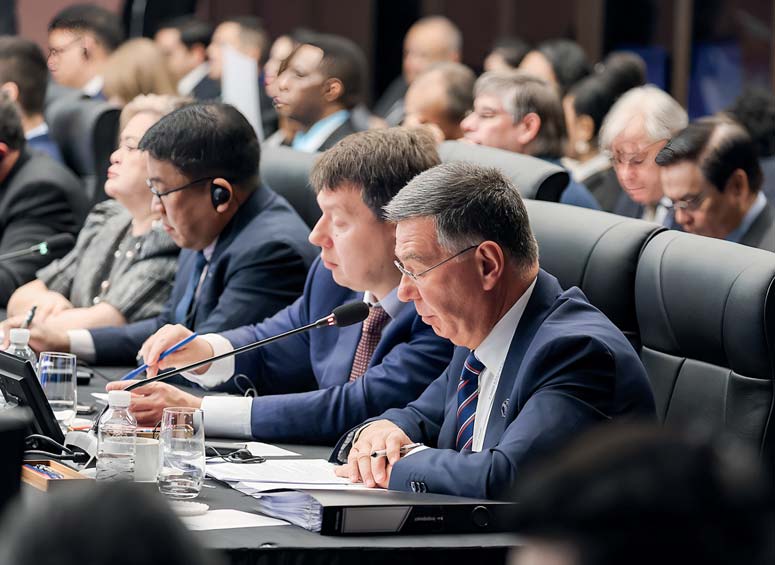
Despite difficulties, reviews of policies continue. This work is undertaken across almost all of APEC initiatives, which include sharing information on the related activities at the economy and APEC-wide level. For example, APEC AI Initiative mandates a final review in 2030 including actions taken by individual APEC economies and collectively.
Similarly, last year APEC Ministers for Structural Reform adopted a new work program on structural reform which will also have a final review in 2030.
It aims to “address or remove structural barriers that limit full, and meaningful participation for all in the economy and stimulate innovation and enhance resilience against economic shocks, demographic changes and other emerging global challenges.” While APEC is well-known for its work on trade policy it is this work on structural reform that can potentially bear the most fruit over the coming years. In 1993 APEC Leaders highlighted inclusion by affirming aspirations, that “Our people share the benefits of economic growth through higher incomes, high skilled and high paying jobs and increased mobility.” However, while the size of the pie has significantly increased since then, the benefits of trade have mostly gone towards higher income segments of the population.
This is not a situation that APEC members have ignored. The concept of more equitable growth was stressed by the APEC Vision Group.
Similarly, last year APEC Ministers for Structural Reform adopted a new work program on structural reform which will also have a final review in 2030.
It aims to “address or remove structural barriers that limit full, and meaningful participation for all in the economy and stimulate innovation and enhance resilience against economic shocks, demographic changes and other emerging global challenges.” While APEC is well-known for its work on trade policy it is this work on structural reform that can potentially bear the most fruit over the coming years. In 1993 APEC Leaders highlighted inclusion by affirming aspirations, that “Our people share the benefits of economic growth through higher incomes, high skilled and high paying jobs and increased mobility.” However, while the size of the pie has significantly increased since then, the benefits of trade have mostly gone towards higher income segments of the population.
This is not a situation that APEC members have ignored. The concept of more equitable growth was stressed by the APEC Vision Group.
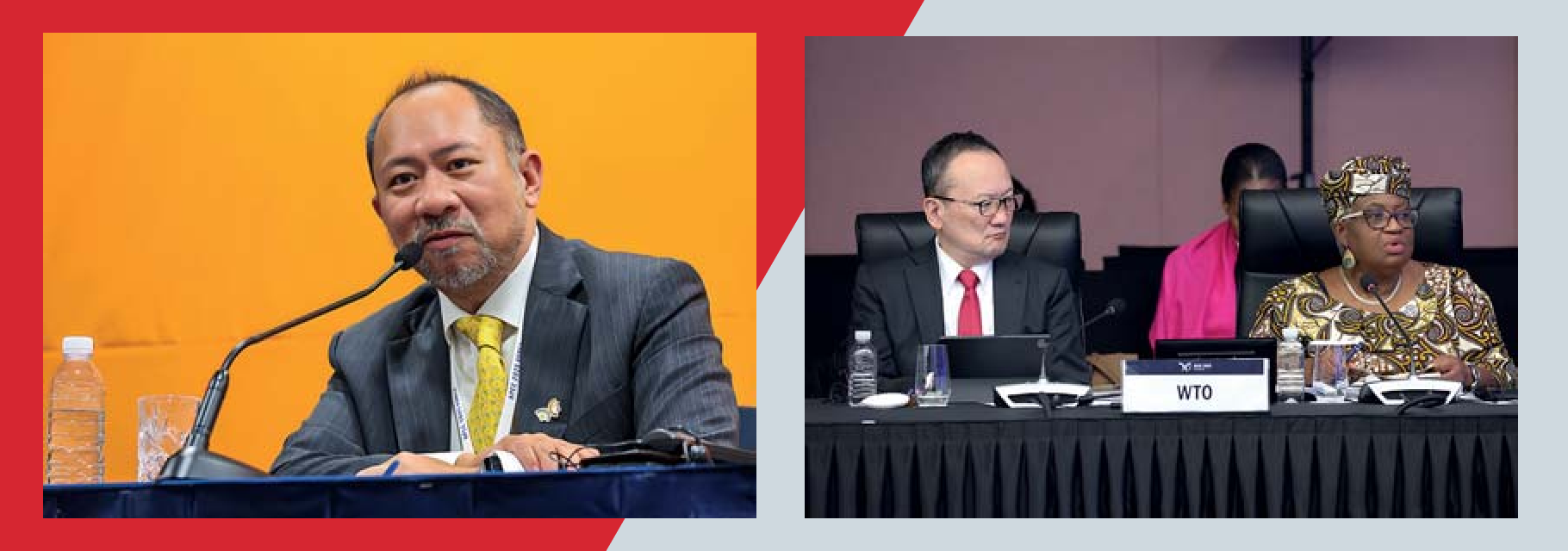
Their 2019 report noted that per capita income in APEC has almost doubled outpacing the rest of the world, while the climate for further trade and investment reform at the multilateral level has deteriorated. Underlying these developments has been rising or persistent inequality within economies, which threatens to undermine sustained growth and stability and fuels growing scepticism about trade and investment liberalisation.
Maintenance of political support for openness today requires more embracing policy frameworks to ensure that all our peoples regard themselves as beneficiaries. APEC also has a role in better communicating the benefits of openness. This places a high burden on the successful implementation of APEC work on structural reform. These policies are part of a broader tool kit required to build support for multilateral institutions. It is not just about trade but also the policies that enable participation in it. Support for progress at the multilateral system needs to address rising income inequality. Over time APEC initiatives have sought to address the disconnect between the benefits of trade and inclusion, with initiatives on micro and small and medium sized enterprises, women and indigenous peoples.
Under Peru’s leadership work in 2024, APEC work deepened on the concept of inclusivity through the inclusion of informal economy. While there are undoubted differences in what these concepts mean in each individual economy and the policy approaches taken to address them, APEC members have agreed to a common cause to address them in the pursuit of the achievement of the APEC Putrajaya Vision 2040.
APEC has also stressed the role of labour market systems to respond to structural changes and to mitigate potential negative impacts on workers such as job losses and polarization.
The most important role that APEC plays is part of its name–“cooperation.” Restoring trust will not be an easy task. The world has significantly changed since the multilateral institutions formed in the aftermath of the Second World War. In 1980 emerging and developing economies accounted for 35% of global GDP, today they account for around 60%. While overall incomes have risen so has income inequality. But this should not entail a wholesale discarding of the multilateral economic system and the rules that have underpinned the economic achievements made since its establishment.
There is little doubt that global governance is at a tipping point. The problems that globalization has brought and the ability of multilateral institutions to solve them must be addressed. These are not all insurmountable problems. Like-minded economies are still coming together to discuss norms and rules that will facilitate a different kind of both regionalism and globalization. Examples include: electronic commerce; investment facilitation for development; domestic services regulation; environmental sustainability.
Some of these may come into the WTO rulebook such as the WTO Trade Facilitation Agreement and the WTO Agreement on Fisheries Subsidies. In other words, despite the concerns about the end of multilateralism, work continues globally, regionally and on a plurilateral basis addressing issues of common purpose.
As APEC leaders said in Peru in 2024, “unprecedented and rapid changes continue to shape the world today. They present a challenge in terms of adjusting our economies to take advantage of new opportunities while minimizing the risks they pose.” They also committed to “working toward necessary WTO reform.” The challenges faced by the multilateral system are not limited to trade. Other global institutions such as the World Bank and the IMF face similar issues. But APEC can also play a role in finding ways forward to ensure that they are fit-for-purpose in the 21st century. APEC Finance Ministers’ Process includes all these institutions and others in their work, demonstrating APEC continual convening power.
APEC represents not only 59% of the global economy and the world’s largest trading economies but also a diversity of members that belong to different groupings. These include members of the CPTPP, RCEP, Pacific Alliance, ASEAN, Eurasian Economic Union, BRICS, the Belt and Road Initiative and the DEPA. APEC, as a convening platform can provide opportunity for information sharing among these groups as well as other processes and institutions.
What are often perceived weaknesses of APEC, they are its strength. Its heterogeneity provides multiple views and approaches on issues of common concern; it is a non-binding organization that facilitates open dialogue; and beyond the headlines of its Leaders’ Meeting, it is a member driven organization providing buy-in and capacity building for its members on issues on the structural changes in the global economy. With the acceleration of technological change and uncertainty about the future of multilateralism it is time to make full use of APEC and its strengths.
If APEC did not exist today, it would need to be created to bring regional players together to successfully navigate this volatile, uncertain, complex and ambiguous world. Its non-binding dialogue, principles-based approach gives it an advantage in being based on gentle persuasion rather than imposition.
Maintenance of political support for openness today requires more embracing policy frameworks to ensure that all our peoples regard themselves as beneficiaries. APEC also has a role in better communicating the benefits of openness. This places a high burden on the successful implementation of APEC work on structural reform. These policies are part of a broader tool kit required to build support for multilateral institutions. It is not just about trade but also the policies that enable participation in it. Support for progress at the multilateral system needs to address rising income inequality. Over time APEC initiatives have sought to address the disconnect between the benefits of trade and inclusion, with initiatives on micro and small and medium sized enterprises, women and indigenous peoples.
Under Peru’s leadership work in 2024, APEC work deepened on the concept of inclusivity through the inclusion of informal economy. While there are undoubted differences in what these concepts mean in each individual economy and the policy approaches taken to address them, APEC members have agreed to a common cause to address them in the pursuit of the achievement of the APEC Putrajaya Vision 2040.
APEC has also stressed the role of labour market systems to respond to structural changes and to mitigate potential negative impacts on workers such as job losses and polarization.
The most important role that APEC plays is part of its name–“cooperation.” Restoring trust will not be an easy task. The world has significantly changed since the multilateral institutions formed in the aftermath of the Second World War. In 1980 emerging and developing economies accounted for 35% of global GDP, today they account for around 60%. While overall incomes have risen so has income inequality. But this should not entail a wholesale discarding of the multilateral economic system and the rules that have underpinned the economic achievements made since its establishment.
There is little doubt that global governance is at a tipping point. The problems that globalization has brought and the ability of multilateral institutions to solve them must be addressed. These are not all insurmountable problems. Like-minded economies are still coming together to discuss norms and rules that will facilitate a different kind of both regionalism and globalization. Examples include: electronic commerce; investment facilitation for development; domestic services regulation; environmental sustainability.
Some of these may come into the WTO rulebook such as the WTO Trade Facilitation Agreement and the WTO Agreement on Fisheries Subsidies. In other words, despite the concerns about the end of multilateralism, work continues globally, regionally and on a plurilateral basis addressing issues of common purpose.
As APEC leaders said in Peru in 2024, “unprecedented and rapid changes continue to shape the world today. They present a challenge in terms of adjusting our economies to take advantage of new opportunities while minimizing the risks they pose.” They also committed to “working toward necessary WTO reform.” The challenges faced by the multilateral system are not limited to trade. Other global institutions such as the World Bank and the IMF face similar issues. But APEC can also play a role in finding ways forward to ensure that they are fit-for-purpose in the 21st century. APEC Finance Ministers’ Process includes all these institutions and others in their work, demonstrating APEC continual convening power.
APEC represents not only 59% of the global economy and the world’s largest trading economies but also a diversity of members that belong to different groupings. These include members of the CPTPP, RCEP, Pacific Alliance, ASEAN, Eurasian Economic Union, BRICS, the Belt and Road Initiative and the DEPA. APEC, as a convening platform can provide opportunity for information sharing among these groups as well as other processes and institutions.
What are often perceived weaknesses of APEC, they are its strength. Its heterogeneity provides multiple views and approaches on issues of common concern; it is a non-binding organization that facilitates open dialogue; and beyond the headlines of its Leaders’ Meeting, it is a member driven organization providing buy-in and capacity building for its members on issues on the structural changes in the global economy. With the acceleration of technological change and uncertainty about the future of multilateralism it is time to make full use of APEC and its strengths.
If APEC did not exist today, it would need to be created to bring regional players together to successfully navigate this volatile, uncertain, complex and ambiguous world. Its non-binding dialogue, principles-based approach gives it an advantage in being based on gentle persuasion rather than imposition.