GREATER EURASIAN PARTNERSHIP: DEVELOPMENT VECTORS AND INSTRUMENTS
The rapid emergence of a multipolar world order calls for new, equitable mechanisms of cooperation. The Greater Eurasian Partnership (GEP) initiative offers precisely such a model for the future of the world’s largest continent. The second World Forum “New Era—New Ways” served as a practical platform where the GEP concept was filled with concrete substance and garnered broad international support.
PLATFORM FOR DIALOGUE ON FUTURE
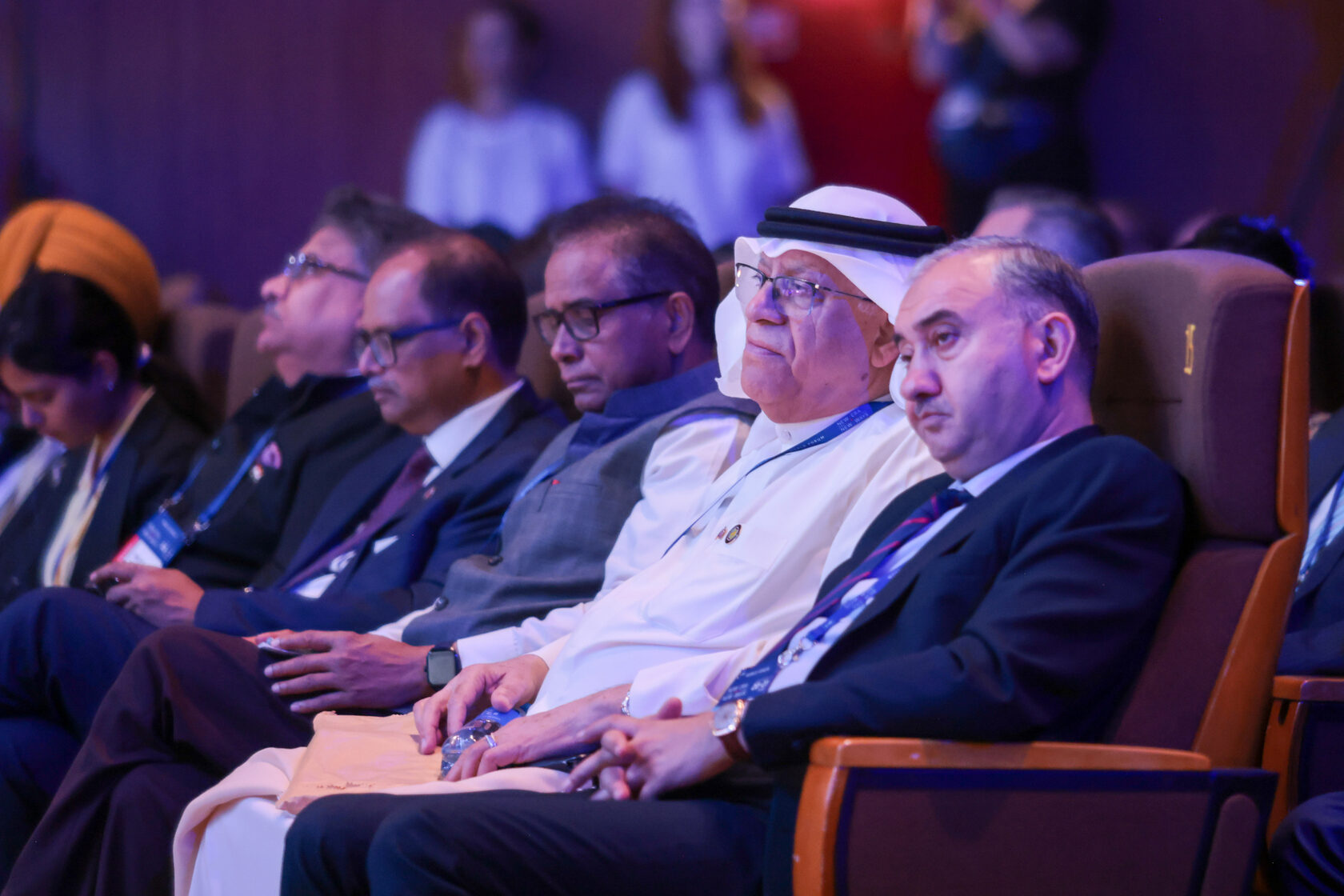
On 20–21 August 2025, Moscow hosted the second annual World Forum “New Era—New Ways”, organised by the International Organisation for Eurasian Cooperation (IOEC). The event, which brought together about 1,000 delegates from 53 countries and over 140 speakers, cemented its status as a leading non-governmental platform for developing practical solutions in international cooperation and the Greater Eurasian Partnership.
The first Forum in April 2024 united more than 600 delegates from 33 countries, with the Russian side represented by the Ministry of Foreign Affairs, the Ministry of Economic Development, the Ministry of Justice, the Russian Union of Industrialists and Entrepreneurs, the Chamber of Commerce and Industry, and other bodies. The event garnered significant positive feedback and extensive coverage in Russian and international media, featuring 11 TV stories and over 640 media mentions.
This year, the Forum was held in a two-day format and included a plenary meeting, sessions under the auspices of the Russian Foreign Ministry, the Eurasian Economic Commission, and the Civil 20 (C20)—a G20 official engagement group—as well as business dialogues with partners from Africa, India, Latin America, the Gulf states, and Asia-Pacific.
The civilisational initiative of Russian President Vladimir Putin—the Greater Eurasian Partnership (GEP)—took center stage in all discussions, as a key framework for building a sustainable and equitable architecture of the multipolar world.
The plenary session and 19 thematic panels examined the outlines of the project, its role in the new multipolar architecture, and its synergy with the efforts of Global South nations, integration associations, and various international formats such as the EAEU, BRICS, SCO, BRI, and ASEAN.
In his opening address, Dmitry Stasyulis, Russia’s Sherpa to the C20, President of the World Forum, and President of the IOEC, stated: “As new global decision-making centres emerge, the role of international platforms where everyone can voice their position, be heard, and contribute to the establishment of a new, equitable world order is increasingly important. The Forum’s goal is to build bridges between all participants involved, to balance the interests of business, government, and civil society, while taking into account that all have their own development pace. Only through open, respectful dialogue among equal partners can we accelerate integration across Eurasia and meet society’s priority demands for a safe, just world with equal opportunities for all.”
On 20–21 August 2025, Moscow hosted the second annual World Forum “New Era—New Ways”, organised by the International Organisation for Eurasian Cooperation (IOEC). The event, which brought together about 1,000 delegates from 53 countries and over 140 speakers, cemented its status as a leading non-governmental platform for developing practical solutions in international cooperation and the Greater Eurasian Partnership.
The first Forum in April 2024 united more than 600 delegates from 33 countries, with the Russian side represented by the Ministry of Foreign Affairs, the Ministry of Economic Development, the Ministry of Justice, the Russian Union of Industrialists and Entrepreneurs, the Chamber of Commerce and Industry, and other bodies. The event garnered significant positive feedback and extensive coverage in Russian and international media, featuring 11 TV stories and over 640 media mentions.
This year, the Forum was held in a two-day format and included a plenary meeting, sessions under the auspices of the Russian Foreign Ministry, the Eurasian Economic Commission, and the Civil 20 (C20)—a G20 official engagement group—as well as business dialogues with partners from Africa, India, Latin America, the Gulf states, and Asia-Pacific.
The civilisational initiative of Russian President Vladimir Putin—the Greater Eurasian Partnership (GEP)—took center stage in all discussions, as a key framework for building a sustainable and equitable architecture of the multipolar world.
The plenary session and 19 thematic panels examined the outlines of the project, its role in the new multipolar architecture, and its synergy with the efforts of Global South nations, integration associations, and various international formats such as the EAEU, BRICS, SCO, BRI, and ASEAN.
In his opening address, Dmitry Stasyulis, Russia’s Sherpa to the C20, President of the World Forum, and President of the IOEC, stated: “As new global decision-making centres emerge, the role of international platforms where everyone can voice their position, be heard, and contribute to the establishment of a new, equitable world order is increasingly important. The Forum’s goal is to build bridges between all participants involved, to balance the interests of business, government, and civil society, while taking into account that all have their own development pace. Only through open, respectful dialogue among equal partners can we accelerate integration across Eurasia and meet society’s priority demands for a safe, just world with equal opportunities for all.”
GEP: ADDRESSING TODAY’S CHALLENGES THROUGH COOPERATION
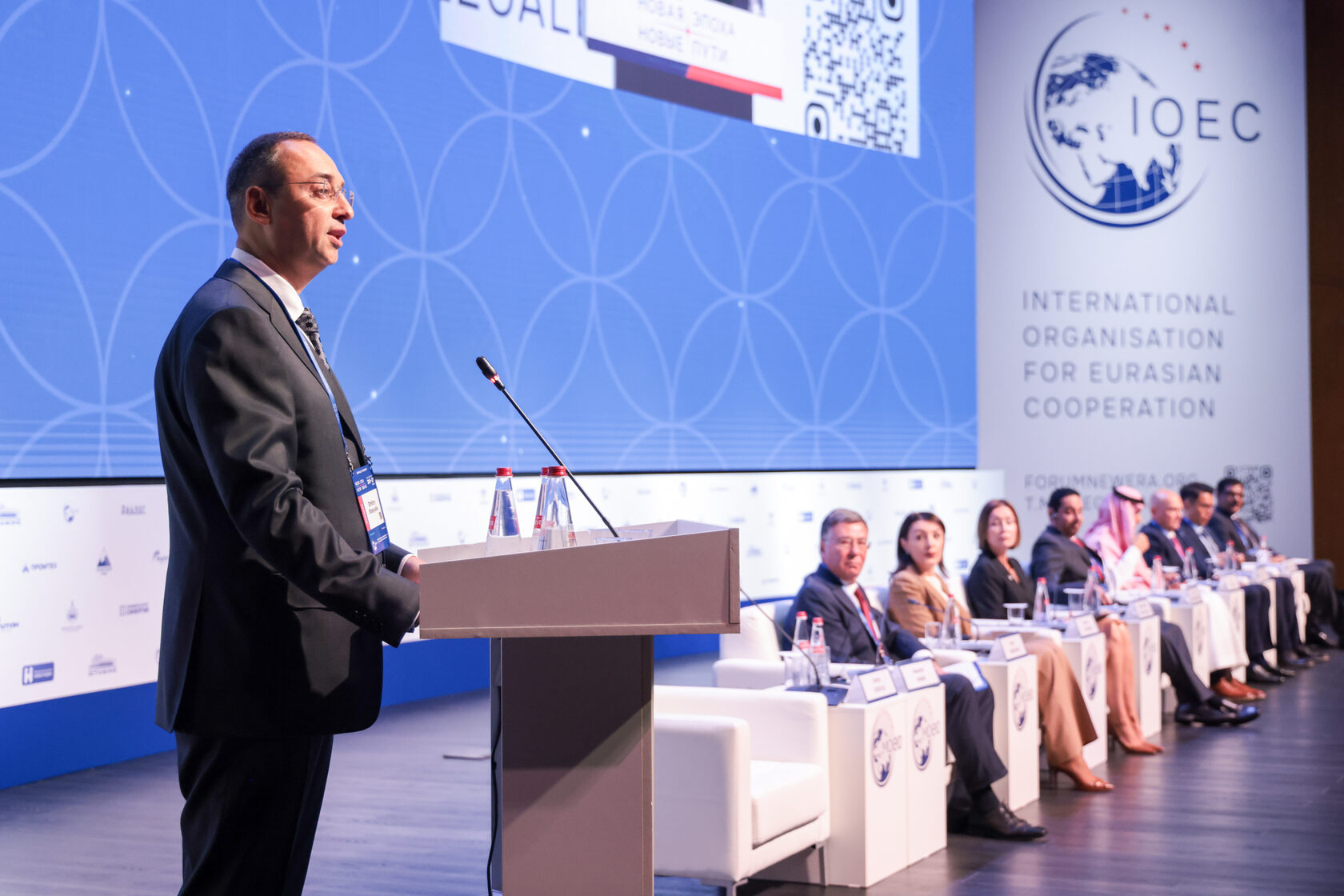
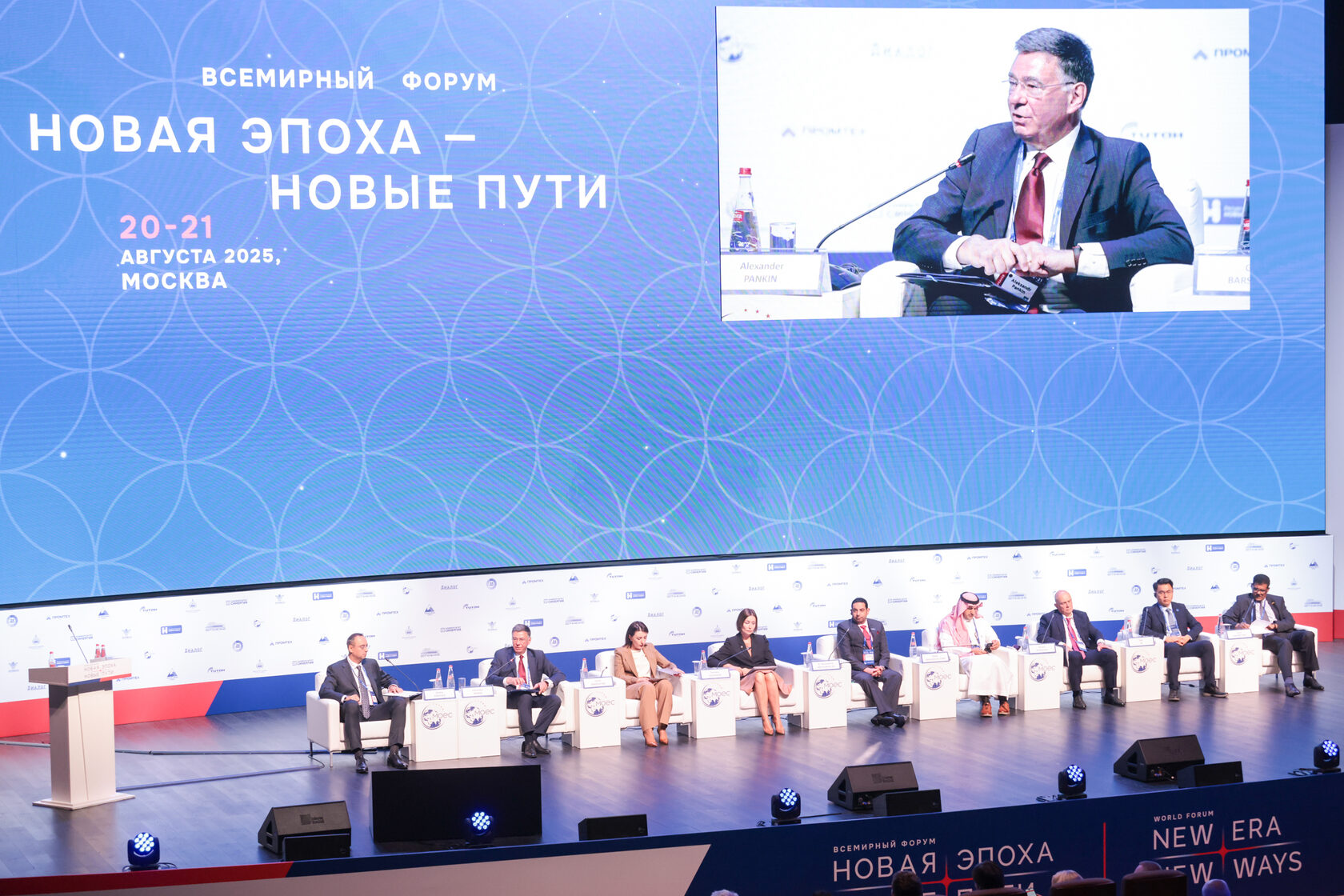
The second annual World Forum “New Era—New Ways” opened with a plenary session, bringing together high-level officials and experts: Alexander Pankin, Deputy Minister of Foreign Affairs of Russia, Gohar Barseghyan, Member of the Board (Minister) for Industry and Agro-Industrial Complex of the Eurasian Economic Commission, Svetlana Chupsheva, General Director of the Agency for Strategic Initiatives, Andrey Klimov, Deputy Chairman of the Federation Council’s Committee on Foreign Affairs, Matthias Moosdorf, Member of the Bundestag for the Zwickau Сonstituency of the Federal Republic of Germany, Dr. Mohammed Abdullah Al-Ali, CEO of the UAE’s TRENDS Research & Advisory, Majed Abdulaziz Al-Turki, Director of the Saudi Centre for Media and Arab-Russian Studies, Eduard Budantsev, Chairman of the “Diktatura Zakona” Bar Association, Gao Qi, Chief Representative of the China Council for the Promotion of International Trade in Russia, Genet Teshome Jirru, Ambassador Extraordinary and Plenipotentiary of the Federal Democratic Republic of Ethiopia to the Russian Federation, and many others.
Following the main theme “Greater Eurasian Partnership: Development Vectors and Instruments,” discussions centred on practical integration mechanisms, i.e. stimulating markets, developing end-to-end transport and logistics, fostering technological sovereignty, and channelling investments into international projects across Greater Eurasia.
Deputy Foreign Minister Alexander Pankin began his statement with historical context, recalling that the concept of the GEP was first proposed in 2015, when the world clearly stood on the threshold of global transfor mation, and successive crises were exposing the vulnerabilities of the pro-Western international system. Moving to today’s challenges, he un derscored the critical importance of advancing the GEP initiative in today’s geopolitical landscape: “The theme of the Greater Eurasian Partnership, central to this forum, is highly per tinent. As the world moves towards a multipolar international system, models of interaction based on a ‘leader-follower’ dynamic, with the West at the helm, are losing ground. Instead, there is growing demand for equitable cooperation mechanisms that strengthen the economic influ ence and the ‘voice’ of the Global Ma jority.”
Goar Barseghyan, Minister for In dustry and Agro-Industrial Complex of the Eurasian Economic Commission (EEC), noted that the EAEU, drawing on a decade of experience and coop eration with international organisa tions, plays a pivotal role in shaping the GEP. The Union is advancing in dustrial cooperation, digitalisation, food security, and transport infra structure: “We are currently working on a plan to implement the Eurasian Eco nomic Path Declaration, with a strong emphasis on establishing the EAEU as a pole of economic partnership within the Greater Eurasian Partnership initiative. It is essential that we intensify efforts to strengthen integration within the Union to become a more robust component of the GEP.”
The second annual World Forum “New Era—New Ways” opened with a plenary session, bringing together high-level officials and experts: Alexander Pankin, Deputy Minister of Foreign Affairs of Russia, Gohar Barseghyan, Member of the Board (Minister) for Industry and Agro-Industrial Complex of the Eurasian Economic Commission, Svetlana Chupsheva, General Director of the Agency for Strategic Initiatives, Andrey Klimov, Deputy Chairman of the Federation Council’s Committee on Foreign Affairs, Matthias Moosdorf, Member of the Bundestag for the Zwickau Сonstituency of the Federal Republic of Germany, Dr. Mohammed Abdullah Al-Ali, CEO of the UAE’s TRENDS Research & Advisory, Majed Abdulaziz Al-Turki, Director of the Saudi Centre for Media and Arab-Russian Studies, Eduard Budantsev, Chairman of the “Diktatura Zakona” Bar Association, Gao Qi, Chief Representative of the China Council for the Promotion of International Trade in Russia, Genet Teshome Jirru, Ambassador Extraordinary and Plenipotentiary of the Federal Democratic Republic of Ethiopia to the Russian Federation, and many others.
Following the main theme “Greater Eurasian Partnership: Development Vectors and Instruments,” discussions centred on practical integration mechanisms, i.e. stimulating markets, developing end-to-end transport and logistics, fostering technological sovereignty, and channelling investments into international projects across Greater Eurasia.
Deputy Foreign Minister Alexander Pankin began his statement with historical context, recalling that the concept of the GEP was first proposed in 2015, when the world clearly stood on the threshold of global transfor mation, and successive crises were exposing the vulnerabilities of the pro-Western international system. Moving to today’s challenges, he un derscored the critical importance of advancing the GEP initiative in today’s geopolitical landscape: “The theme of the Greater Eurasian Partnership, central to this forum, is highly per tinent. As the world moves towards a multipolar international system, models of interaction based on a ‘leader-follower’ dynamic, with the West at the helm, are losing ground. Instead, there is growing demand for equitable cooperation mechanisms that strengthen the economic influ ence and the ‘voice’ of the Global Ma jority.”
Goar Barseghyan, Minister for In dustry and Agro-Industrial Complex of the Eurasian Economic Commission (EEC), noted that the EAEU, drawing on a decade of experience and coop eration with international organisa tions, plays a pivotal role in shaping the GEP. The Union is advancing in dustrial cooperation, digitalisation, food security, and transport infra structure: “We are currently working on a plan to implement the Eurasian Eco nomic Path Declaration, with a strong emphasis on establishing the EAEU as a pole of economic partnership within the Greater Eurasian Partnership initiative. It is essential that we intensify efforts to strengthen integration within the Union to become a more robust component of the GEP.”
Svetlana Chupsheva, Director General of the Agency for Strate gic Initiatives (ASI), emphasised the Agency’s role as a driver of interna tional strategic projects across Great er Eurasia. She highlighted key focus areas, including family and demog raphy, energy, creative economy, un manned systems, and technological sovereignty. Addressing the latter, she explained the principle behind the models developed by ASI togeth er with the experts: “The foundation of this model—as an international frame work for discussing the future of tech nology—is Maslow’s hierarchy of needs, a well-known structure of human prior ities. Similarly, we have constructed a universal pyramid of state objectives, reflecting the priority areas that must be addressed to ensure the well-being and sustainable development of citizens. Within this pyramid, the state allocates technologies capable of significantly influencing technological sovereignty beyond 2030. To successfully achieve such sovereignty, a state must possess the ‘keys’ to these technologies.”
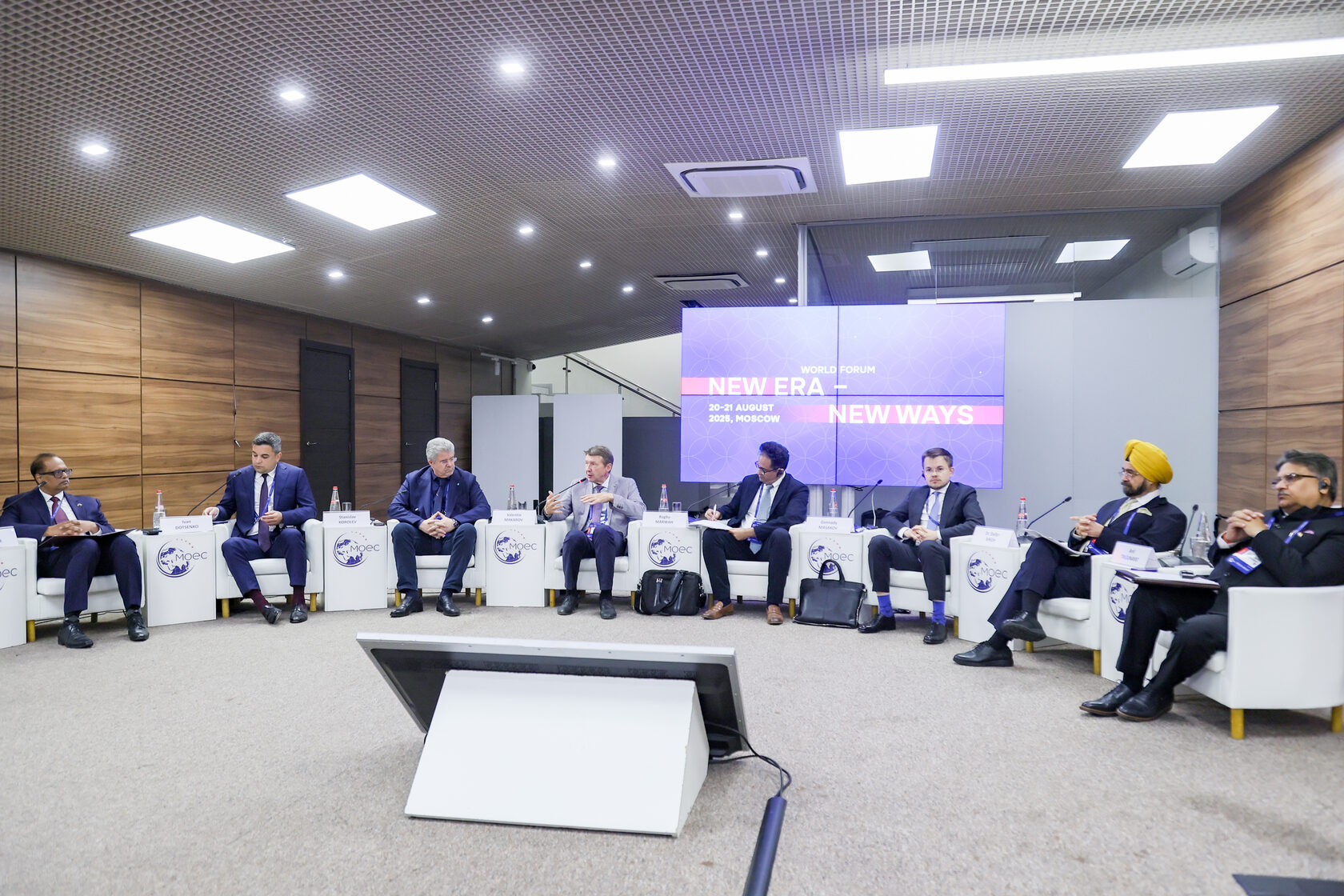
A session organised with the participation of the Russian Foreign Ministry explored strategies for developing the Greater Eurasian Partnership amid the transition to a multipolar world. The discussion featured Dmitry Birichevsky, Director of the Depart ment of Economic Cooperation at the Russian Foreign Ministry, Nam Viyaketh, former Minister of Industry and Commerce of Laos and member of the Board of the Russia-Laos Friendship Association, Dr. Dalbir Singh, National Secretary of the Indian National Con gress, and other distinguished participants. The speakers outlined the importance of aligning the GEP with the potential of structures such as the EAEU, BRICS, SCO, BRI, and ASEAN.
Dmitry Birichevsky emphasised that integration institutions within Greater Eurasia are not only functioning robustly but, unlike their eroding European counterparts, are thriving and expanding. Alongside represen tatives from the EAEU, China, the UAE, Saudi Arabia, and India, he high lighted the participation of European politicians and officials who demon strated the “courage to affirm that Eu rope is, indeed, part of Eurasia,” noting that “this is living proof that people want… to cooperate.”
The vibrant dialogue during the session, supported by the Russian Foreign Ministry, clearly illustrated that the GEP is neither an isolated nor an exclusive initiative. On the contrary, its strength lies in its ability to serve as a “bridge” between diverse integration alliances and nations.
Pierre-Emmanuel Thomann, Founder and President of an inter national association Eurocontinent in Brussels and Professor of geopolitics at ISSER in Lyon, said that the future belongs to Greater Eurasia as the foundation of a multipolar world. He has called for the creation of a single space of cooperation as a coun terbalance to the Western doctrine of Eurasian fragmentation. He notes that the continent needs a new security architecture and a comprehensive dialogue that unites all Eurasian nations, and Russia plays a pivotal role here: “The future of Europe lies in reuni fication with Russia.”
A session organised with the participation of the Russian Foreign Ministry explored strategies for developing the Greater Eurasian Partnership amid the transition to a multipolar world. The discussion featured Dmitry Birichevsky, Director of the Depart ment of Economic Cooperation at the Russian Foreign Ministry, Nam Viyaketh, former Minister of Industry and Commerce of Laos and member of the Board of the Russia-Laos Friendship Association, Dr. Dalbir Singh, National Secretary of the Indian National Con gress, and other distinguished participants. The speakers outlined the importance of aligning the GEP with the potential of structures such as the EAEU, BRICS, SCO, BRI, and ASEAN.
Dmitry Birichevsky emphasised that integration institutions within Greater Eurasia are not only functioning robustly but, unlike their eroding European counterparts, are thriving and expanding. Alongside represen tatives from the EAEU, China, the UAE, Saudi Arabia, and India, he high lighted the participation of European politicians and officials who demon strated the “courage to affirm that Eu rope is, indeed, part of Eurasia,” noting that “this is living proof that people want… to cooperate.”
The vibrant dialogue during the session, supported by the Russian Foreign Ministry, clearly illustrated that the GEP is neither an isolated nor an exclusive initiative. On the contrary, its strength lies in its ability to serve as a “bridge” between diverse integration alliances and nations.
Pierre-Emmanuel Thomann, Founder and President of an inter national association Eurocontinent in Brussels and Professor of geopolitics at ISSER in Lyon, said that the future belongs to Greater Eurasia as the foundation of a multipolar world. He has called for the creation of a single space of cooperation as a coun terbalance to the Western doctrine of Eurasian fragmentation. He notes that the continent needs a new security architecture and a comprehensive dialogue that unites all Eurasian nations, and Russia plays a pivotal role here: “The future of Europe lies in reuni fication with Russia.”
GEP AND ITS CIVIC DIMENSION
The Greater Eurasian Partnership initiative is resonating not only at the state level but also among experts and civil society, becoming a shared endeavour.
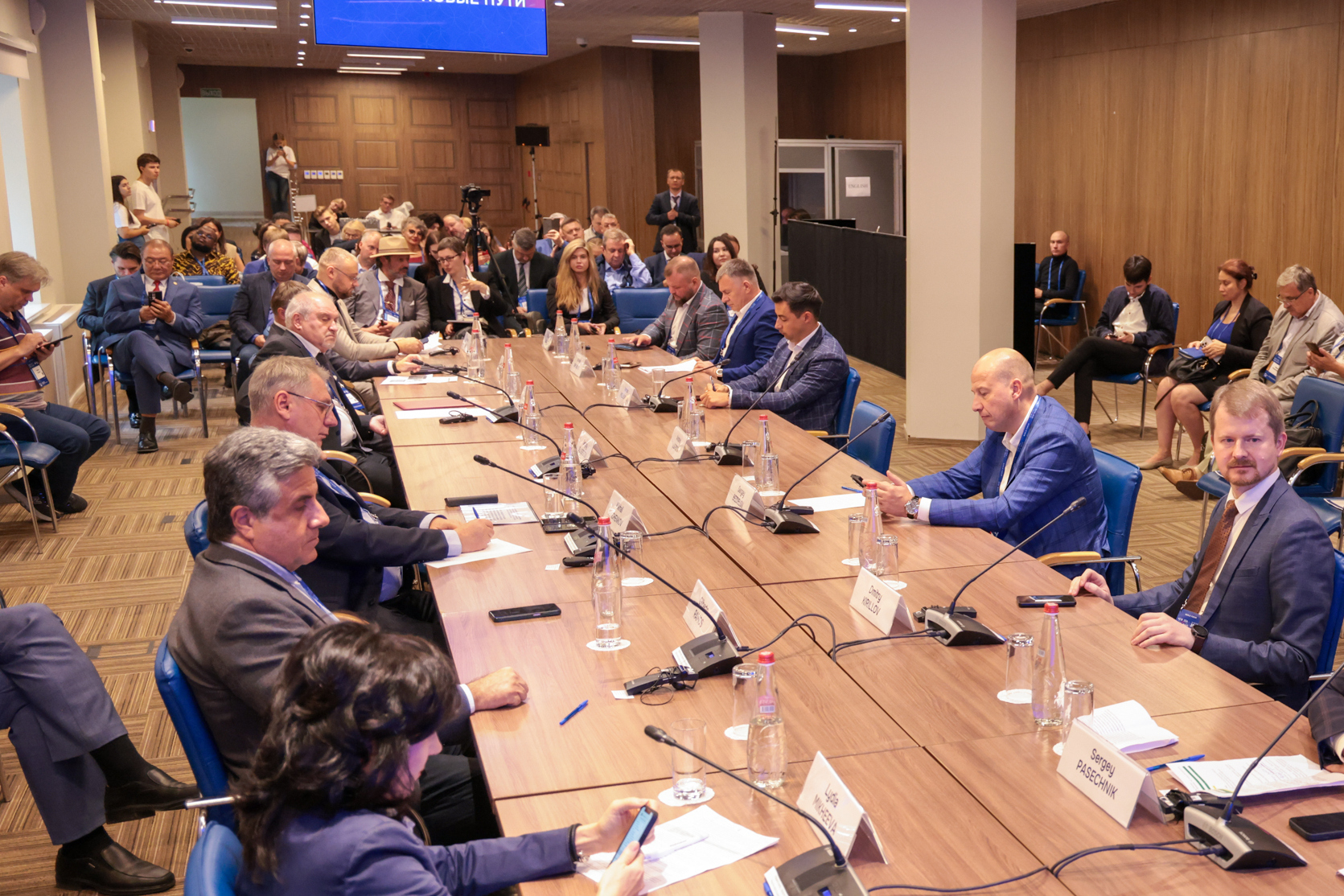
A pivotal moment of the Forum was the open session of the Civil 20 (C20), a G20 official engagement group, which saw participants discuss global challenges and the role of pub lic institutions in addressing them.
Dmitry Stasyulis, Russia’s Sherpa to the C20, presented key Russian initiatives reflected in the C20 final communiqué—a set of recommen dations from civil society to the G20 leaders. These include reforming the WTO to amplify the voice of the Glob al Majority, reforming the IMF and the World Bank, abandoning unilateral sanctions, supporting the GEP, respecting national sovereignty and cultural-historical identities, upholding traditional values and the institution of the traditional family, preserv ing historical memory and preventing the distortion of history.
Marat Berdyev, Russia’s Ambassa dor-at-Large for G20, APEC, and GEP, reaffirmed the country’s commitment to incorporating the perspectives of non-governmental actors in global decision-making: “Russia attaches great importance to engaging with the non-governmental sector, con sidering the interests of civil society, and ensuring that all stakeholders contribute to decision-making. The parties confirmed their readiness to strengthen cooperation on the civic track within the framework of the G20 Social Summit.”
The Greater Eurasian Partnership initiative is resonating not only at the state level but also among experts and civil society, becoming a shared endeavour.
A pivotal moment of the Forum was the open session of the Civil 20 (C20), a G20 official engagement group, which saw participants discuss global challenges and the role of pub lic institutions in addressing them.
Dmitry Stasyulis, Russia’s Sherpa to the C20, presented key Russian initiatives reflected in the C20 final communiqué—a set of recommen dations from civil society to the G20 leaders. These include reforming the WTO to amplify the voice of the Glob al Majority, reforming the IMF and the World Bank, abandoning unilateral sanctions, supporting the GEP, respecting national sovereignty and cultural-historical identities, upholding traditional values and the institution of the traditional family, preserv ing historical memory and preventing the distortion of history.
Marat Berdyev, Russia’s Ambassa dor-at-Large for G20, APEC, and GEP, reaffirmed the country’s commitment to incorporating the perspectives of non-governmental actors in global decision-making: “Russia attaches great importance to engaging with the non-governmental sector, con sidering the interests of civil society, and ensuring that all stakeholders contribute to decision-making. The parties confirmed their readiness to strengthen cooperation on the civic track within the framework of the G20 Social Summit.”
IN THE SPOTLIGHT: PRACTICAL MECHANISMS FOR INTEGRATION
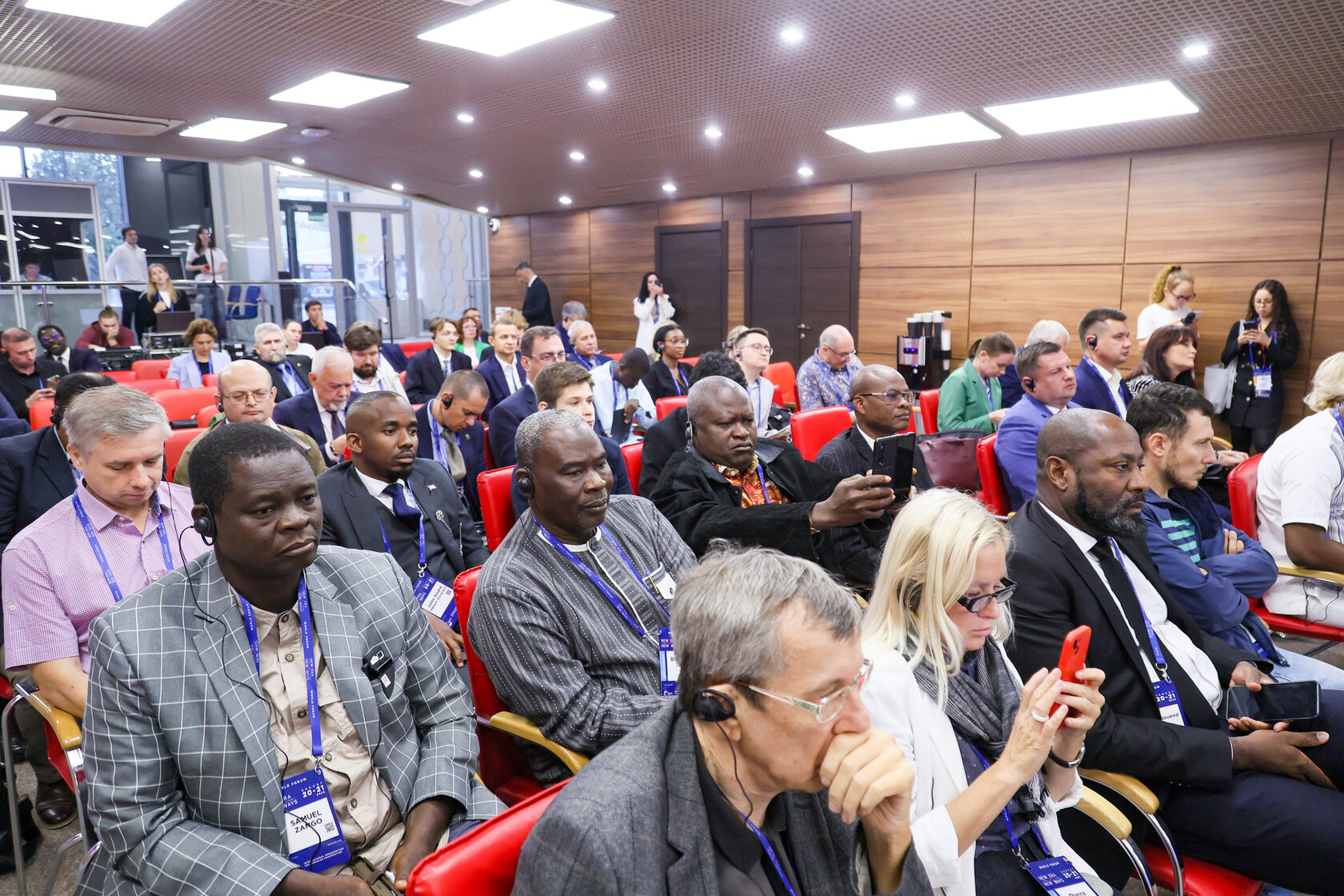
A defining feature of the Forum was its emphasis on horizontal coop eration—between regions, business associations, and experts. This “living tissue” of interaction is what forg es enduring connections in practice. Thematic sessions were dedicated to deepening these ties, addressing key issues such as interregional cooperation, the development of a single GEP transport infrastructure, technology transfer, digital security and drivers of the Fourth Industrial Revolution, creative industries, humanitarian collaboration, advancement of medical diplomacy, international leasing, com pliance in the modern context.
A central element of the Forum was a series of business dialogues involving delegations from India, Asia-Pacific, the GCC states, Latin America, and Africa. Participants ex plored opportunities for regional co operation, reducing trade imbalances, identifying avenues for mutual invest ment, and developing transport-logistics links and cross-platform projects in the new geoeconomic landscape. The discussions were tailored to the specific needs of each region.
Latin America: Boosting mutual exports and enhancing access to national markets, overcoming logistical, regulatory, and informational barriers, promoting tourism, leveraging cultural and humanitarian diplomacy to bolster economicties, exploring the potential for joint production facilities, logistics hubs, and investment platforms.
Asia-Pacific: Developing joint in dustrial and technological projects, logistics and infrastructure solutions to deepen cooperation, creating a favourable business climate, and en hancing the role of business associations and intergovernmental mechanisms in fostering bilateral and multilateral relations.
India: Deepening economic, scientific, and humanitarian ties, strengthening collaboration in digitaltech nology and energy, advancing the International North-South Transport Corridor (INSTC), developing joint sustainable and inclusive technologies, as well as steps to address trade imbalances and achieve a $100 bil lion trade turnover by 2030.
GCC States: Elaborating mecha nisms for legal and institutional sup port, ensuring investment protection and business arbitration, overcoming barriers hindering joint projects, promoting the role of business and expert communities in building trust and advancing initiatives, and en hancing mutual roles of these nations within global economic value chains.
Africa: Assessing the role of local initiatives and humanitarian projects in boosting investor confidence, en hancing the resilience and predict ability of the business environment, identifying the most attractive economic sectors for investment, addressing the risks and barriers to capital inflow and mitigating them, fostering interstate and business partnerships in infrastructure and industrial development, and develop ing mechanisms for a stable regulatory framework to protect the interests of foreign investors.
Participants underscored the vital role of horizontal cooperation be tween nations, as a means to bring players in international markets closer together, including within the GEP. “The Greater Eurasian Partnership—a bold, comprehensive political and eco nomic initiative—has emerged as one of the most ambitious projects of the 21st century. Relations between regions are transcending the purely economic and reaching a strategic level, seeking to build a common future. For this part nership to succeed, a robust knowledge base at every stage of its development is essential,” noted Dr. Mohammed Abdullah Al-Ali, CEO of the TRENDS Research & Advisory.
A defining feature of the Forum was its emphasis on horizontal coop eration—between regions, business associations, and experts. This “living tissue” of interaction is what forg es enduring connections in practice. Thematic sessions were dedicated to deepening these ties, addressing key issues such as interregional cooperation, the development of a single GEP transport infrastructure, technology transfer, digital security and drivers of the Fourth Industrial Revolution, creative industries, humanitarian collaboration, advancement of medical diplomacy, international leasing, com pliance in the modern context.
A central element of the Forum was a series of business dialogues involving delegations from India, Asia-Pacific, the GCC states, Latin America, and Africa. Participants ex plored opportunities for regional co operation, reducing trade imbalances, identifying avenues for mutual invest ment, and developing transport-logistics links and cross-platform projects in the new geoeconomic landscape. The discussions were tailored to the specific needs of each region.
Latin America: Boosting mutual exports and enhancing access to national markets, overcoming logistical, regulatory, and informational barriers, promoting tourism, leveraging cultural and humanitarian diplomacy to bolster economicties, exploring the potential for joint production facilities, logistics hubs, and investment platforms.
Asia-Pacific: Developing joint in dustrial and technological projects, logistics and infrastructure solutions to deepen cooperation, creating a favourable business climate, and en hancing the role of business associations and intergovernmental mechanisms in fostering bilateral and multilateral relations.
India: Deepening economic, scientific, and humanitarian ties, strengthening collaboration in digitaltech nology and energy, advancing the International North-South Transport Corridor (INSTC), developing joint sustainable and inclusive technologies, as well as steps to address trade imbalances and achieve a $100 bil lion trade turnover by 2030.
GCC States: Elaborating mecha nisms for legal and institutional sup port, ensuring investment protection and business arbitration, overcoming barriers hindering joint projects, promoting the role of business and expert communities in building trust and advancing initiatives, and en hancing mutual roles of these nations within global economic value chains.
Africa: Assessing the role of local initiatives and humanitarian projects in boosting investor confidence, en hancing the resilience and predict ability of the business environment, identifying the most attractive economic sectors for investment, addressing the risks and barriers to capital inflow and mitigating them, fostering interstate and business partnerships in infrastructure and industrial development, and develop ing mechanisms for a stable regulatory framework to protect the interests of foreign investors.
Participants underscored the vital role of horizontal cooperation be tween nations, as a means to bring players in international markets closer together, including within the GEP. “The Greater Eurasian Partnership—a bold, comprehensive political and eco nomic initiative—has emerged as one of the most ambitious projects of the 21st century. Relations between regions are transcending the purely economic and reaching a strategic level, seeking to build a common future. For this part nership to succeed, a robust knowledge base at every stage of its development is essential,” noted Dr. Mohammed Abdullah Al-Ali, CEO of the TRENDS Research & Advisory.
FROM WORDS TO DEEDS: SEALING AGREEMENTS
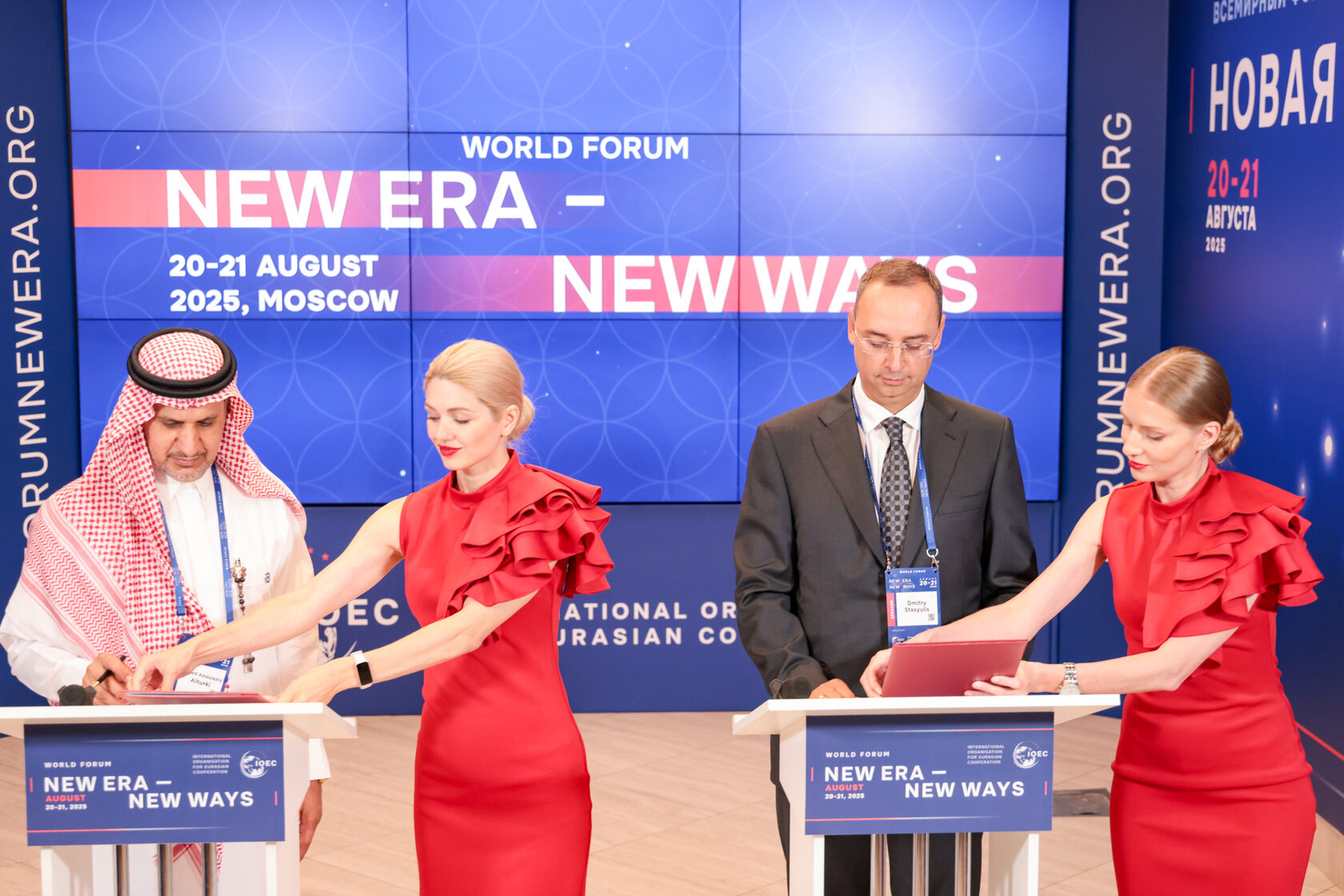
The two-day Forum culminated in the signing of several landmark strategic cooperation agreements between the International Organisation for Eurasian Cooperation (IOEC) and key players in international markets, in cluding the Agency for Strategic Initia tives, the Russian-Arab Research and Information Foundation, the Economic Council of India, TRENDS Research & Advisory, the International Association of Exchanges, and many others.
To strengthen and refine inter national leasing products, the IOEC signed a Memorandum on the Development of International Leasing, aimed to establish the International Leasing Council, with participation from Russia, Belarus, Armenia, Kyrgyzstan, and other nations.
These steps mark a significant milestone in the creation of tangible mechanisms for developing multilateral, mutually beneficial relations among nations within the emerging multipolar world architecture. These agreements clearly prove that words are turning into deeds.
As Dmitry Stasyulis noted, “The World Forum held in Moscow on 20–21 August confirmed the growing in terest of the global community in cooperating with Russia across various economic sectors... We discussed practical initiatives under the Greater Eurasian Partnership, signed crucial agreements, and launched real projects in international leasing, technology, and agriculture.”
The two-day Forum culminated in the signing of several landmark strategic cooperation agreements between the International Organisation for Eurasian Cooperation (IOEC) and key players in international markets, in cluding the Agency for Strategic Initia tives, the Russian-Arab Research and Information Foundation, the Economic Council of India, TRENDS Research & Advisory, the International Association of Exchanges, and many others.
To strengthen and refine inter national leasing products, the IOEC signed a Memorandum on the Development of International Leasing, aimed to establish the International Leasing Council, with participation from Russia, Belarus, Armenia, Kyrgyzstan, and other nations.
These steps mark a significant milestone in the creation of tangible mechanisms for developing multilateral, mutually beneficial relations among nations within the emerging multipolar world architecture. These agreements clearly prove that words are turning into deeds.
As Dmitry Stasyulis noted, “The World Forum held in Moscow on 20–21 August confirmed the growing in terest of the global community in cooperating with Russia across various economic sectors... We discussed practical initiatives under the Greater Eurasian Partnership, signed crucial agreements, and launched real projects in international leasing, technology, and agriculture.”
GEP: NEW GROWTH ECOSYSTEM
According to participants—govern ment officials, business leaders, and experts from around the world—the second World Forum “New Era—New Ways” and the International Organisa tion for Eurasian Cooperation (IOEC) have emerged as pivotal non-gov ernmental platforms. It is here that the Greater Eurasian Partnership initiative is not merely debated but is being furnished with substantive content, unlocking fresh avenues for collaboration.
“Despite persistent claims of Russia’s isolation, the world sees that we have succeeded in strengthening our presence and building work in new global markets, directly, without Westen mediation. This is how a multipolar architecture should take shape,” concluded Dmitry Stasyulis.
The key takeaway of the Forum is clear—the Russian GEP initiative has evolved beyond a mere geopoliti cal concept, it is now forging a new growth ecosystem for participating nations and integration associa tions. The initiative’s drivers include seamless transport infrastructure, cross-border payment systems, horizontal cooperation in the real economy, multilateral projects, direct in vestments in high-tech. And as the Forum demonstrated, this ecosystem is already under construction—here and now.
According to participants—govern ment officials, business leaders, and experts from around the world—the second World Forum “New Era—New Ways” and the International Organisa tion for Eurasian Cooperation (IOEC) have emerged as pivotal non-gov ernmental platforms. It is here that the Greater Eurasian Partnership initiative is not merely debated but is being furnished with substantive content, unlocking fresh avenues for collaboration.
“Despite persistent claims of Russia’s isolation, the world sees that we have succeeded in strengthening our presence and building work in new global markets, directly, without Westen mediation. This is how a multipolar architecture should take shape,” concluded Dmitry Stasyulis.
The key takeaway of the Forum is clear—the Russian GEP initiative has evolved beyond a mere geopoliti cal concept, it is now forging a new growth ecosystem for participating nations and integration associa tions. The initiative’s drivers include seamless transport infrastructure, cross-border payment systems, horizontal cooperation in the real economy, multilateral projects, direct in vestments in high-tech. And as the Forum demonstrated, this ecosystem is already under construction—here and now.