
Andrey SLEPNEV, Minister in charge of Trade of the Eurasian Economic Commission
EAEU TRADE AGREEMENTS—RESPONSE TO GLOBAL ECONOMIC TURBULENCE
Given the global economic volatility, what truly matters today is not merely mutually beneficial ties with like-minded partners from third countries, but relations built on a certain degree of trust. To further deepen cooperation and fully unlock its potential in trade and economy, the Eurasian Economic Union (EAEU) is building a network of preferential trade agreements, underpinned by the trade bloc of its supranational regulatory body—the Eurasian Economic Commission (EEC).
Of particular note is that 2025 saw a large number of Free Trade Agreements (FTAs) signed—a record in the history of the EAEU.
On June 27, 2025, on the sidelines of the Supreme Eurasian Economic Council meeting and in the presence of the Heads of State, agreements were signed with Mongolia and the UAE, followed by signing of the agreement with Indonesia on December 21 the same year. These agreements are currently undergoing the necessary ratification procedures prior to coming into force.
We expect that the Economic Partnership Agreement with the United Arab Emirates will open a new chapter in trade relations between the UAE and the member states.
Of particular note is that 2025 saw a large number of Free Trade Agreements (FTAs) signed—a record in the history of the EAEU.
On June 27, 2025, on the sidelines of the Supreme Eurasian Economic Council meeting and in the presence of the Heads of State, agreements were signed with Mongolia and the UAE, followed by signing of the agreement with Indonesia on December 21 the same year. These agreements are currently undergoing the necessary ratification procedures prior to coming into force.
We expect that the Economic Partnership Agreement with the United Arab Emirates will open a new chapter in trade relations between the UAE and the member states.
In 2025, the EAEU signed a record number of FTAs—with Mongolia, the UAE, and Indonesia.
Over recent years, the UAE has established itself as a key trading partner for the EAEU countries in the Middle East and has risen into the top ten of the EAEU’s largest trading partners by volume.
Once the agreement with the UAE comes into force, we expect it to deliver tangible results for the EAEU economies, both in terms of budget and broader socio-economic benefits.
The final concessions secured from the UAE cover 86% of our partner’s product range, or 98% of the EAEU’s current export volume to the UAE. This enables exporters from the member states to save up to USD 266 million annually on customs duties. In the medium term, once the agreement with the UAE enters into force, EAEU exports are expected to increase by USD 5–6 billion.
The agreement’s regulatory framework, aligned with the demands of global trade policy, is particularly noteworthy. On several key provisions, the parties have succeeded in enshrining additional WTO+ commitments, which represent novelties, for the Emirati team as well.
The Interim Trade Agreement between the EAEU and Mongolia, meanwhile, demonstrates a particular level of trust and mutual interest between the partners, establishing a conducive environment for both sides to enter the market. Despite the agreement’s limited scope, the EAEU gains preferential access to 367 product subheadings, covering 90.2% of its current exports, thus enabling the countries to save up to USD 100 million annually in import duties on their exports to the Mongolian market.
Expanding imports of Mongolian goods is equally important. Mongolia has been granted preferential access to the EAEU market for a range of products, including meat, light industrial goods, leather, footwear, and dairy. These trade channels hold promising potential, given that the EAEU currently imports over USD 15 billion worth of such goods from around the world each year—yet Mongolia’s share of that total remains rather modest.
Our assessment suggests that in the medium term, following the agreement entering into force, EAEU exports are likely to experience significant growth.
As for the FTA between the EAEU and Indonesia, it is first and foremost worth noting that the agreed terms will set a fundamentally new standard for trade and economy between the EAEU nations and ASEAN’s leading economies.
Indonesia has granted preferential access to 90% of product lines. In value terms, its coverage will extend to more than 94% of current exports from the EAEU. Indonesian imports from the EAEU are projected to increase by USD 2–3 billion over the next three to five years following the agreement entering into force. Annual savings on customs duties for the EAEU could reach up to USD 120 million.
In respect to negotiations with India, the past year marked a significant breakthrough. Presently, New Delhi stands not only as a reliable partner but as a key strategic player, taking third place in the EAEU’s trade rankings.
Once the agreement with the UAE comes into force, we expect it to deliver tangible results for the EAEU economies, both in terms of budget and broader socio-economic benefits.
The final concessions secured from the UAE cover 86% of our partner’s product range, or 98% of the EAEU’s current export volume to the UAE. This enables exporters from the member states to save up to USD 266 million annually on customs duties. In the medium term, once the agreement with the UAE enters into force, EAEU exports are expected to increase by USD 5–6 billion.
The agreement’s regulatory framework, aligned with the demands of global trade policy, is particularly noteworthy. On several key provisions, the parties have succeeded in enshrining additional WTO+ commitments, which represent novelties, for the Emirati team as well.
The Interim Trade Agreement between the EAEU and Mongolia, meanwhile, demonstrates a particular level of trust and mutual interest between the partners, establishing a conducive environment for both sides to enter the market. Despite the agreement’s limited scope, the EAEU gains preferential access to 367 product subheadings, covering 90.2% of its current exports, thus enabling the countries to save up to USD 100 million annually in import duties on their exports to the Mongolian market.
Expanding imports of Mongolian goods is equally important. Mongolia has been granted preferential access to the EAEU market for a range of products, including meat, light industrial goods, leather, footwear, and dairy. These trade channels hold promising potential, given that the EAEU currently imports over USD 15 billion worth of such goods from around the world each year—yet Mongolia’s share of that total remains rather modest.
Our assessment suggests that in the medium term, following the agreement entering into force, EAEU exports are likely to experience significant growth.
As for the FTA between the EAEU and Indonesia, it is first and foremost worth noting that the agreed terms will set a fundamentally new standard for trade and economy between the EAEU nations and ASEAN’s leading economies.
Indonesia has granted preferential access to 90% of product lines. In value terms, its coverage will extend to more than 94% of current exports from the EAEU. Indonesian imports from the EAEU are projected to increase by USD 2–3 billion over the next three to five years following the agreement entering into force. Annual savings on customs duties for the EAEU could reach up to USD 120 million.
In respect to negotiations with India, the past year marked a significant breakthrough. Presently, New Delhi stands not only as a reliable partner but as a key strategic player, taking third place in the EAEU’s trade rankings.
The prospects of a future trade agreement are indeed considerable; yet, achieving a balanced and mutually agreeable outcome for both parties calls for diversifying export-import flows.
Liberalising trade with the largest economy in South Asia—the world’s fastest-growing major economy and its most populous nation—demands particularly careful calibration of all terms.
Throughout 2025, extensive efforts were undertaken in close cooperation with our Indian partners to harmonise the terms of preferential trade. The first round of negotiations took place in late November 2025 and marked significant progress in discussions concerning the regulatory framework of the agreement.
We expect to maintain this intensive pace of negotiations with our Indian counterparts throughout the year, particularly since the topic of trade liberalisation is supported at the highest levels. During President Putin’s state visit to New Delhi in December 2025, the leaders acknowledged the importance of intensifying joint efforts to finalise a Free Trade Agreement between the EAEU and India, which will cover sectors of mutual interest.
At present, the Commission’s trade bloc is engaged in identifying potential new partners for trade negotiations. In coordination with the EAEU member states, a list of countries has been drawn up with which consultations may commence shortly.
We are already anticipating the talks with Tunisia to start soon. Additionally, countries from Asia, the Middle East and Africa are also under consideration.
A specific area of our efforts is focused on existing agreements.
On May 15, 2025, the comprehensive FTA between the EAEU and Iran, signed on December 25, 2023, entered into force. Under this agreement, the ban on the supply of a wide range of products (over 2,000 tariff lines) has been lifted for EAEU countries, including confectionery, and soft drinks.
Pursuant to the Agreement, both parties have committed not to introduce or maintain any bans or restrictions on the import of goods, including quotas, import or export licences, among others.
Liberalising trade with the largest economy in South Asia—the world’s fastest-growing major economy and its most populous nation—demands particularly careful calibration of all terms.
Throughout 2025, extensive efforts were undertaken in close cooperation with our Indian partners to harmonise the terms of preferential trade. The first round of negotiations took place in late November 2025 and marked significant progress in discussions concerning the regulatory framework of the agreement.
We expect to maintain this intensive pace of negotiations with our Indian counterparts throughout the year, particularly since the topic of trade liberalisation is supported at the highest levels. During President Putin’s state visit to New Delhi in December 2025, the leaders acknowledged the importance of intensifying joint efforts to finalise a Free Trade Agreement between the EAEU and India, which will cover sectors of mutual interest.
At present, the Commission’s trade bloc is engaged in identifying potential new partners for trade negotiations. In coordination with the EAEU member states, a list of countries has been drawn up with which consultations may commence shortly.
We are already anticipating the talks with Tunisia to start soon. Additionally, countries from Asia, the Middle East and Africa are also under consideration.
A specific area of our efforts is focused on existing agreements.
On May 15, 2025, the comprehensive FTA between the EAEU and Iran, signed on December 25, 2023, entered into force. Under this agreement, the ban on the supply of a wide range of products (over 2,000 tariff lines) has been lifted for EAEU countries, including confectionery, and soft drinks.
Pursuant to the Agreement, both parties have committed not to introduce or maintain any bans or restrictions on the import of goods, including quotas, import or export licences, among others.
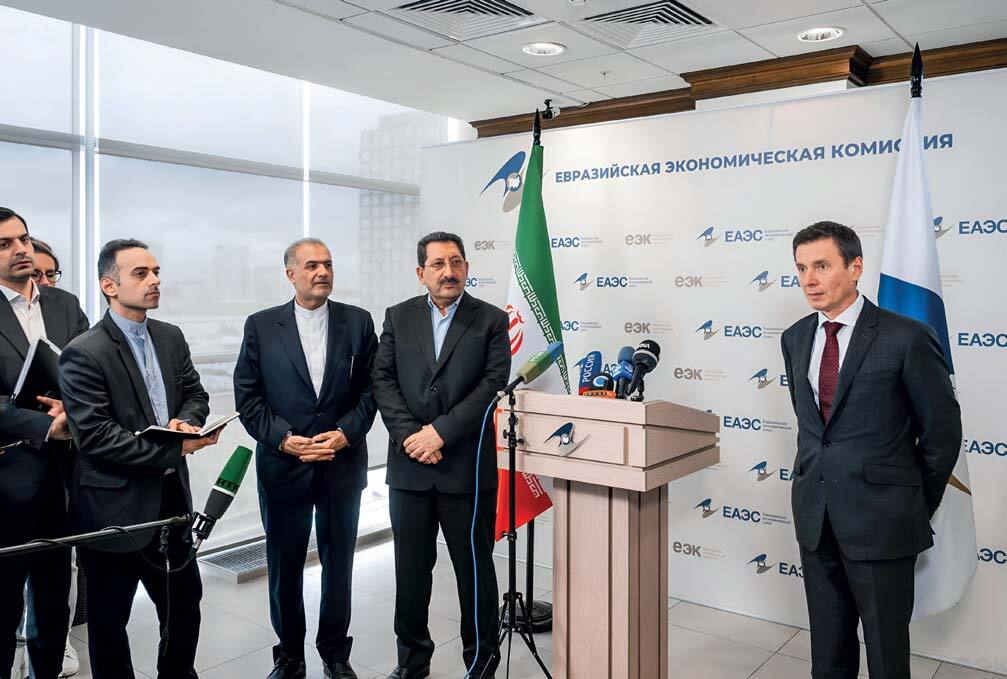
At the inaugural meeting of the Joint Committee on the Implementation of the FTA between the EAEU and Iran, held in Moscow on September 24, 2025, a Joint Action Plan was signed. It outlines concrete steps to build up cooperation in areas such as trade policy and market protection; customs administration and trade facilitation; technical regulation and standardisation; sanitary and phytosanitary measures; transport, logistics, and the North–South Corridor; sectoral cooperation; and business community engagement. In addition, the Joint Committee adopted a joint statement aimed at simplifying mutual trade in Halal products.
Since the Interim Agreement between the EAEU and Iran came into force on May 17, 2018, trade turnover has increased by nearly 2.5 times. Between 2019 and 2024, exports from the EAEU to Iran more than doubled, while imports increased almost threefold. In 2024 alone, the trade turnover between the EAEU and Iran grew by 14.6%, with EAEU exports to Iran climbing by 18.0% and imports from Iran rising by 9.9%.
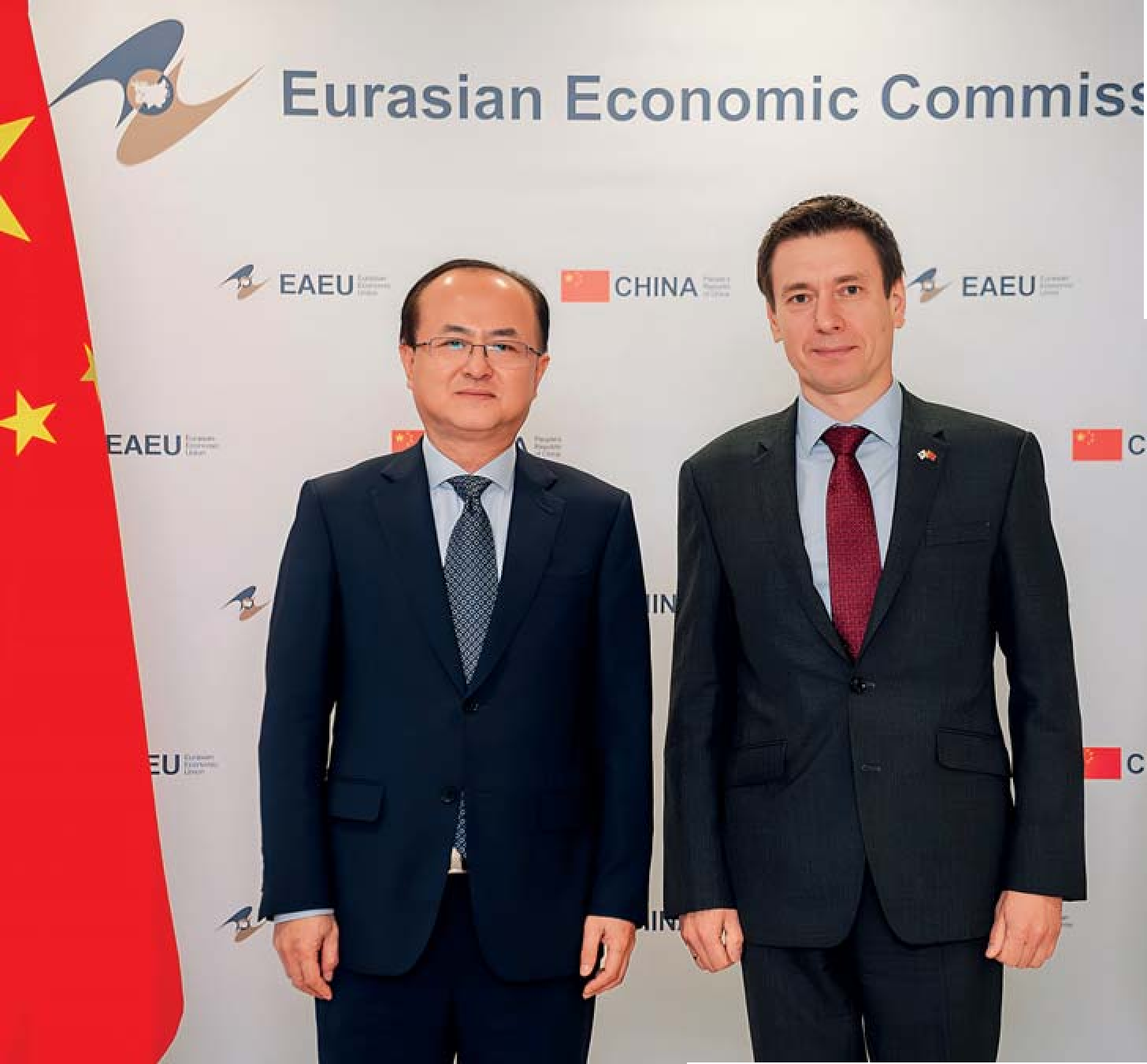
Beyond preferential trade agreements, the EAEU also has a non-preferential agreement with China. In engaging with this largest trading partner, every effort is made to streamline regulatory work pertaining to trade. Since the launch of the agreement, trade turnover has more than doubled—rising between 2019 and 2024.
At the 5th meeting of the Joint Commission on the Implementation of the Trade and Economic Cooperation Agreement with China, held in Moscow on November 12, 2025, both parties identified key areas for further development. These include the trade and economic cooperation roadmap; trade protection; technical regulation; customs; market access, including sanitary and phytosanitary measures; competition and public procurement; engagement within the multilateral trading system; support for the Eurasian Agroexpress project; and cooperation in pharmaceuticals.
An agreement has been reached with China to establish a permanent dialogue on climate change, aiming to harmonise standards in low carbon development and mitigate the risks of trade barriers related to the calculation of the carbon footprint of industrial products.
Both parties stressed the importance of expert consultations to address concerns over the application of sanitary and phytosanitary measures. They also agreed to hold a joint seminar on registering EAEU agricultural exporters in China’s CIFER to enhance understanding of the system and boost agricultural and food exports from the EAEU to the Chinese market.
To implement the FTA with Serbia (2019), discussions were held last year to address issues related to international lorry transport through border checkpoints of Belarus and Russia for Serbian nationals, specifically professional drivers.
In March 2025, following the relevant review, Serbia notified the EEC of its decision to lift quantitative restrictions on the import of sunflower oil and fat-containing products from EAEU countries.
With regard to the FTA with Vietnam (2015), a notable development, as of July 1, 2025, was a simplified registration of drugs, including measures to streamline e-commerce of pharmaceuticals—a matter that had been raised on multiple occasions during meetings of the joint committees established under the agreement.
According to estimates by the EEC, the EAEU’s preferential trade agreements have resulted in a 23% increase in exports to partner countries since the preferential trade regime was introduced. This growth rate is more than twice that of EAEU exports to the rest of the world over the past five years.
This positive effect on export growth to FTA partners has, over the lifetime of all preferential agreements, generated a total of more than 120,000 additional jobs and contributed an extra USD 1.2 billion to budget revenues.
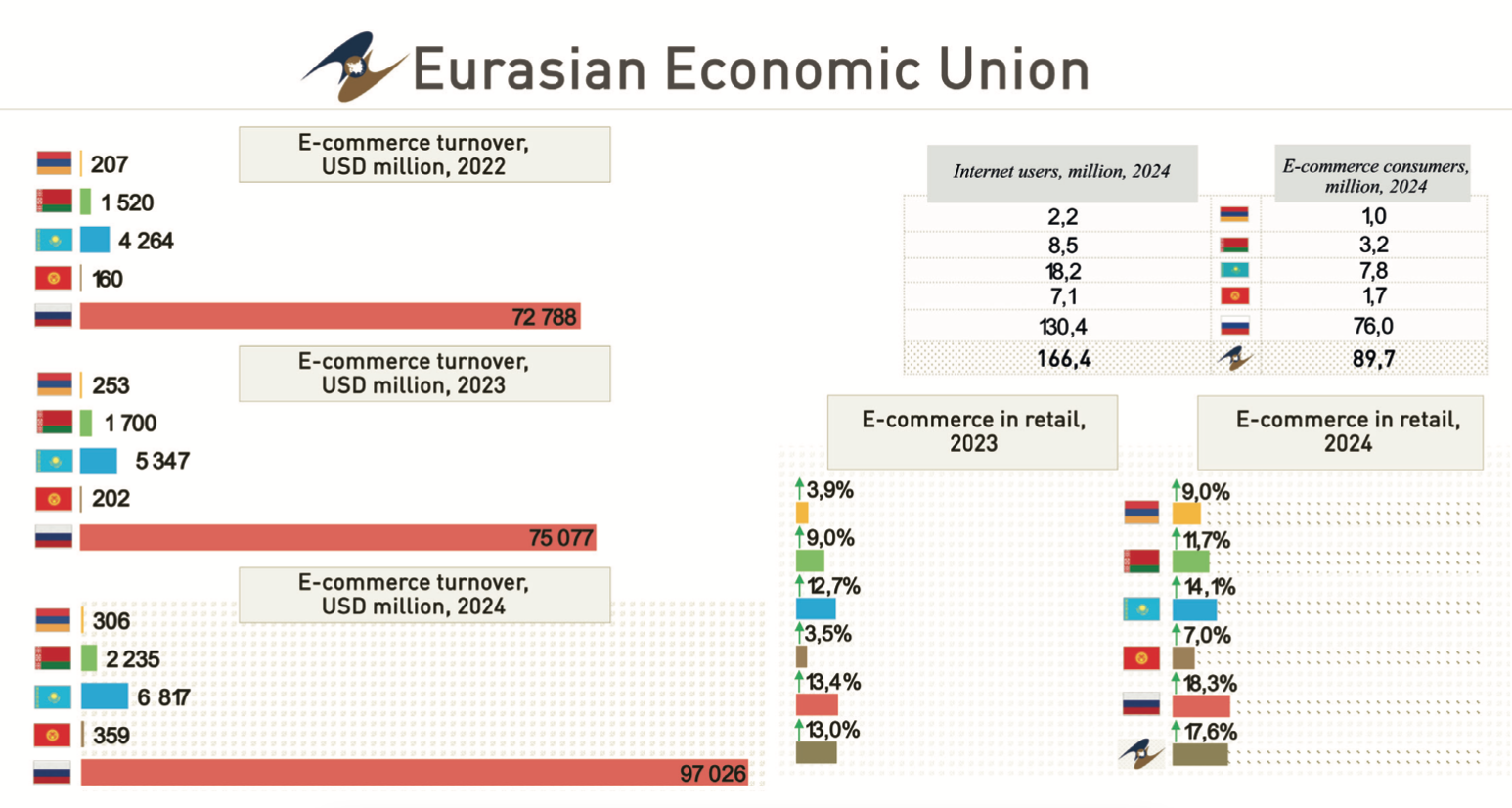
Nor can one overlook the modern forms of commercial activity that have emerged as a result of widespread digitalisation and received a significant boost during COVID 19. E commerce within the EAEU, for instance, continues to develop rapidly, with its total value reaching approximately USD 110 billion in 2024—accounting for over 17% of all retail sales. Around 90 million consumers across the EAEU states now purchase goods online, that is nearly half the population of the five member states combined. The majority of these sellers are SMEs, which make up to 80% of the market.
It is for this reason that, since 2020, the Commission and the member states have placed particular emphasis on developing modern and competitive regulatory frameworks for these processes.
The key directions for e-commerce within the EAEU are set out in the roadmap, signed by the heads of government in November 2021. Considerable progress has already been made.
As part of its implementation, a draft Agreement on E-Commerce in Goods within the EAEU is now at its final stage. This agreement is objectively necessary to prevent new barriers in the internal market and to uphold the free movement of goods across the EAEU.
The agreement establishes a common legal foundation for e-commerce within the EAEU in the most transparent and fair manner. It also addresses a number of existing and potential challenges.
Under its provisions, mutual e-commerce—both physical and digital—as well as related services, is conducted on the basis of non-discrimination.
Furthermore, amid ongoing discussions within the WTO, mutual e-commerce in digital goods will be carried out without EAEU member states applying measures analogous to the customs, tariff, and non-tariff regulations that govern trade in physical goods under the EAEU Treaty.
Within the EAEU, there are plans to develop a package of secondary legislation establishing a basic set of rules. These will cover conditions for returning goods, terms and timelines for refunds, and the mandatory information to be provided at the point of sale, among others.
The agreement sets a uniform minimum return period of 14 calendar days for goods of satisfactory quality. It also mandates the creation and publication on the EAEU’s official website of a register of products prohibited or restricted within e-commerce across member states, in accordance with their national legislation. Additionally, it specifies requirements relating to advertising mailings.
The agreement sets out a basic model for electronic document flow (EDF), involving national EDF operators and trusted third parties, aiming at the mutual recognition of electronic documents exchanged within such a system.
In late December 2025, the draft agreement was forwarded to the EAEU states in preparation for signature.
The development of e-commerce regulation within the EAEU addresses not only mutual trade but also the establishment of an appropriate legal framework for its external dimension.
At present, the ratification of the amendments to the EAEU Customs Code, introduced in December 2023, is nearing completion. These amendments relate to the regulation of external e-commerce, specifically concerning the purchase of goods by individuals from member states via foreign marketplaces.
The main innovations in this area should be noted.
First, e-commerce is now recognised as a distinct category of foreign trade, combining elements of both traditional commerce and the movement of goods for personal use.
Second, the import of e-commerce goods will proceed via two routes: “direct delivery” (directly to the individual through international postal services or couriers) and “bonded warehouse” (a consolidated consignment of goods into a customs warehouse, followed by their sale individually to consumers).
Third, the primary point of contact with customs authorities will be the e-commerce operator, who will be responsible for all formalities related to the import of goods on behalf of the buyer, including submitting declarations, providing necessary information to customs, calculating and paying duties and taxes.
At the 5th meeting of the Joint Commission on the Implementation of the Trade and Economic Cooperation Agreement with China, held in Moscow on November 12, 2025, both parties identified key areas for further development. These include the trade and economic cooperation roadmap; trade protection; technical regulation; customs; market access, including sanitary and phytosanitary measures; competition and public procurement; engagement within the multilateral trading system; support for the Eurasian Agroexpress project; and cooperation in pharmaceuticals.
An agreement has been reached with China to establish a permanent dialogue on climate change, aiming to harmonise standards in low carbon development and mitigate the risks of trade barriers related to the calculation of the carbon footprint of industrial products.
Both parties stressed the importance of expert consultations to address concerns over the application of sanitary and phytosanitary measures. They also agreed to hold a joint seminar on registering EAEU agricultural exporters in China’s CIFER to enhance understanding of the system and boost agricultural and food exports from the EAEU to the Chinese market.
To implement the FTA with Serbia (2019), discussions were held last year to address issues related to international lorry transport through border checkpoints of Belarus and Russia for Serbian nationals, specifically professional drivers.
In March 2025, following the relevant review, Serbia notified the EEC of its decision to lift quantitative restrictions on the import of sunflower oil and fat-containing products from EAEU countries.
With regard to the FTA with Vietnam (2015), a notable development, as of July 1, 2025, was a simplified registration of drugs, including measures to streamline e-commerce of pharmaceuticals—a matter that had been raised on multiple occasions during meetings of the joint committees established under the agreement.
According to estimates by the EEC, the EAEU’s preferential trade agreements have resulted in a 23% increase in exports to partner countries since the preferential trade regime was introduced. This growth rate is more than twice that of EAEU exports to the rest of the world over the past five years.
This positive effect on export growth to FTA partners has, over the lifetime of all preferential agreements, generated a total of more than 120,000 additional jobs and contributed an extra USD 1.2 billion to budget revenues.
Nor can one overlook the modern forms of commercial activity that have emerged as a result of widespread digitalisation and received a significant boost during COVID 19. E commerce within the EAEU, for instance, continues to develop rapidly, with its total value reaching approximately USD 110 billion in 2024—accounting for over 17% of all retail sales. Around 90 million consumers across the EAEU states now purchase goods online, that is nearly half the population of the five member states combined. The majority of these sellers are SMEs, which make up to 80% of the market.
It is for this reason that, since 2020, the Commission and the member states have placed particular emphasis on developing modern and competitive regulatory frameworks for these processes.
The key directions for e-commerce within the EAEU are set out in the roadmap, signed by the heads of government in November 2021. Considerable progress has already been made.
As part of its implementation, a draft Agreement on E-Commerce in Goods within the EAEU is now at its final stage. This agreement is objectively necessary to prevent new barriers in the internal market and to uphold the free movement of goods across the EAEU.
The agreement establishes a common legal foundation for e-commerce within the EAEU in the most transparent and fair manner. It also addresses a number of existing and potential challenges.
Under its provisions, mutual e-commerce—both physical and digital—as well as related services, is conducted on the basis of non-discrimination.
Furthermore, amid ongoing discussions within the WTO, mutual e-commerce in digital goods will be carried out without EAEU member states applying measures analogous to the customs, tariff, and non-tariff regulations that govern trade in physical goods under the EAEU Treaty.
Within the EAEU, there are plans to develop a package of secondary legislation establishing a basic set of rules. These will cover conditions for returning goods, terms and timelines for refunds, and the mandatory information to be provided at the point of sale, among others.
The agreement sets a uniform minimum return period of 14 calendar days for goods of satisfactory quality. It also mandates the creation and publication on the EAEU’s official website of a register of products prohibited or restricted within e-commerce across member states, in accordance with their national legislation. Additionally, it specifies requirements relating to advertising mailings.
The agreement sets out a basic model for electronic document flow (EDF), involving national EDF operators and trusted third parties, aiming at the mutual recognition of electronic documents exchanged within such a system.
In late December 2025, the draft agreement was forwarded to the EAEU states in preparation for signature.
The development of e-commerce regulation within the EAEU addresses not only mutual trade but also the establishment of an appropriate legal framework for its external dimension.
At present, the ratification of the amendments to the EAEU Customs Code, introduced in December 2023, is nearing completion. These amendments relate to the regulation of external e-commerce, specifically concerning the purchase of goods by individuals from member states via foreign marketplaces.
The main innovations in this area should be noted.
First, e-commerce is now recognised as a distinct category of foreign trade, combining elements of both traditional commerce and the movement of goods for personal use.
Second, the import of e-commerce goods will proceed via two routes: “direct delivery” (directly to the individual through international postal services or couriers) and “bonded warehouse” (a consolidated consignment of goods into a customs warehouse, followed by their sale individually to consumers).
Third, the primary point of contact with customs authorities will be the e-commerce operator, who will be responsible for all formalities related to the import of goods on behalf of the buyer, including submitting declarations, providing necessary information to customs, calculating and paying duties and taxes.
To secure these amendments to the Code, efforts are currently underway to develop the necessary regulatory framework to enforce the new provisions.
In particular, in late 2025, the Commission Council adopted a decision setting a uniform customs duty rate of 5%, with a minimum charge of EUR 1 per kilogram. This does not exceed the current weighted average import customs duty applied within the EAEU. Furthermore, for 2026, the duty-free import threshold has been set at EUR 200.
It is worth noting that the full implementation of the EAEU Customs Code governing external e-commerce is scheduled to come into effect on July 1, 2026.
Broader digitalisation of trade is also high on the Commission’s agenda. To meet the objectives set out in the Declaration on the further development of economic processes within the EAEU up to 2030 and the period up to 2045, “The Eurasian Economic Path,” the Commission, in cooperation with the EAEU member states, is devising an action plan aimed at advancing digital technologies in trade, while taking into account national solutions and achievements.
In particular, emphasis is placed on developing proposals to create the necessary conditions for introducing digital (“paperless”) trade, ensuring electronic document flow and information exchange in import-export operations, with the potential integration of smart contract technologies.
There is also an ongoing discussion on whether model approaches on the ethical use of AI and other digital technologies in trade within the EAEU should be established.
The comprehensive strategy underpinning the EEC’s trade agenda enables the EAEU not only to keep pace with global economic developments, but also to systematically build up its capacity, strengthening its position as a key player in international economic relations and expanding its influence in the global economy.
In particular, in late 2025, the Commission Council adopted a decision setting a uniform customs duty rate of 5%, with a minimum charge of EUR 1 per kilogram. This does not exceed the current weighted average import customs duty applied within the EAEU. Furthermore, for 2026, the duty-free import threshold has been set at EUR 200.
It is worth noting that the full implementation of the EAEU Customs Code governing external e-commerce is scheduled to come into effect on July 1, 2026.
Broader digitalisation of trade is also high on the Commission’s agenda. To meet the objectives set out in the Declaration on the further development of economic processes within the EAEU up to 2030 and the period up to 2045, “The Eurasian Economic Path,” the Commission, in cooperation with the EAEU member states, is devising an action plan aimed at advancing digital technologies in trade, while taking into account national solutions and achievements.
In particular, emphasis is placed on developing proposals to create the necessary conditions for introducing digital (“paperless”) trade, ensuring electronic document flow and information exchange in import-export operations, with the potential integration of smart contract technologies.
There is also an ongoing discussion on whether model approaches on the ethical use of AI and other digital technologies in trade within the EAEU should be established.
The comprehensive strategy underpinning the EEC’s trade agenda enables the EAEU not only to keep pace with global economic developments, but also to systematically build up its capacity, strengthening its position as a key player in international economic relations and expanding its influence in the global economy.