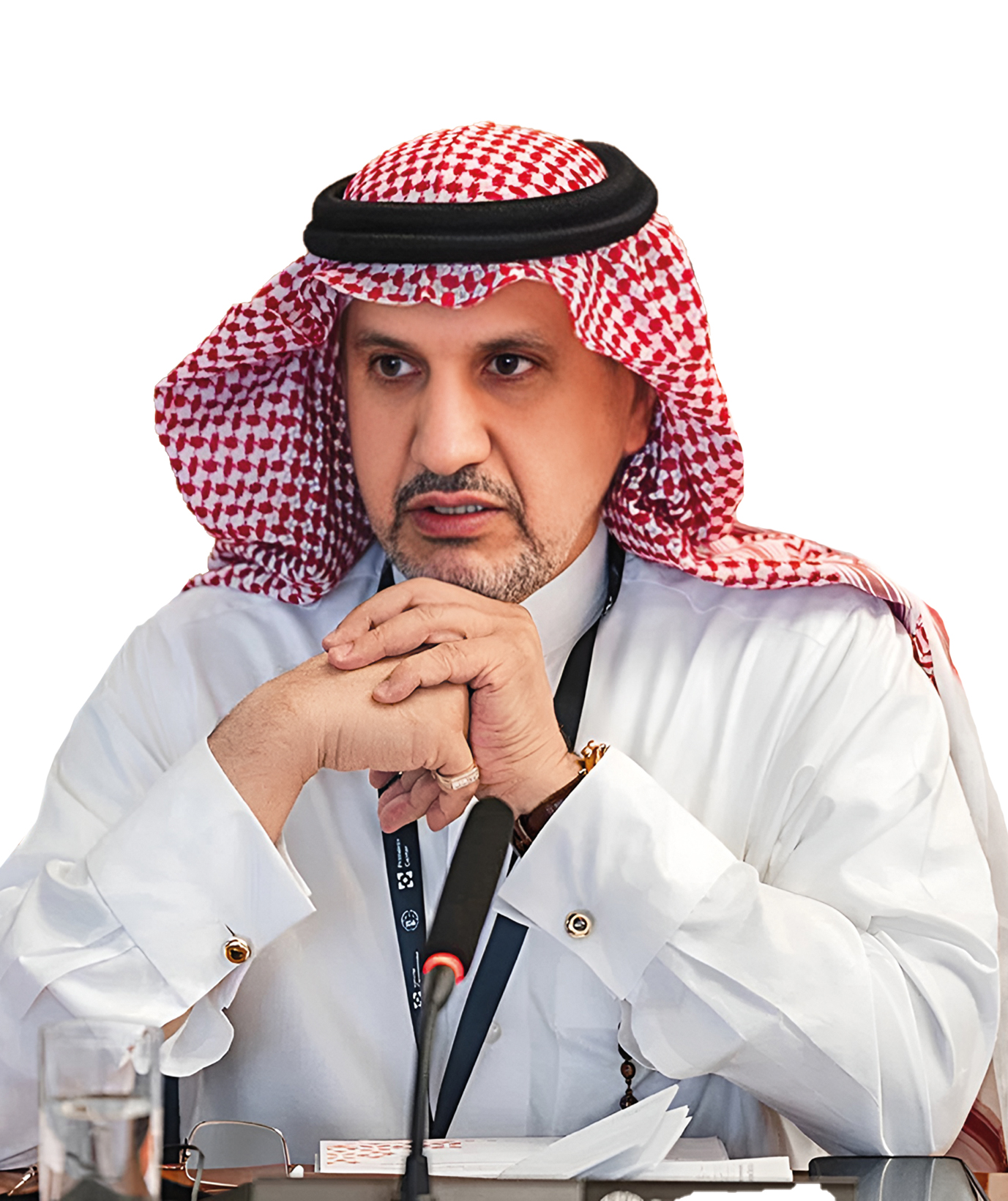
THE ANNUAL INTERNATIONAL ECONOMIC FORUM “RUSSIA — ISLAMIC WORLD” STANDS AS A COMPELLING TESTAMENT TO THE ABILITY OF RUSSIA AND THE ISLAMIC WORLD TO SHAPE THE OUTLINES OF A NEW GLOBAL ORDER.
– MAJED ABDULAZIZ AL-TURKI, Director, Center of Information and Arabian-Russian Studies
SHAPING COOPERATION BETWEEN RUSSIA AND THE ISLAMIC WORLD
Nearly 23 years ago, in October 2003, Russia’s President Putin took part in the 10th Summit of the Heads of State and Government of the Organisation of the Islamic Conference (OIC), held in Kuala Lumpur. In his address, he noted that “Russian Muslims are an integral, full-fledged and vibrant part of the multinational and multi faith people of Russia,” that it is unacceptable to equate terrorism with Islam, and called for stronger cooperation between Russia and the Islamic world.
The President’s speech heralded the opening of a new avenue of international engagement: “Russia – Islamic world,” based on shared geography and history and aimed at drawing Muslim countries away from the Western orbit—the very states that, following the events of September 11, 2001, had unleashed a deliberate campaign against the Islamic world and the civilisational foundations of Islam. Shortly thereafter, in 2005, Russia was granted observer status with the OIC.
In 2006, with the express aim of solidifying a new strategic course, President Putin personally initiated the Group of Strategic Vision “Russia — Islamic World.” This bold move was swiftly followed by further decisive steps: during a meeting with the OIC Secretary General, the Russian head of state unequivocally designated the development of relations with the Islamic world as a priority, and went on to underscore the importance of steady economic cooperation with Muslim nations. He also voiced unwavering support for intercivilisational dialogue and condemned Islamophobia.
It is essential to recognise that these declarations were not mere formalities—they reflected the Russian leadership’s unyielding commitment to fostering closer ties both with the Islamic world—driven by deep-rooted civilisational affinities—and with Eurasia, a region bound to Russia by geography. To advance such a course demands political will and resolve, and in this context, we cannot but admire the resolute pursuit of centralism by Russia’s top authorities in implementing this strategy. Yet this is but a side of the coin. Equally vital is the principle of “multi-variance” in the work of government bodies tasked with this agenda, as it ensures the necessary dynamism and diversity.
These two guiding principles— centralism and multi-variance—are not mutually exclusive; rather, they are mutually reinforcing. It becomes evident when examining Russia’s sovereign decision-making, particularly in the political landscape of “Putin’s Russia.” Such a stance naturally ripples through the international reality. Here, centralised decision-making emerges as a key factor behind the Russian-Saudi accord—a landmark achievement reached despite the enduring challenges and complexities of their bilateral relations.
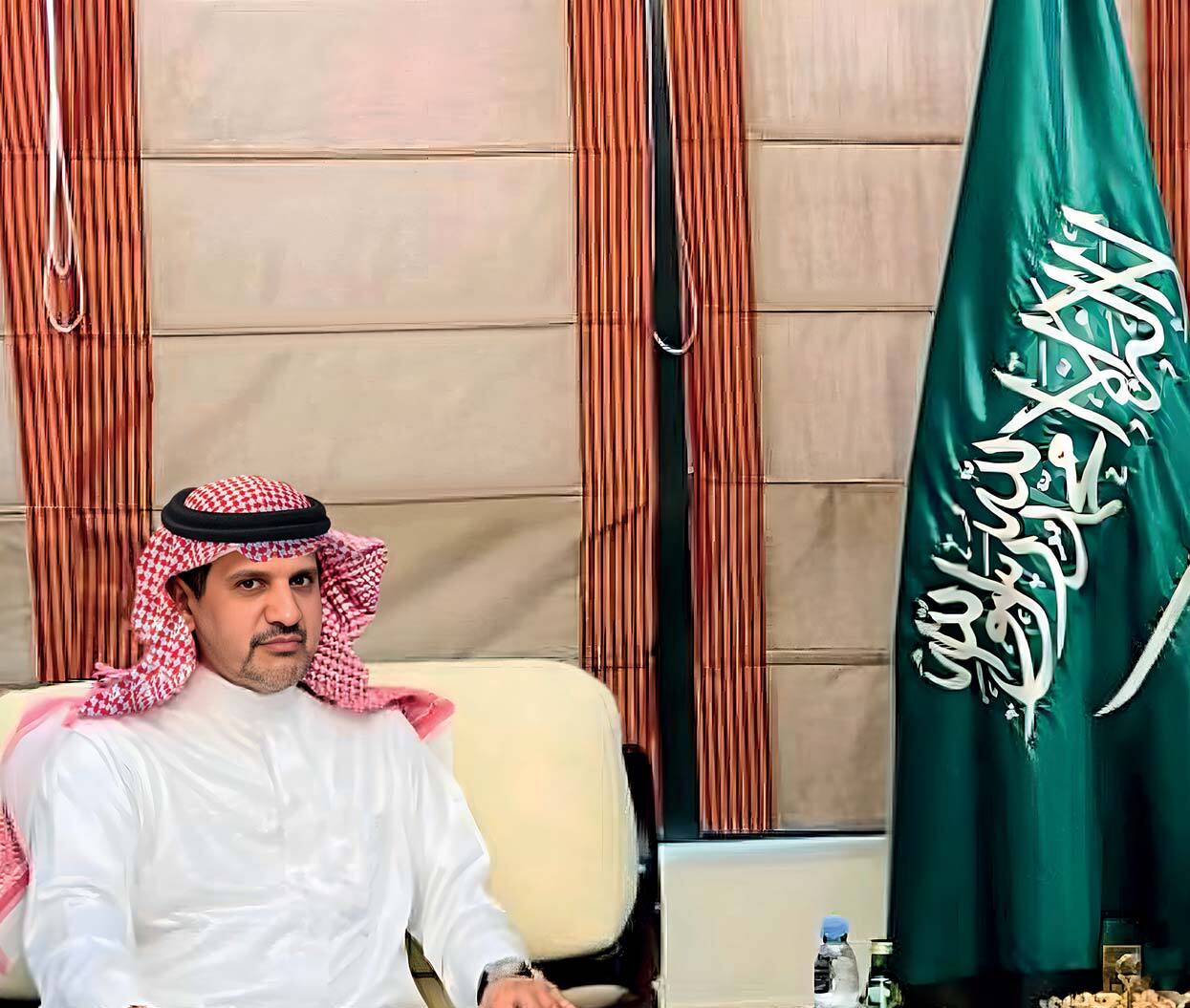
The strategy pursued by Russia to deepen ties with the Islamic world is underpinned by a blend of political resolve and the guiding principles of centralism and “multi-variance.”
RUSSIA AND ISLAMIC WORLD: SUCCESSES AND CHALLENGES
The modern geopolitical and economic landscape is undergoing profound change. The once-dominant unipolar order—for decades the bedrock of international relations—is steadily giving way to pluralism and diversity. This shift towards multipolarity presents both opportunity and challenge. For the Islamic world and Russia alike, it opens new avenues of cooperation and influence. Yet, it is also fraught with significant challenges. The Islamic states now face a critical test of their capacity and readiness to forge strategic unity and harness their economic and human potential. This may require the establishment of platforms designed to address pressing issues: redefining roles, establishing common priorities, and aligning joint efforts given the rapid pace of global change.
These shifts are not abstract, but steadily unfolding in real life. Fresh opportunities arise for Russia and the Islamic states to amplify their influence. In this context, the annual Kazan International Economic Forum “Russia — Islamic World” stands as a compelling testament to the ability of both parties to play an active role in shaping a more balanced and inclusive world order.
It is worth highlighting the 30% surge in trade between Russia and the Islamic world—a figure that speaks volumes about the tangible prospects for deeper cooperation. Yet, amid such progress, pressing issues remain whether this growth can withstand the turbulence currently gripping the global economy, if there is the necessary readiness to effectively use available economic and human resources and the will to strengthen partnerships in education, technology, and commerce. The collective efforts of all involved could transform these challenges into genuine opportunities, paving the way for a fairer and more balanced world order in the shared interest. Yet the question persists: can the Islamic world and Russia rise to these challenges, pool their efforts, and drive real change?
The reality is that the Group of Strategic Vision “Russia — Islamic World” is navigating a complex landscape. Its work faces several obstacles, not least of which are the following:
- Muslim communities in many countries remain poorly involved in this partnership, often due to a lack of awareness within Russia about the true nature of Islam, alongside misconceptions about the Muslim world in general—and Saudi society in particular.
- The deep penetration of Western political, economic, and cultural influence into the fabric of the Muslim world creates fierce competition to Russia’s outreach to Islamic states.
- Concerted campaigns by Western nations to distort the image of the Muslim world have a tangible impact— even in Russia, where public perception of certain issues is often shaped by Western narratives.
Despite the formidable obstacles in the way of a strategic partnership between Russia and the Islamic world, two pivotal and actionable factors are driving this rapprochement forward.
The first—and this concerns Russia—is the enduring significance of Islam for Russia, as Muslims are seen as citizens of Russia and account for a substantial part of its population. Islam is the second-largest faith in the country after Orthodox Christianity, deeply embedded in its history rather than a recent import, as it has been in much of Europe and the United States.
The second—and this is true for the Islamic world—is the aftermath of the 9/11. The response that followed revealed the true face of the West, led by the United States, and its unjust treatment of Islam. The West’s military campaigns—in Somalia, Iraq, Afghanistan, Pakistan, Gaza, and Lebanon—left destruction, while relentless aerial bombardments by the US and Israel inflicted untold suffering on civilians. These actions also caused profound economic, political, and cultural damage. In these circumstances, shaped by Western aggression, the Islamic world has come to recognise Russia as a vital partner—a strong state capable of providing meaningful support. Can—and will—Russia provide it?
Looking back at the progress made, it is clear that Russia has made significant headway in advancing its strategic partnership with the Islamic world.
The second—and this is true for the Islamic world—is the aftermath of the 9/11. The response that followed revealed the true face of the West, led by the United States, and its unjust treatment of Islam. The West’s military campaigns—in Somalia, Iraq, Afghanistan, Pakistan, Gaza, and Lebanon—left destruction, while relentless aerial bombardments by the US and Israel inflicted untold suffering on civilians. These actions also caused profound economic, political, and cultural damage. In these circumstances, shaped by Western aggression, the Islamic world has come to recognise Russia as a vital partner—a strong state capable of providing meaningful support. Can—and will—Russia provide it?
Looking back at the progress made, it is clear that Russia has made significant headway in advancing its strategic partnership with the Islamic world.
- Firstly, sustained, profound engagement with Muslim states is maintained through the OIC.
- Secondly, Russia has cultivated a positive image within the Islamic world.
- Thirdly, the negative influence of external Muslim actors on Russia has been neutralised, with an emphasis made particularly on self-reliance in matters relating to Islam.
Russia’s rapprochement with the Islamic world is hampered by a lack of awareness about Islam within Russian society and by Western influence over Muslim states.
SAUDI ARABIA AND RUSSIA IN EURASIA
Today, it is evident that Saudi Arabia’s support for integration with Russia and more broadly with Eurasia (including the EAEU) is steadily intensifying and deepening. This shift is driven by Saudi Arabia’s Vision 2030, which aims to diversify the economy, bolster food security, and position the country as a global logistics hub. In this context, a number of key areas of cooperation have emerged.
Direct Cooperation with the Eurasian Economic Commission (EEC)In October 2022, the EEC engaged in high-level discussions with Saudi Arabia’s Ministry of Environment, Water and Agriculture to explore avenues for agricultural cooperation, including in drafting an international treaty on organic farming systems, aimed at facilitating the free trade of organic products. Additionally, the talks centred on establishing a dedicated platform to promote investment and the export of agricultural goods from Eurasia to third markets.
In February 2026, the EEC Council approved a draft Memorandum of Understanding with Saudi Arabia’s Major Tender Committee. The document envisions exchange of experience, joint market research, and ongoing dialogue on competition policy—all of which pave the way for a long-term partnership.
Saudi-Russian Bilateral PartnershipTrade turnover between Saudi Arabia and Russia has surged to unprecedented levels, surpassing USD 3.8 billion in 2024—a 62% increase on the previous year. In the first quarter of 2025 alone, trade volumes quadrupled. Non-oil trade has seen particularly dramatic growth, rising from USD 491 million in 2016 to USD 3.28 billion in 2024.
Cooperation is expanding across key sectors—energy (coordination within OPEC+ to stabilise global prices), agriculture (Russian exports of wheat, meat, and vegetable oils), mining and industrial production, technology and logistics. Investment flows have also intensified, with Saudi investment in
Russia growing by 11% and Russian investment in Saudi Arabia soaring by 600% in 2024. This momentum has been bolstered by the establishment of a USD 10 billion joint investment platform between the Saudi Public Investment Fund and the Russian Direct Investment Fund.
In December 2025, the Saudi-Russian Business Forum convened in Riyadh as part of the 9th session of the bilateral intergovernmental commission. A central focus was the proposed construction of the “Eurasia–Middle East” axis, linking Russia to the region.
Free Trade Agreements and Infrastructure ProjectsOngoing negotiations are advancing towards a free trade agreement between the EAEU and Saudi Arabia. For Riyadh, this would unlock access to the EAEU’s vast market of 185 million consumers, reduce logistics costs, and open Saudi markets to Russian and other Eurasian goods. Additionally, Saudi Arabia has been invited to join the “North– South” international transport corridor, a logistics network linking the Red Sea and the Gulf with Russia’s northern trade routes. Participation in this project would further cement Saudi Arabia’s role as a central hub within Eurasian integration.
In December 2025, the Saudi-Russian Business Forum convened in Riyadh as part of the 9th session of the bilateral intergovernmental commission. A central focus was the proposed construction of the “Eurasia–Middle East” axis, linking Russia to the region.
Free Trade Agreements and Infrastructure ProjectsOngoing negotiations are advancing towards a free trade agreement between the EAEU and Saudi Arabia. For Riyadh, this would unlock access to the EAEU’s vast market of 185 million consumers, reduce logistics costs, and open Saudi markets to Russian and other Eurasian goods. Additionally, Saudi Arabia has been invited to join the “North– South” international transport corridor, a logistics network linking the Red Sea and the Gulf with Russia’s northern trade routes. Participation in this project would further cement Saudi Arabia’s role as a central hub within Eurasian integration.
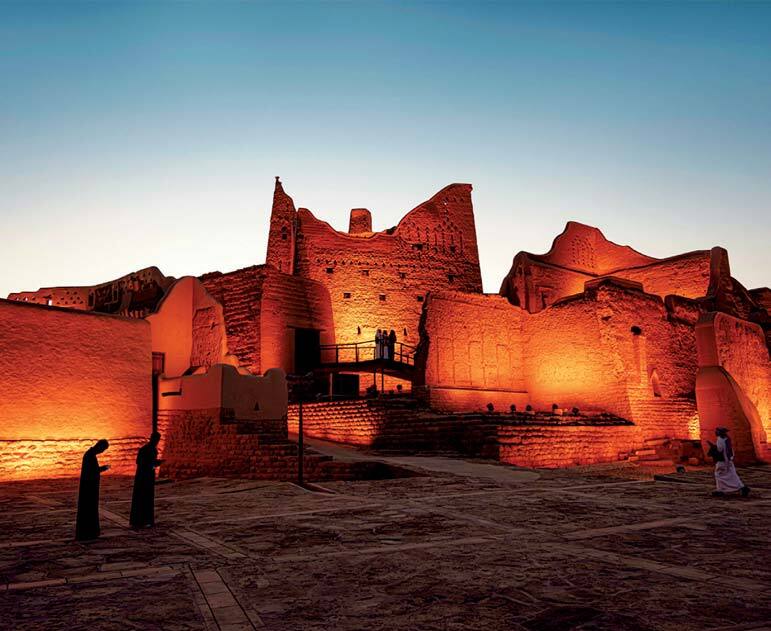
Through direct engagement with the EEC, the development of bilateral relations with Russia, and collaboration within the EAEU and BRICS, Saudi Arabia is actively promoting Eurasian integration.
Multilateral Cooperation Within BRICS
Official BRICS sources confirm Saudi Arabia’s active engagement in the group, reinforcing multi-faceted economic integration with Russia and other Eurasian nations. In this context, Saudi-Russian partnership is seen as a cornerstone for bridging BRICS, the Middle East, and Eurasia.
These developments mark a paradigm shift—moving beyond traditional ties in the oil sector towards a comprehensive strategic partnership that bolsters Eurasian integration through trade, investment, and logistics. While Saudi Arabia does not directly participate in EAEU integration, it strengthens external linkages, thereby supporting Russia’s pivot towards the East and South. This alignment is driven by shared interests: diversifying Saudi Arabia’s economy and helping Russia navigate sanctions.
With Saudi Arabia’s participation as a guest at the St. Petersburg International Economic Forum 2026 and the anticipated progress on the free trade agreement, these trends are poised to gather further momentum. Such cooperation will be pivotal in constructing an economic framework that bridges Eurasia and the Middle East.
Official BRICS sources confirm Saudi Arabia’s active engagement in the group, reinforcing multi-faceted economic integration with Russia and other Eurasian nations. In this context, Saudi-Russian partnership is seen as a cornerstone for bridging BRICS, the Middle East, and Eurasia.
These developments mark a paradigm shift—moving beyond traditional ties in the oil sector towards a comprehensive strategic partnership that bolsters Eurasian integration through trade, investment, and logistics. While Saudi Arabia does not directly participate in EAEU integration, it strengthens external linkages, thereby supporting Russia’s pivot towards the East and South. This alignment is driven by shared interests: diversifying Saudi Arabia’s economy and helping Russia navigate sanctions.
With Saudi Arabia’s participation as a guest at the St. Petersburg International Economic Forum 2026 and the anticipated progress on the free trade agreement, these trends are poised to gather further momentum. Such cooperation will be pivotal in constructing an economic framework that bridges Eurasia and the Middle East.