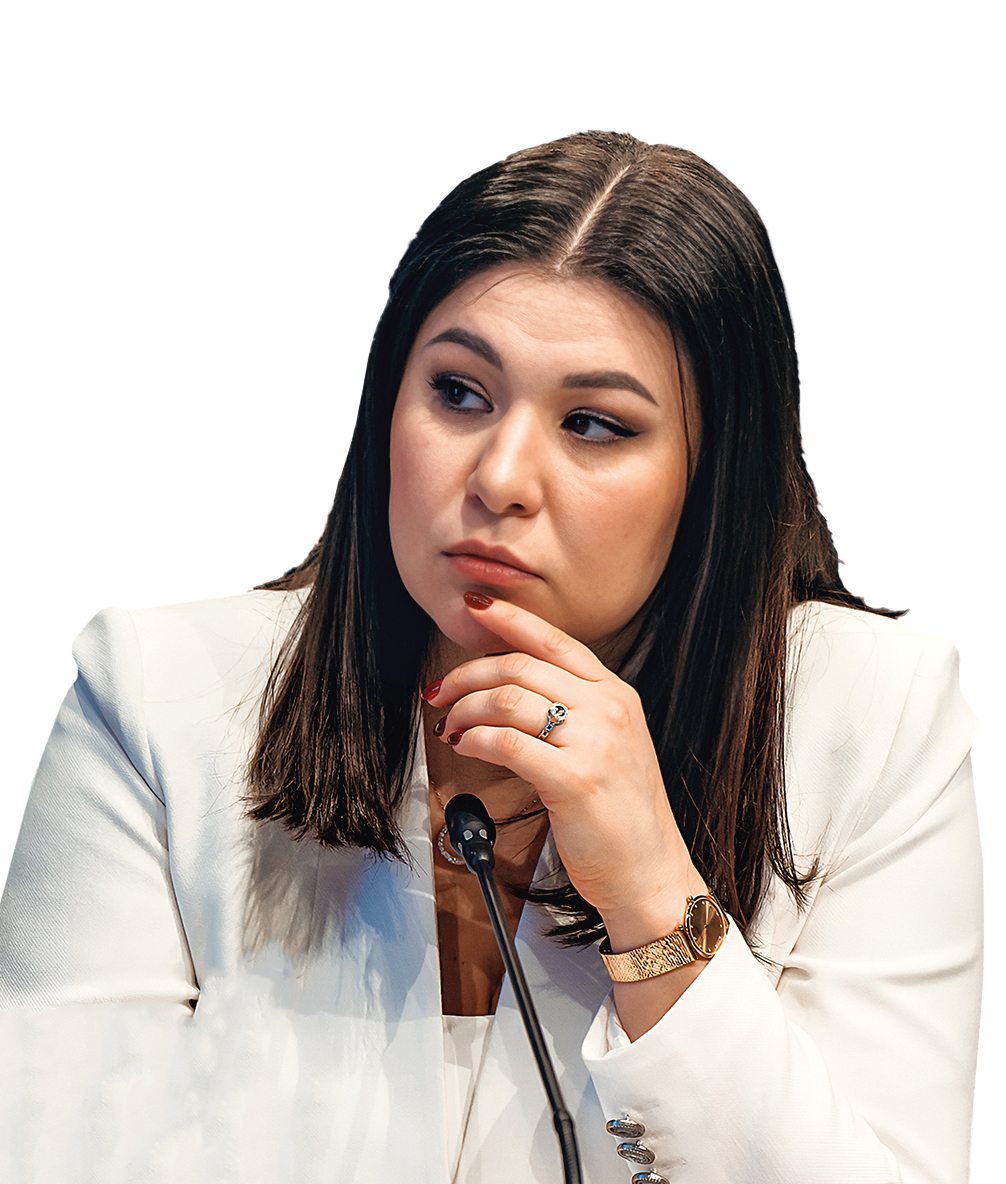
Taliya MINULLINA, Head of the Tatarstan Investment Development Agency, in an interview with the “Eurasian Dialogue”
— Ms. Minullina, what do you believe to be the secret to Tatarstan’s success in investment activities? Could you highlight some key investment indicators for the region over the recent years?
— The most telling indicator of a region’s investment attractiveness is, of course, the quality of its investment climate. According to the National Rating of Investment Climate in Russian regions, Tatarstan has consistently held a leading position since 2015. From 2015 to 2017, the Republic topped the rankings, secured third place in 2018, and held second place from 2019 to 2024. Then, in 2025, Tatarstan came first among all regions—second only to Moscow. As for the secret, I suppose, it is simple: Tatarstan knows how to foster a welcoming investment climate.
Firstly, the Republic has established a systematic framework to support investment—achieved through the political stability and continuity of leadership. For over 15 years, Tatarstan has been led by Rustam Minnikhanov. His vast experience—first within local government, then as Minister of Finance, and later as Prime Minister—enabled him to steer the Republic’s balanced development, strengthen Russia’s international standing, and, crucially, earn the trust of major investors from the East.
Secondly, Tatarstan has developed and is steadily following its long-term development plan—Strategy 2030, now extended to 2050. Clear priorities and goals have been set, and all programmes are aligned with this Strategy.
Here, I must emphasise that it is precisely strategic planning that grants Tatarstan its competitive edge in attracting investors. A clear plan empowersittoactdecisivelyandmake bold decisions—such as building hundreds of thousands of square metres of production space long before inviting investors. This approach proved effective in the special economic zone of Alabuga, where its leadership took the bold step of securing a substantial loan. As a result, today, manufacturers are using every facility. After all, investors are unwilling to waste time, and if forced to wait for construction, they will simply relocate to another region offering more favourable conditions. Key to success is industrial infrastructure. What truly matters are the most advantageous business conditions: turnkey production sites with utilities and access roads. And it is through bold policies that Alabuga has, for several years, led both Russian and international rankings of special economic zones. Today, it is evolving into a vital logistics hub in European Russia, one that will bridge connections with China.
Thirdly, there is the agglomeration approach. Tatarstan has established an Institute for Spatial Development, which has been successfully crafting master plans for cities and agglomerations. This ensures SDGs are met: territorialmodellingallowsforforecasting transport flows, labour migration, and other dynamics, thereby pre-empting infrastructure bottlenecks and ensuring the availability of social, cultural, and educational facilities. Spatial planning provides unparalleled clarity on where and which investment projects should be situated—a transformative leap in investment strategy. The master plan for Kazan has already been finalised. I am convinced that Tatarstan’s experience in this regard could be scaled across the whole of Russia. Moreover, the Republic has deliberately dispersed its economic and social growth centres, ensuring that economic activity is not concentrated in the capital alone. Every effort has been made to diversify the economies of single-industry towns—those still reliant on Soviet-era production models.
Fourthly, unlocking all the possibilities of the support measures available under federal programmes: special economic zones (SEZs), territories of advanced development (TADs), industrial parks, resourses from the Industrial Development Fund, investment protection and promotion agreements, a range of public-private partnership instruments, investment guarantee obligations, and tax relief. It is worth noting that Tatarstan is the only Russian region known for its comprehensive network of eight zones offering economic incentives: five TADs and three SEZs, one of which—Green Valley—is set to launch this year and will specialise in biotechnology. A cornerstone of state support for investment projects is the Regional Investment Standard (RIS), a flagship federal initiative designed to create a conducive climate for business in the regions, secure a level playing field and provide investors with the assurances they seek. When the RIS was introduced, it drew heavily on Tatarstan’s own pioneering experience—we were among the first to develop an Investment Declaration and introduce a consolidated set of investment rules governing the issuance of permits and documentation. Today, the RIS underpins the benchmarking of investment climates, including those assessed by the Agency for Strategic Initiatives.
— The most telling indicator of a region’s investment attractiveness is, of course, the quality of its investment climate. According to the National Rating of Investment Climate in Russian regions, Tatarstan has consistently held a leading position since 2015. From 2015 to 2017, the Republic topped the rankings, secured third place in 2018, and held second place from 2019 to 2024. Then, in 2025, Tatarstan came first among all regions—second only to Moscow. As for the secret, I suppose, it is simple: Tatarstan knows how to foster a welcoming investment climate.
Firstly, the Republic has established a systematic framework to support investment—achieved through the political stability and continuity of leadership. For over 15 years, Tatarstan has been led by Rustam Minnikhanov. His vast experience—first within local government, then as Minister of Finance, and later as Prime Minister—enabled him to steer the Republic’s balanced development, strengthen Russia’s international standing, and, crucially, earn the trust of major investors from the East.
Secondly, Tatarstan has developed and is steadily following its long-term development plan—Strategy 2030, now extended to 2050. Clear priorities and goals have been set, and all programmes are aligned with this Strategy.
Here, I must emphasise that it is precisely strategic planning that grants Tatarstan its competitive edge in attracting investors. A clear plan empowersittoactdecisivelyandmake bold decisions—such as building hundreds of thousands of square metres of production space long before inviting investors. This approach proved effective in the special economic zone of Alabuga, where its leadership took the bold step of securing a substantial loan. As a result, today, manufacturers are using every facility. After all, investors are unwilling to waste time, and if forced to wait for construction, they will simply relocate to another region offering more favourable conditions. Key to success is industrial infrastructure. What truly matters are the most advantageous business conditions: turnkey production sites with utilities and access roads. And it is through bold policies that Alabuga has, for several years, led both Russian and international rankings of special economic zones. Today, it is evolving into a vital logistics hub in European Russia, one that will bridge connections with China.
Thirdly, there is the agglomeration approach. Tatarstan has established an Institute for Spatial Development, which has been successfully crafting master plans for cities and agglomerations. This ensures SDGs are met: territorialmodellingallowsforforecasting transport flows, labour migration, and other dynamics, thereby pre-empting infrastructure bottlenecks and ensuring the availability of social, cultural, and educational facilities. Spatial planning provides unparalleled clarity on where and which investment projects should be situated—a transformative leap in investment strategy. The master plan for Kazan has already been finalised. I am convinced that Tatarstan’s experience in this regard could be scaled across the whole of Russia. Moreover, the Republic has deliberately dispersed its economic and social growth centres, ensuring that economic activity is not concentrated in the capital alone. Every effort has been made to diversify the economies of single-industry towns—those still reliant on Soviet-era production models.
Fourthly, unlocking all the possibilities of the support measures available under federal programmes: special economic zones (SEZs), territories of advanced development (TADs), industrial parks, resourses from the Industrial Development Fund, investment protection and promotion agreements, a range of public-private partnership instruments, investment guarantee obligations, and tax relief. It is worth noting that Tatarstan is the only Russian region known for its comprehensive network of eight zones offering economic incentives: five TADs and three SEZs, one of which—Green Valley—is set to launch this year and will specialise in biotechnology. A cornerstone of state support for investment projects is the Regional Investment Standard (RIS), a flagship federal initiative designed to create a conducive climate for business in the regions, secure a level playing field and provide investors with the assurances they seek. When the RIS was introduced, it drew heavily on Tatarstan’s own pioneering experience—we were among the first to develop an Investment Declaration and introduce a consolidated set of investment rules governing the issuance of permits and documentation. Today, the RIS underpins the benchmarking of investment climates, including those assessed by the Agency for Strategic Initiatives.
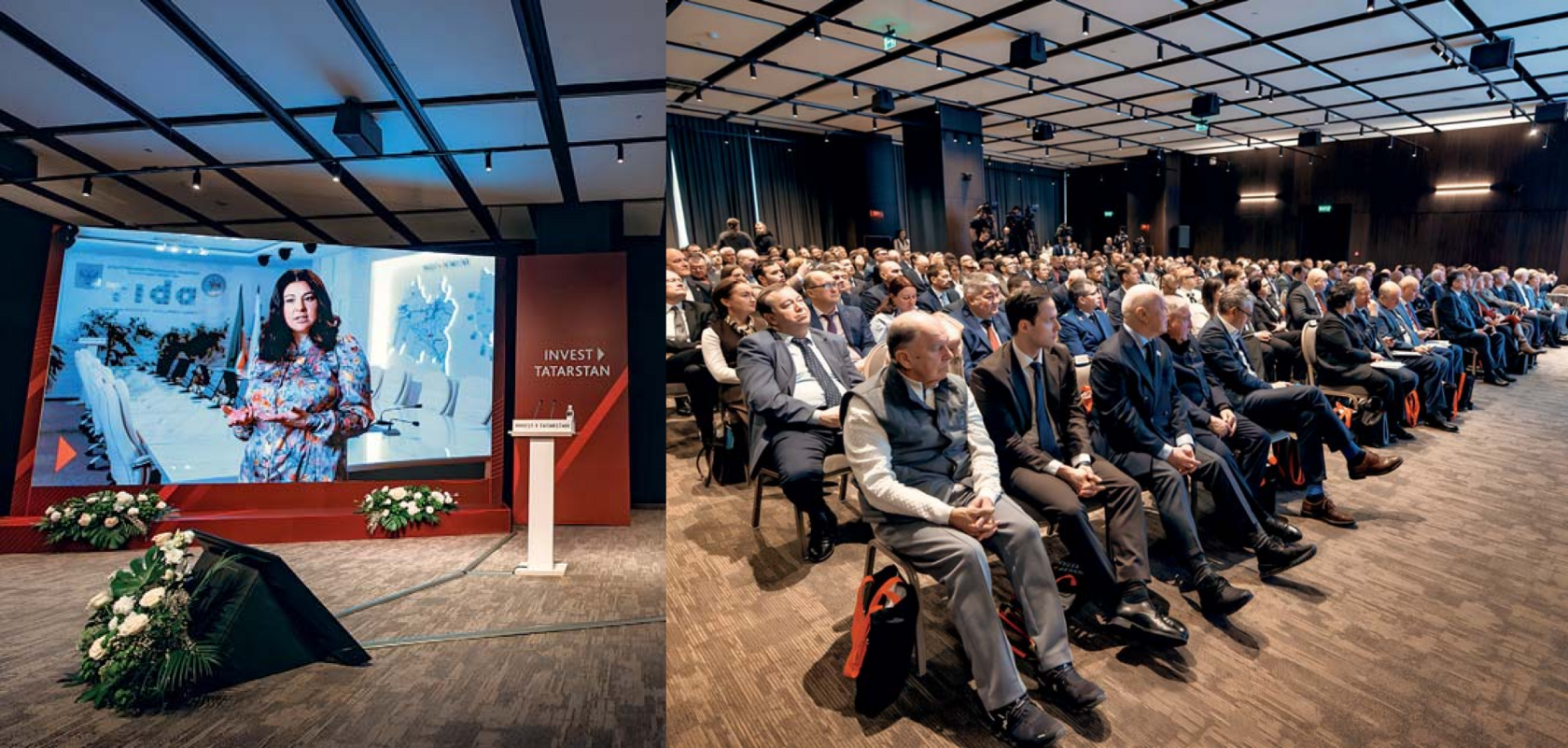
Turning to performance indicators: in 2023, Tatarstan attracted over 1 trillion roubles (1.18 trillion roubles, to be exact) in investments into fixed capital, including the social sphere—a first for the Republic. Growth in fixed capital investments, adjusted for comparable prices, surged by 122% over the previous year. Private investment in fixed capital reached 953 billion roubles, a 122.7% increase on 2022. In 2025, private investment in Tatarstan grew by 15.5%—a remarkable achievement amid challenging economic conditions. Fixed capital investment, excluding budgetary funds at all levels, amounted to nearly 1.485 trillion roubles, while investment excluding federal budget funds totalled 1.57 trillion roubles, representing a 110.8% rise on 2024.
— What factors, in your view, underpin Tatarstan’s investment appeal?
— The bedrock of Tatarstan’s investment appeal is its energy sector. We are the regional leader in gas supply coverage, and the Republic boasts the comprehensive infrastructure required to accommodate investment projects of any scale. When it comes to connecting utilities for industrial facilities, we act with speed and efficiency as part of our investor support framework.
Among its strengths is information transparency. Investors must have a clear understanding—where to find suitable sites, what incentives are available, and how to get started. Transparent access to land plots and real estate assets is ensured through online resources: the investment portal, the investment map, and the investment monitoring system, which records every investor project. Each project is then brought before the Investment Council of the Republic of Tatarstan, chaired by the Rais of the Republic, for consideration and approval.
Another key strength of Tatarstan lies in its commitment to innovation. For several years running, Russia’s Ministry of Economic Development has recognised Innopolis as an economic zone of 100% efficiency. Every Russian or international resident company here benefits from a tailored service package and tax incentives, alongside access to world-class infrastructure. The SEZ actively recruits talent from across Russia and beyond, offering relocation support that includes housing and all the amenities for family life—including high-quality education for children. The University of Innopolis trains experts in partnership with resident IT companies.
Among the critical elements of Tatarstan’s investor outreach strategy is a marketing-led approach.
Our engine for this is a calendar of high-profile international forums held in Kazan. Take this year’s schedule, for instance.
From 13 to 15 May, the business programme of KazanForum will take centre stage, culminating in a special exhibition of investor and infrastructure projects. On the margins of the Forum, participants will discuss investment cooperation with OIC members, Caspian states, and Asia-Pacific nations. Discussions will also focus on advanced technologies, including developments in biomedicine, biopharmaceuticals and other sciences (find more at kazanforum.ru).
Then, from 17 to 18 August, the forum “SPROUTS: Russia and China — Mutually Beneficial Cooperation” will mark its fourth edition—an event now established as Russia’s largest platform for engagement with China. Its rapid growth has prompted both regional and federal authorities to explore expanding the concept with “SPROUTS: Education,” “SPROUTS: Healthcare,” and other themed editions (find more at russiachinaforum. com).
Finally, from 15 to 16 October, the second TIME Business Forum will take place—an event Indian stakeholders are eagerly awaiting. The first edition “TIME: Russia-India. Mutual Efficiency” took place in Kazan on October 8–9, 2025, and was a success. It brought together 3,500 participants from Russia and India. Promising venues for Russian-Indian cooperation include IT, pharmaceuticals, medicine, culture, cinema, among others (find more at time-forum.ru).
— What factors, in your view, underpin Tatarstan’s investment appeal?
— The bedrock of Tatarstan’s investment appeal is its energy sector. We are the regional leader in gas supply coverage, and the Republic boasts the comprehensive infrastructure required to accommodate investment projects of any scale. When it comes to connecting utilities for industrial facilities, we act with speed and efficiency as part of our investor support framework.
Among its strengths is information transparency. Investors must have a clear understanding—where to find suitable sites, what incentives are available, and how to get started. Transparent access to land plots and real estate assets is ensured through online resources: the investment portal, the investment map, and the investment monitoring system, which records every investor project. Each project is then brought before the Investment Council of the Republic of Tatarstan, chaired by the Rais of the Republic, for consideration and approval.
Another key strength of Tatarstan lies in its commitment to innovation. For several years running, Russia’s Ministry of Economic Development has recognised Innopolis as an economic zone of 100% efficiency. Every Russian or international resident company here benefits from a tailored service package and tax incentives, alongside access to world-class infrastructure. The SEZ actively recruits talent from across Russia and beyond, offering relocation support that includes housing and all the amenities for family life—including high-quality education for children. The University of Innopolis trains experts in partnership with resident IT companies.
Among the critical elements of Tatarstan’s investor outreach strategy is a marketing-led approach.
Our engine for this is a calendar of high-profile international forums held in Kazan. Take this year’s schedule, for instance.
From 13 to 15 May, the business programme of KazanForum will take centre stage, culminating in a special exhibition of investor and infrastructure projects. On the margins of the Forum, participants will discuss investment cooperation with OIC members, Caspian states, and Asia-Pacific nations. Discussions will also focus on advanced technologies, including developments in biomedicine, biopharmaceuticals and other sciences (find more at kazanforum.ru).
Then, from 17 to 18 August, the forum “SPROUTS: Russia and China — Mutually Beneficial Cooperation” will mark its fourth edition—an event now established as Russia’s largest platform for engagement with China. Its rapid growth has prompted both regional and federal authorities to explore expanding the concept with “SPROUTS: Education,” “SPROUTS: Healthcare,” and other themed editions (find more at russiachinaforum. com).
Finally, from 15 to 16 October, the second TIME Business Forum will take place—an event Indian stakeholders are eagerly awaiting. The first edition “TIME: Russia-India. Mutual Efficiency” took place in Kazan on October 8–9, 2025, and was a success. It brought together 3,500 participants from Russia and India. Promising venues for Russian-Indian cooperation include IT, pharmaceuticals, medicine, culture, cinema, among others (find more at time-forum.ru).
— Which sectors dominate Tatarstan’s investment landscape today? Where do investors show the most interest?
— Its investment landscape is dominated by manufacturing, mining, logistics, and real estate. We are also seeing a marked rise in investments in intellectual property. Logistics, in particular, has seen its share grow—and this trend is likely to continue.
Investors are increasingly drawn to hospitality projects, particularly given that Kazan is turning into a global hub for both international sports and political events. While Tatarstan already boasts a strong supply of budget hotels, international-scale gatherings demand five-star accommodation for VIP guests. Investment in this sector is particularly timely.
Kazan has emerged as a centre of attraction for both tourism and business. In the short term, this translates into rapid economic returns from investments in construction and tourism, while long-term gains lie in infrastructure and public transport development.
Right now, we are in a phase where free niches have emerged across virtually every sector—from food production to hospitality. The market is evolving apace, presenting a wealth of opportunities for both the Republic and our serious partners.
— Its investment landscape is dominated by manufacturing, mining, logistics, and real estate. We are also seeing a marked rise in investments in intellectual property. Logistics, in particular, has seen its share grow—and this trend is likely to continue.
Investors are increasingly drawn to hospitality projects, particularly given that Kazan is turning into a global hub for both international sports and political events. While Tatarstan already boasts a strong supply of budget hotels, international-scale gatherings demand five-star accommodation for VIP guests. Investment in this sector is particularly timely.
Kazan has emerged as a centre of attraction for both tourism and business. In the short term, this translates into rapid economic returns from investments in construction and tourism, while long-term gains lie in infrastructure and public transport development.
Right now, we are in a phase where free niches have emerged across virtually every sector—from food production to hospitality. The market is evolving apace, presenting a wealth of opportunities for both the Republic and our serious partners.
— One of the first countries to take advantage of the open door to Russia via Tatarstan back in the 1990s was Türkiye. How is the Turkish business faring in the Republic today?
— Tatarstan shares a strong bond with Türkiye: a shared faith, cultural and linguistic affinity—this is the foundation of trust. And trust, in turn, is the bedrock of successful cooperation and entrepreneurship. Well over half of all Turkish investment in Russia is channelled into Tatarstan—and this trend shows no sign of abating.
The bulk of investments is flowing into the industrial processing sector. Turkish investors have fully embraced the Republic’s investment infrastructure. A range of Turkish enterprises are now operating here, including Kastamonu Entegre, Hayat Kimya, Şişecam— Trakya Glass and Şişecam Automotive Glass—and Doğşunöz. Mean while, the special economic zone of Alabuga is home to a project by Gemont Metall.
The Turkish business also takes particular interest in construction, medical tourism, textiles, and hospitality—areas with great investment potential. Take, for example, the Tasigo hotel in the centre of Kazan: built by a Turkish investor, it not only stands as one of the city’s finest hotels but also preserves and restores a historic cultural landmark. That said, given Türkiye’s deep expertise in the HoReCa sector, there is scope for even greater engagement.
— Tatarstan is now ramping up its economic engagement with China. What is driving this momentum? Could you name some joint projects?
— Tatarstan’s ties with China have been long-standing. Kazan hosts the Chinese Consulate General, which encompasses the entire Volga Federal District. Alongside this, Tatarstan maintains its own trade representation in China.
With Chinese partners’ support, many enterprises were able to streamline their operations during a challenging market phase—particularly in industrial processing equipment. China remains one of Tatarstan’s top trading partners, playing a key role in sectors critical to the Republic’s economy, such as machine building and electronics.
Our current priorities include building fresh infrastructure to facilitate trade with the East. Tatarstan has greenlit the creation of a dedicated logistics hub—named after Deng Xiaoping—with autonomous cargo delivery. The project is estimated at 63 billion roubles. This hub will link up with Western China, while a dedicated transport corridor is expected to cut transit times between Russia and China to just 10 days. Under the plan, the centre will ship out petrochemical products—such as rubbers and propylene—while importing automotive components and household appliance parts. To this end, the logistics hub is situated next to the “Ethylene 600” industrial park—a project with investments estimated at 1.3 trillion roubles.
— Tatarstan shares a strong bond with Türkiye: a shared faith, cultural and linguistic affinity—this is the foundation of trust. And trust, in turn, is the bedrock of successful cooperation and entrepreneurship. Well over half of all Turkish investment in Russia is channelled into Tatarstan—and this trend shows no sign of abating.
The bulk of investments is flowing into the industrial processing sector. Turkish investors have fully embraced the Republic’s investment infrastructure. A range of Turkish enterprises are now operating here, including Kastamonu Entegre, Hayat Kimya, Şişecam— Trakya Glass and Şişecam Automotive Glass—and Doğşunöz. Mean while, the special economic zone of Alabuga is home to a project by Gemont Metall.
The Turkish business also takes particular interest in construction, medical tourism, textiles, and hospitality—areas with great investment potential. Take, for example, the Tasigo hotel in the centre of Kazan: built by a Turkish investor, it not only stands as one of the city’s finest hotels but also preserves and restores a historic cultural landmark. That said, given Türkiye’s deep expertise in the HoReCa sector, there is scope for even greater engagement.
— Tatarstan is now ramping up its economic engagement with China. What is driving this momentum? Could you name some joint projects?
— Tatarstan’s ties with China have been long-standing. Kazan hosts the Chinese Consulate General, which encompasses the entire Volga Federal District. Alongside this, Tatarstan maintains its own trade representation in China.
With Chinese partners’ support, many enterprises were able to streamline their operations during a challenging market phase—particularly in industrial processing equipment. China remains one of Tatarstan’s top trading partners, playing a key role in sectors critical to the Republic’s economy, such as machine building and electronics.
Our current priorities include building fresh infrastructure to facilitate trade with the East. Tatarstan has greenlit the creation of a dedicated logistics hub—named after Deng Xiaoping—with autonomous cargo delivery. The project is estimated at 63 billion roubles. This hub will link up with Western China, while a dedicated transport corridor is expected to cut transit times between Russia and China to just 10 days. Under the plan, the centre will ship out petrochemical products—such as rubbers and propylene—while importing automotive components and household appliance parts. To this end, the logistics hub is situated next to the “Ethylene 600” industrial park—a project with investments estimated at 1.3 trillion roubles.
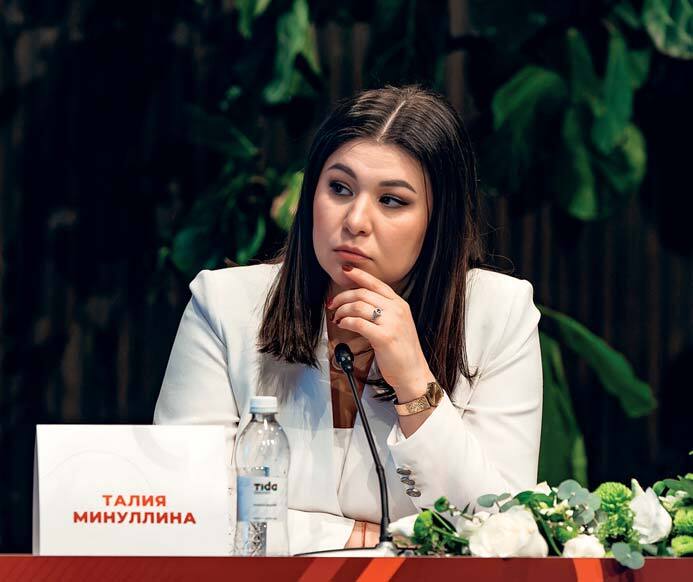
Taliya Minullina is a member of the Government of the Republic of Tatarstan, Head of the Tatarstan Investment Development Agency since 2014.
A graduate of Kazan (Volga Region) Federal University and the Skolkovo Moscow School of Management, she further pursued her education abroad, earning an MBA at the UK Public University, completing programmes at Canada’s School of Public Service, the Lee Kuan Yew School of Public Policy at the National University of Singapore, and Stanford University.
She holds a Master’s degree with the Russian Presidential Academy of National Economy and Public Administration (RANEPA). Minullina also serves as Deputy Chair of the Board of the National Association of Investment and Development Agencies (NAAIR).
— Russia is currently conducting an experiment in Islamic finance. How has this contributed to the development of trade and economic ties with Islamic states?
— The experiment has fostered unique conditions in Tatarstan and across Russia for direct dialogue and joint investment projects with Islamic nations. It has acted as a catalyst for export growth, mutual trust, and business contacts. The most striking example is the opening, on December 26, 2025, of the Kazan Representative Office for the Accounting and Auditing Organisation for Islamic Financial Institutions (AAOIFI)—an international body responsible for setting accounting, auditing, and Shariah compliancestandardsforIslamicfinancial institutions.
This initiative is the result of Tatarstan’s systematic approach to developing partnership-based financing. Within a short period, the region has progressed from pilot experiments to a robust infrastructure and direct engagement with international standards. For the region, this means, first and foremost, increased investor confidence from OIC member states, the expansion of partnerships with allied nations, and the integration of Islamic financial instruments into the national economy.
— And last, what do you see as the key factor for successful investor engagement?
— The most important thing is to work with those who are already here. Supporting investors already operating in the region—through export support systems, staff recruitment and development, or addressing day-to-day challenges—is essential. Until these investors are satisfied, successful, and actively reinvesting, there is little point in attracting new actors.
— The experiment has fostered unique conditions in Tatarstan and across Russia for direct dialogue and joint investment projects with Islamic nations. It has acted as a catalyst for export growth, mutual trust, and business contacts. The most striking example is the opening, on December 26, 2025, of the Kazan Representative Office for the Accounting and Auditing Organisation for Islamic Financial Institutions (AAOIFI)—an international body responsible for setting accounting, auditing, and Shariah compliancestandardsforIslamicfinancial institutions.
This initiative is the result of Tatarstan’s systematic approach to developing partnership-based financing. Within a short period, the region has progressed from pilot experiments to a robust infrastructure and direct engagement with international standards. For the region, this means, first and foremost, increased investor confidence from OIC member states, the expansion of partnerships with allied nations, and the integration of Islamic financial instruments into the national economy.
— And last, what do you see as the key factor for successful investor engagement?
— The most important thing is to work with those who are already here. Supporting investors already operating in the region—through export support systems, staff recruitment and development, or addressing day-to-day challenges—is essential. Until these investors are satisfied, successful, and actively reinvesting, there is little point in attracting new actors.