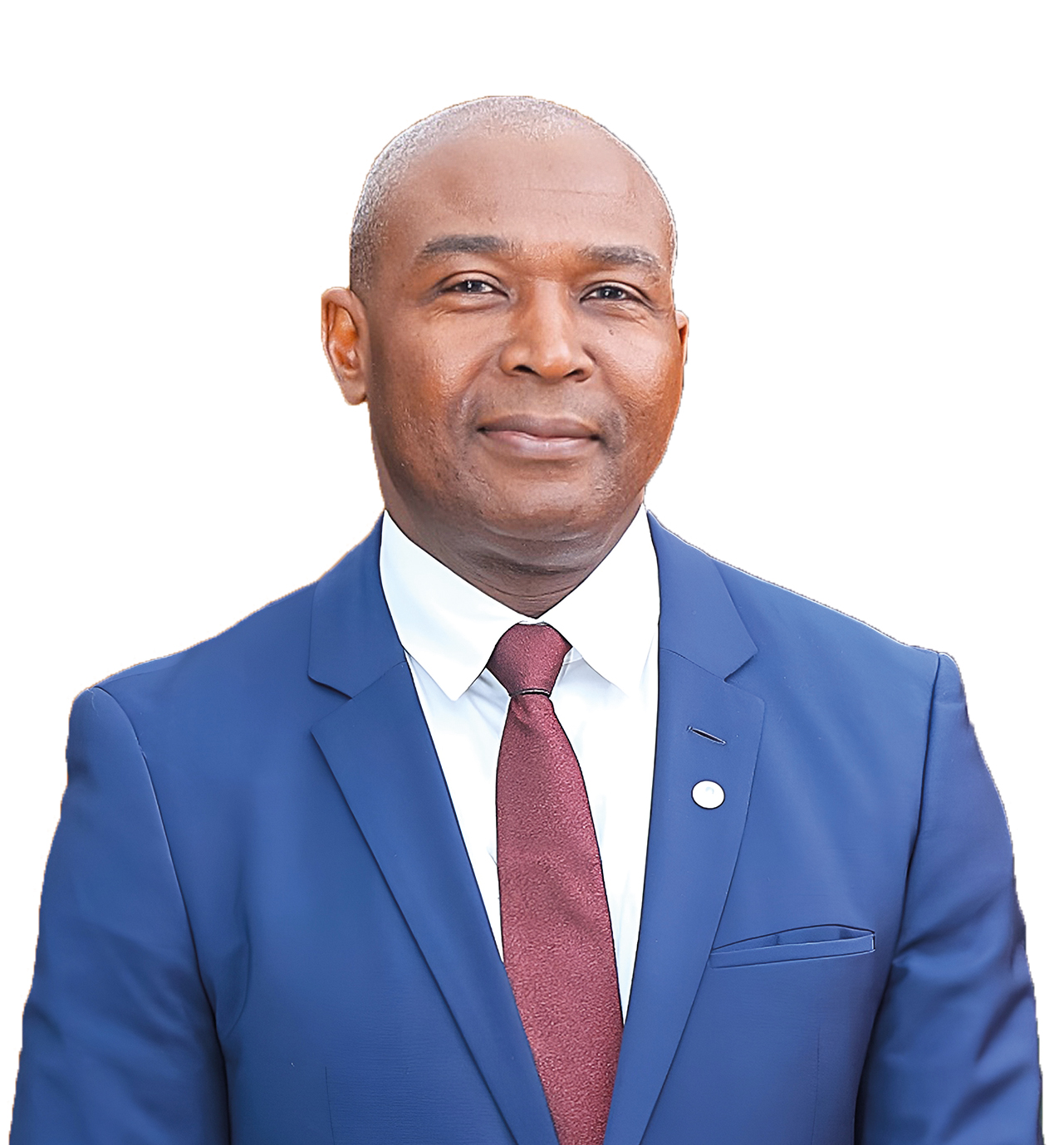
THE GECF IS AN EFFECTIVE PLATFORM FOR DIALOGUE AND INTERACTION BETWEEN LEADING GAS—PRODUCING STATES, WITH A MISSION TO UPHOLD THE KEY ROLE OF NATURAL GAS IN THE ENERGY TRANSITION AND PROTECT THE MEMBERS’ SOVEREIGN RIGHTS TO NATURAL RESOURCES.
– Dr Philip Mshelbila assumed office as Secretary General of the Gas Exporting Countries Forum (GECF) on January 1, 2026. With more than three decades of experience across the global natural gas, LNG, and power value chains, he brings deep expertise in strategic leadership and sustainable development FIRST-PERSON ENERGY
NATURAL GAS AND THE PATH TO A SHARED ENERGY FUTURE
In a world marked by geopolitical uncertainty, economic recalibration, and intensifying climate debates, one reality stands clear: global energy demand continues to rise. Populations are growing. Industries are expanding. Digitalisation, artificial intelligence, and climate-driven heating and cooling needs are accelerating consumption. Energy security has reemerged as a central pillar of national policy.
Against this backdrop, natural gas has regained its rightful place in the global energy conversation, not as a temporary compromise, but as a pragmatic, reliable, and lower-carbon solution capable of addressing the multifaceted energy trilemma of security, affordability, and sustainability.
In October 2026, Heads of State and Government from Member Countries of the Gas Exporting Countries Forum (GECF) will gather in Moscow for the 8th GECF Summit. At this pivotal moment for the global energy system, our leaders will deliberate on how natural gas can continue to contribute to stability, development, and balanced energy transitions worldwide.
A TIME FOR PRAGMATISM
The international climate agenda has evolved significantly in recent years. While ambition remains high, there is growing recognition that energy transitions must be grounded in economic feasibility, technological readiness, and social realities. Recent global discussions have underscored the importance of balancing mitigation with adaptation, acknowledging that energy security is a prerequisite for resilience. At the same time, the world continues to confront stark energy inequities: hundreds of millions of people lack reliable access to electricity, and billions still rely on polluting fuels for cooking. No serious energy pathway can ignore these realities.
Natural gas offers a practical response. It emits roughly half the carbon dioxide of coal and significantly fewer local air pollutants. Coal-to-gas switching remains one of the most effective tools available for immediate emissions reduction, particularly in power generation. Moreover, technological advances in methane abatementhavestrengthenedtheenvironmental performance of gas across the value chain.
The data is clear. Global gas consumption maintained its upward trajectory in 2025, rising by 1.2% to reach around 4,230 bcm, driven primarily by expanding gas-fired power generation and sustained growth in industrial demand. At the same time, global LNG trade increased by 7% to exceed 438 million tons, reaching a new record level and underscoring the critical role of natural gas in strengthening energy security and supporting the continued expansion of global energy demand. These developments are not theoretical; they are occurring in real time.
GAS AS A STABILIZER IN A TRANSFORMING POWER SECTOR
In many advanced economies, renewable energy now represents a growing share of electricity generation. This is a welcome development. Yet, by their nature, renewables are intermittent. Wind and solar output fluctuate with weather conditions and seasonal variations. Natural gas plays a crucial balancing role.
In Europe, for example, gas-fired power generation rose during colder periods in late 2025 to compensate for seasonal variations in renewable output and ensure grid stability. Gas remains an essential partner to renewables, providing dispatchable power that safeguards system reliability.
Globally, LNG infrastructure is expanding to meet the growing energy demand. Between 2026 and 2030, approximately 235 million tonnes per annum (mtpa) of new liquefaction capacity are expected to come online, based on currently announced projects. At the same time, global regasification capacity is also scaling up, with Floating Storage and RegasificationUnits(FSRUs)playingan increasingly important role and now accounting for about 20% of global regasification capacity, offering flexible, rapid-deployment solutions for both mature and emerging markets.
This infrastructure expansion is not merely commercial; it is strategic. It enhances resilience, diversifies supply routes, and connects producers to consumers more efficiently than ever before.
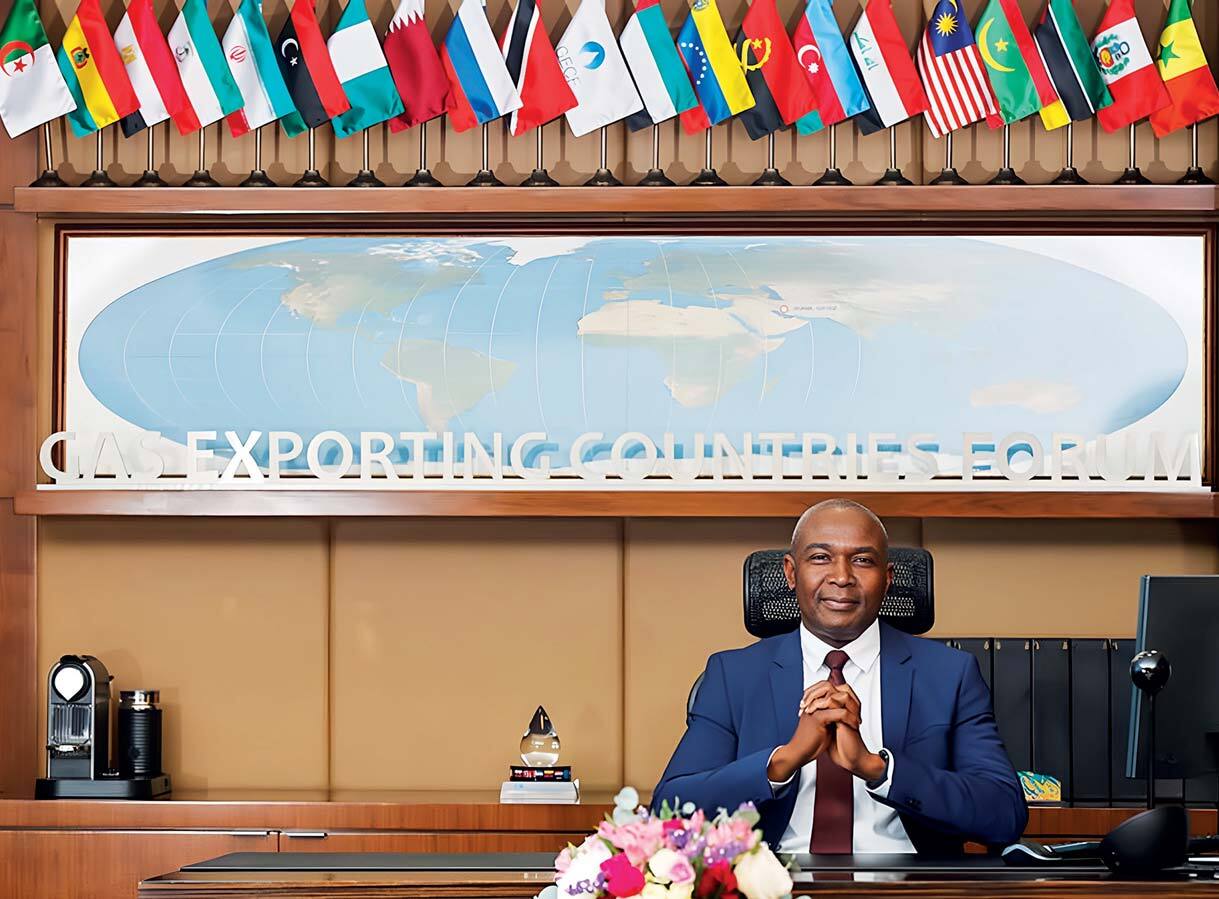
Natural gas is one of the most effective ways to cut emissions, as it emits half as much carbon dioxide into the atmosphere as coal.
GECF: COOPERATION OVER FRAGMENTATION
The Gas Exporting Countries Forum was established to foster dialogue and cooperation among the world’s leading gas-producing nations.
Flagship analytical outputs such as the Monthly Gas Market Report, Annual Gas Market Report and Global Gas Outlook provide authoritative, data-driven insights that inform policymakers, markets, and stakeholders worldwide.
GECF Member Countries are Algeria, Bolivia, Egypt, Equatorial Guinea, Iran, Libya, Nigeria, Qatar, Russia, Trinidad and Tobago, the United Arab Emirates, and Venezuela.
Observer Countries are Angola, Azerbaijan, Iraq, Malaysia, Mauritania, Mozambique, Peru, and Senegal.
Together, they account for approximately 70% of the world’s proven natural gas reserves, 38% of marketed gas production, and 42% of global gas exports. With such scale comes responsibility.
Guided by its Long-Term Strategy, GECF envisions natural gas as a cornerstone of inclusive and sustainable development. The Forum’s mission is to advocate for natural gas as a critical component of realistic energy transitions, while safeguarding the sovereign rights of Member Countries over their natural resources and contributing to global energy security.
In an increasingly fragmented international environment, energy must remain a bridge, not a fault line. Uncoordinated trade measures, regulatory divergence, and geopolitical tensions risk distorting markets and undermining long-term investment. Yet the global gas industry depends on predictability, transparency, and trust.
The upcoming 8th GECF Summit in October 2026 in Moscow will provide a platform for our leaders to reaffirm these principles. Leaders are expected to deliberate on avenues to strengthen producer-consumer dialogue, enhance market stability, and ensure that natural gas continues to contribute constructively to global development.
A BALANCED ENERGY FUTURE
Energy transitions cannot be reduced to slogans. They must be engineered carefully, responsibly, and inclusively.
We firmly believe that advancing economic development and social progress without undermining climate objectives requires pragmatic, balanced, and low-carbon energy transitions, with natural gas playing a central role.
Natural gas is uniquely positioned in this context. It supports emissions reduction when displacing coal or oil. It complements renewables. It enhances energy security. It powers industry. It enables economic growth. And for many developing nations, it represents the most realistic pathway toward modern energy systems.
The road to Moscow is therefore more than preparation for a Summit. It is an opportunity to shape a shared vision, one that recognizes the complexity of the global energy landscape and embraces pragmatic solutions grounded in cooperation. Together, we will advance a message that is both clear and constructive: natural gas remains essential to building a secure, sustainable, and inclusive global energy future.